PRODUCT GUIDES STAGE 03
Walking Gear
Choosing comfortable, safe and practical walking equipment for your dog.
Walking equipment can look deceptively simple.
A lead is a lead. A collar is a collar. A harness is a harness.
Until you start shopping.
Suddenly there are different attachment points, shapes, materials, lengths, clips, padded sections, reflective panels and enough terminology to make getting around the block feel like preparation for an expedition.
Most dogs don’t need a cupboard full of walking equipment.
They need comfortable, appropriately fitted gear that suits the dog, the person holding the lead and the places they actually go.
So let’s start there.
Collar, harness or both?
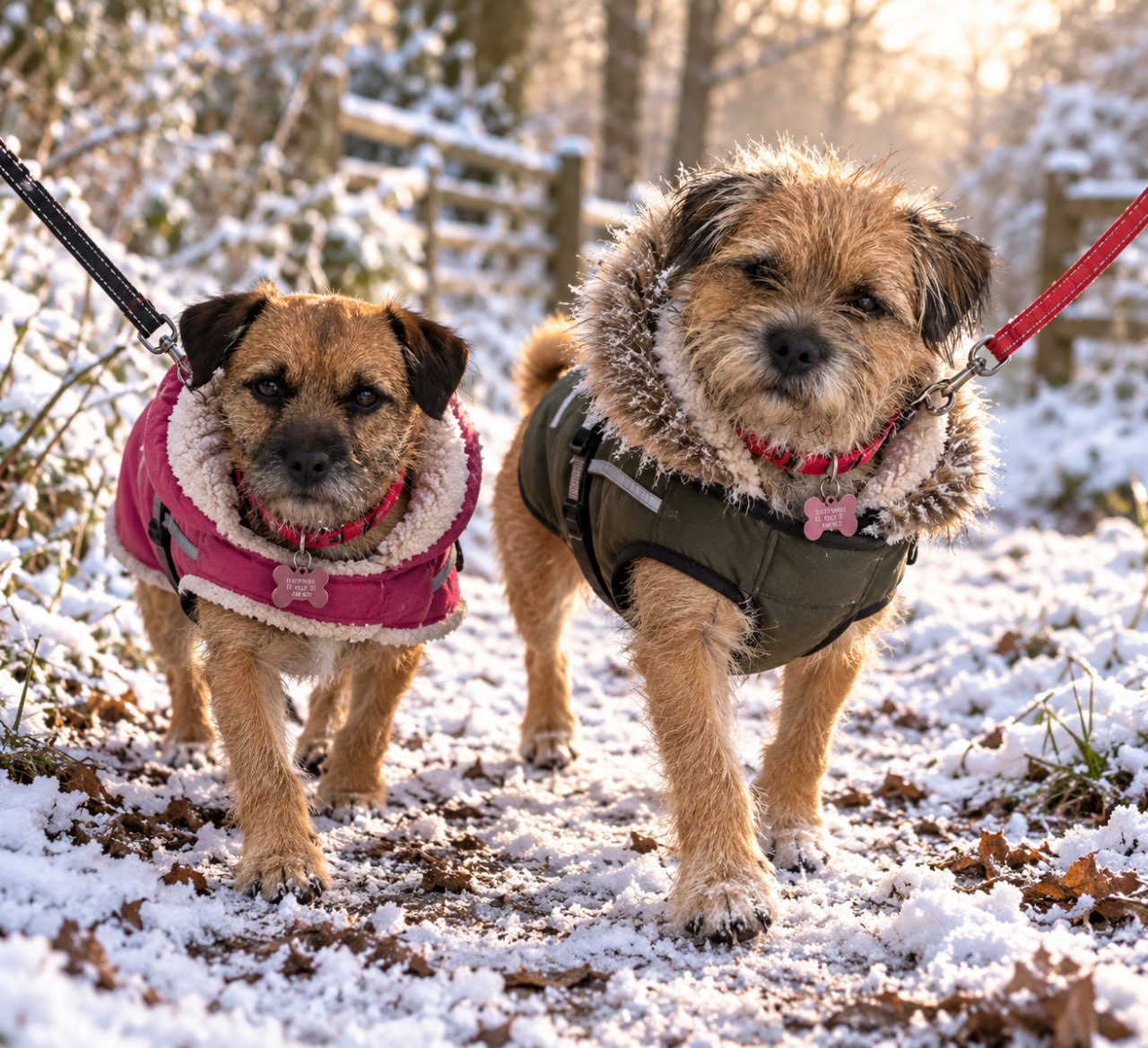
For many dogs, a collar and a harness do different jobs rather than competing for the same one.
A well-fitted collar can carry identification and may be perfectly suitable for some everyday situations.
A harness distributes lead attachment differently around the dog’s body and may be useful for ordinary walks, training, long-line work or dogs for whom pressure around the neck is undesirable.
Some owners use both, attaching the lead according to the situation.
The important question isn’t which one is universally “best”.
It’s whether the equipment is comfortable, secure and suitable for your individual dog.

A quick UK identification reminder
In England, the law requires dogs to wear a collar displaying their owner’s name and address when they’re on a road or in a public place, unless a specific exemption applies. This requirement comes from the Control of Dogs Order 1992 and applies even if your dog is microchipped or normally walks on a harness.
Make sure the identification details are accurate and easy to read. Adding a telephone number is also a sensible precaution, as it can help someone contact you quickly if your dog gets lost. Check the collar and tag regularly for damage or wear.
Choosing a harness
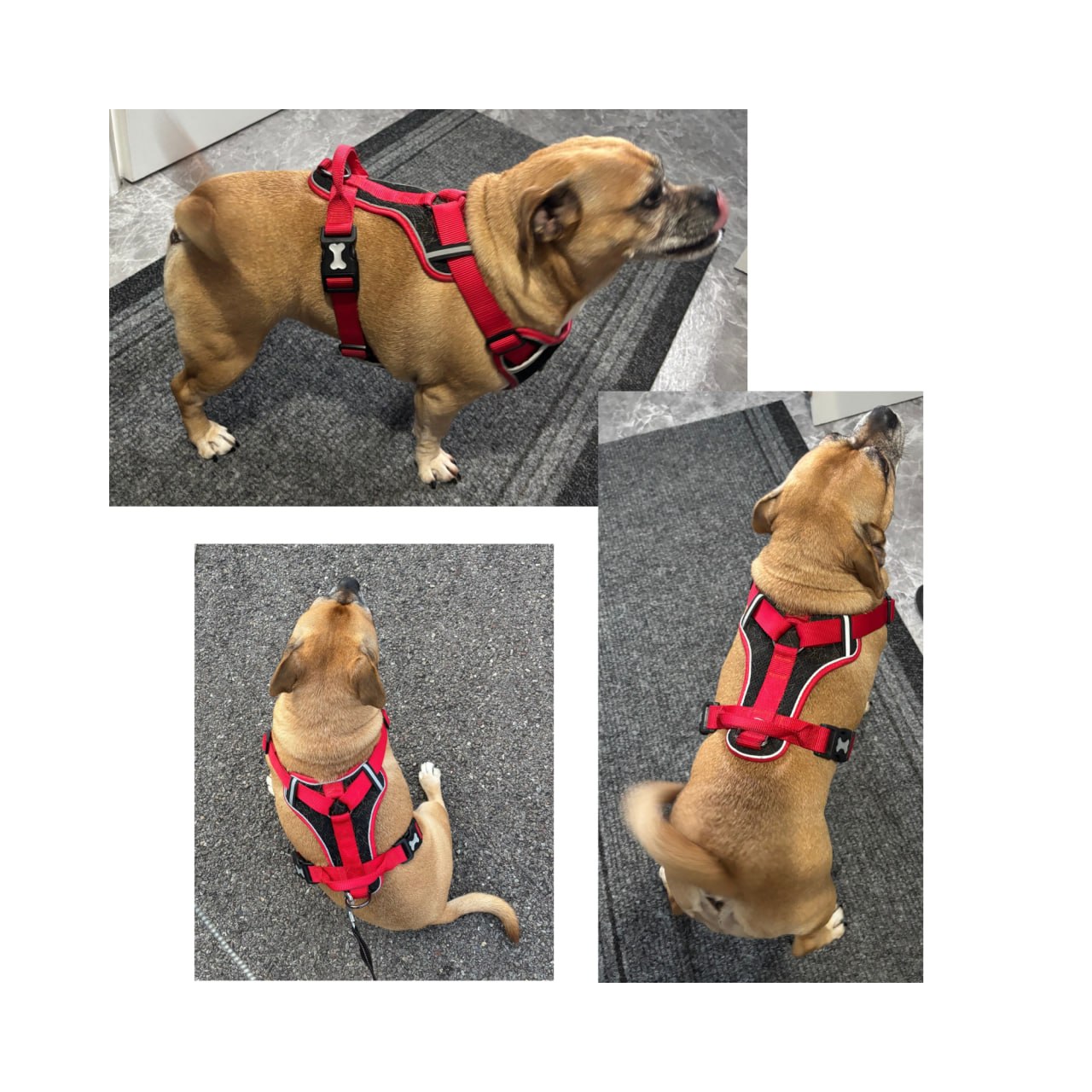
A harness can be extremely useful, but the fact that it fits around the dog doesn’t necessarily mean it fits well.
Look at where straps sit and how the harness moves when your dog walks.
It shouldn’t obviously rub behind the front legs, restrict normal movement or sit so loosely that the dog could easily back out of it.
Check the manufacturer’s fitting instructions because different harness designs sit differently.
And remember that fluffy coats can be deceptive. Something that looks snug over a lot of fur may fit very differently when you actually feel beneath it.
Front or back attachment?
Some harnesses attach the lead on the back, some at the front and some provide both options.
The attachment point can change how the equipment feels and behaves, but it doesn’t replace training.
If your dog pulls on the lead, equipment may help you manage walks while you’re working on the skill, but no clip position magically teaches loose-lead walking.
Equipment can support training. It doesn’t do the learning for your dog.
Puppies grow. Quickly.
That beautiful puppy harness may have a surprisingly short career.
Check the fit regularly while your puppy is growing.
Straps that fitted perfectly a few weeks ago may become tight, and a harness adjusted to its maximum size may no longer sit where the manufacturer intended.
You don’t necessarily need to buy the most expensive equipment available during every growth stage.
A secure, comfortable, appropriately fitted harness that can be adjusted as your puppy grows may be the more sensible choice.
While your puppy is still growing, focus on a comfortable, secure and adjustable harness rather than spending too much on something they’ll quickly outgrow.
Choosing a Lead for Everyday Walks
For ordinary walks, simplicity is often underrated.
A comfortable handle, secure clip, sensible length and material that feels manageable in your hands may matter far more than clever extras.
Think about where you normally walk.
Busy pavements and town environments may require different handling from open countryside.
A very short lead can restrict normal movement and sniffing, while an excessively long lead may be awkward where space is limited.
The right everyday lead gives you appropriate control without making every walk unnecessarily restrictive.
Long Training Leads: When and How to Use Them
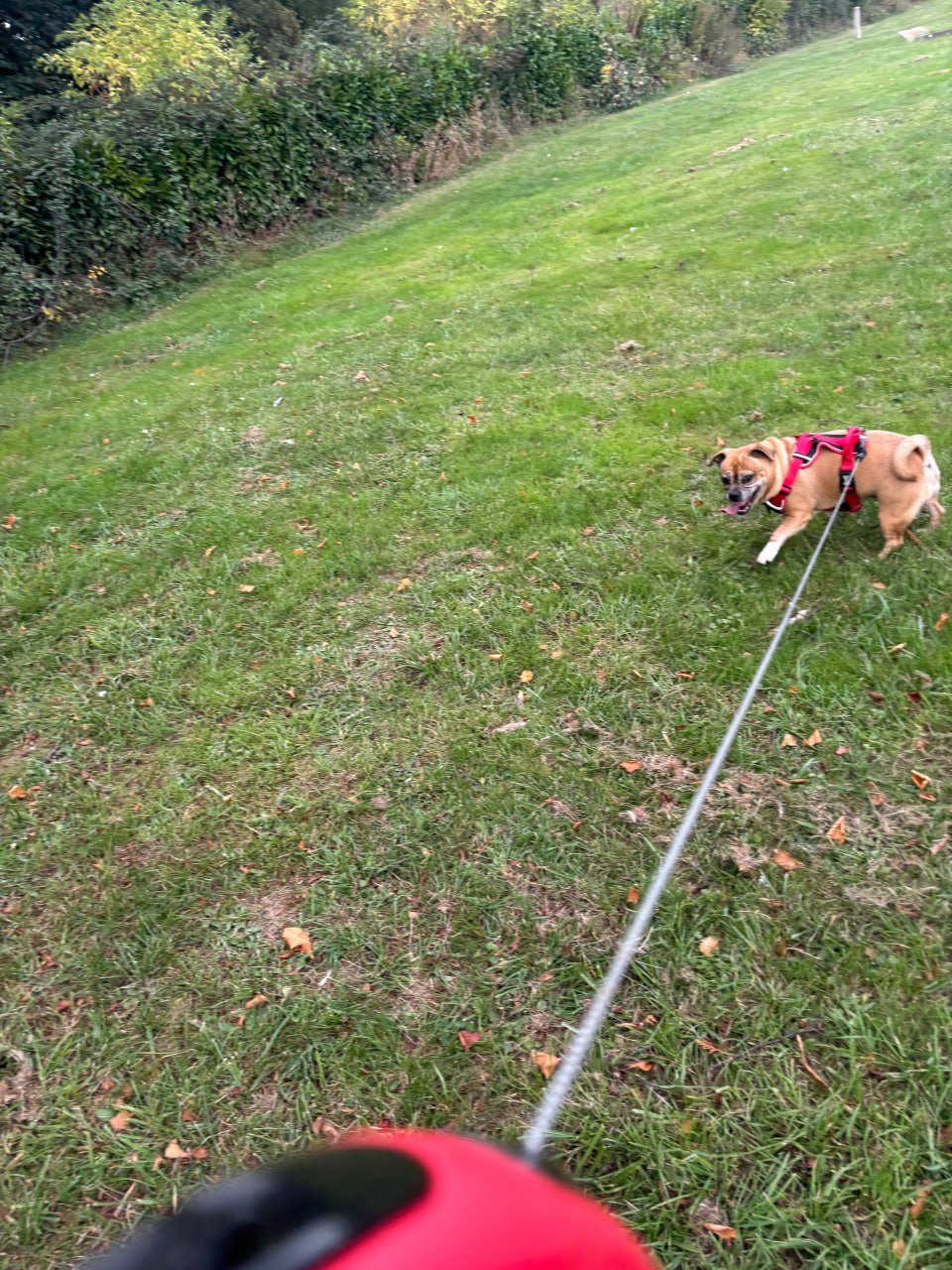
A long line can be useful when you’re developing recall or want to give your dog more freedom in an appropriate area without allowing them completely off lead.
They come in different lengths and materials.
Longer isn’t automatically better.
The more line you have, the more you need to manage safely.
Be aware of people, dogs, trees, posts and legs. A long line travelling quickly around ankles is an experience nobody needs to add to their weekend.
For long-line work, attachment to a suitable harness is generally preferable to allowing sudden force to be applied to the dog’s neck.
If you’re new to using one, start somewhere spacious and quiet while you get used to handling the extra line.
What about retractable leads?
Retractable leads divide opinion, largely because their usefulness depends heavily on where and how they’re being used.
They can offer additional freedom in some appropriate open environments while retaining a connection to the dog.
But they also require careful handling.
The thin line or tape can be difficult for other people to see, dogs can travel a considerable distance before being stopped, and they may be unsuitable where close control is needed around roads, people or other dogs.
Don’t wrap the line around your hand, and be mindful of the risk of tangling or friction injuries.
A retractable lead isn’t automatically good or bad.
It’s a tool.
The question is whether it’s the right tool for that dog, handler and environment.
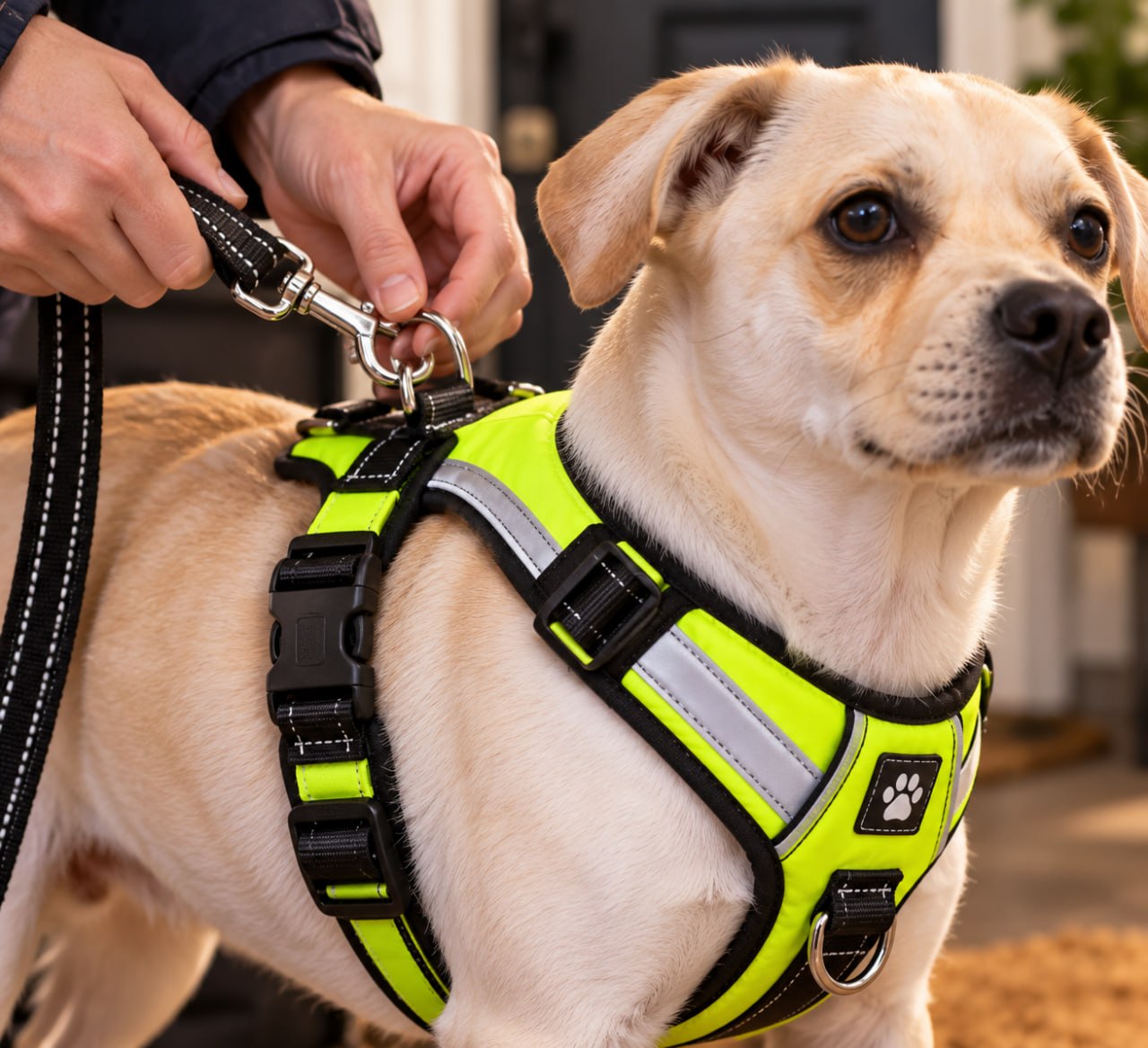
Checking Clips, Fastenings and Attachment Points on Your Dog’s Walking Equipment
The exciting colour may be what catches your eye.
The clip is what keeps your dog attached to you.
Check hardware regularly for wear, damage, corrosion or anything that no longer closes securely.
Look at stitching and attachment points too.
If your dog is strong, particularly active or prone to sudden lunging, equipment needs to be appropriately robust for the forces involved.
Likewise, very heavy hardware can be unnecessarily cumbersome on a tiny dog.
Match the equipment to the dog rather than assuming bigger and heavier always means safer.
Preventing Your Dog from Slipping Out of Their Harness or Collar
Some dogs are exceptionally talented at reversing out of equipment.
Dogs with particular body shapes, newly adopted dogs, worried dogs and dogs prone to sudden attempts to escape may need additional consideration when choosing secure walking gear.
A harness with additional adjustment or an extra body strap may suit some dogs better.
In higher-risk situations, owners may choose an appropriate backup connection between pieces of equipment.
If you’re concerned that your dog could slip out of their collar or harness, check the fit and security of their equipment before taking them out. A properly fitted, secure setup is particularly important for dogs that are nervous, easily startled or likely to pull away suddenly.
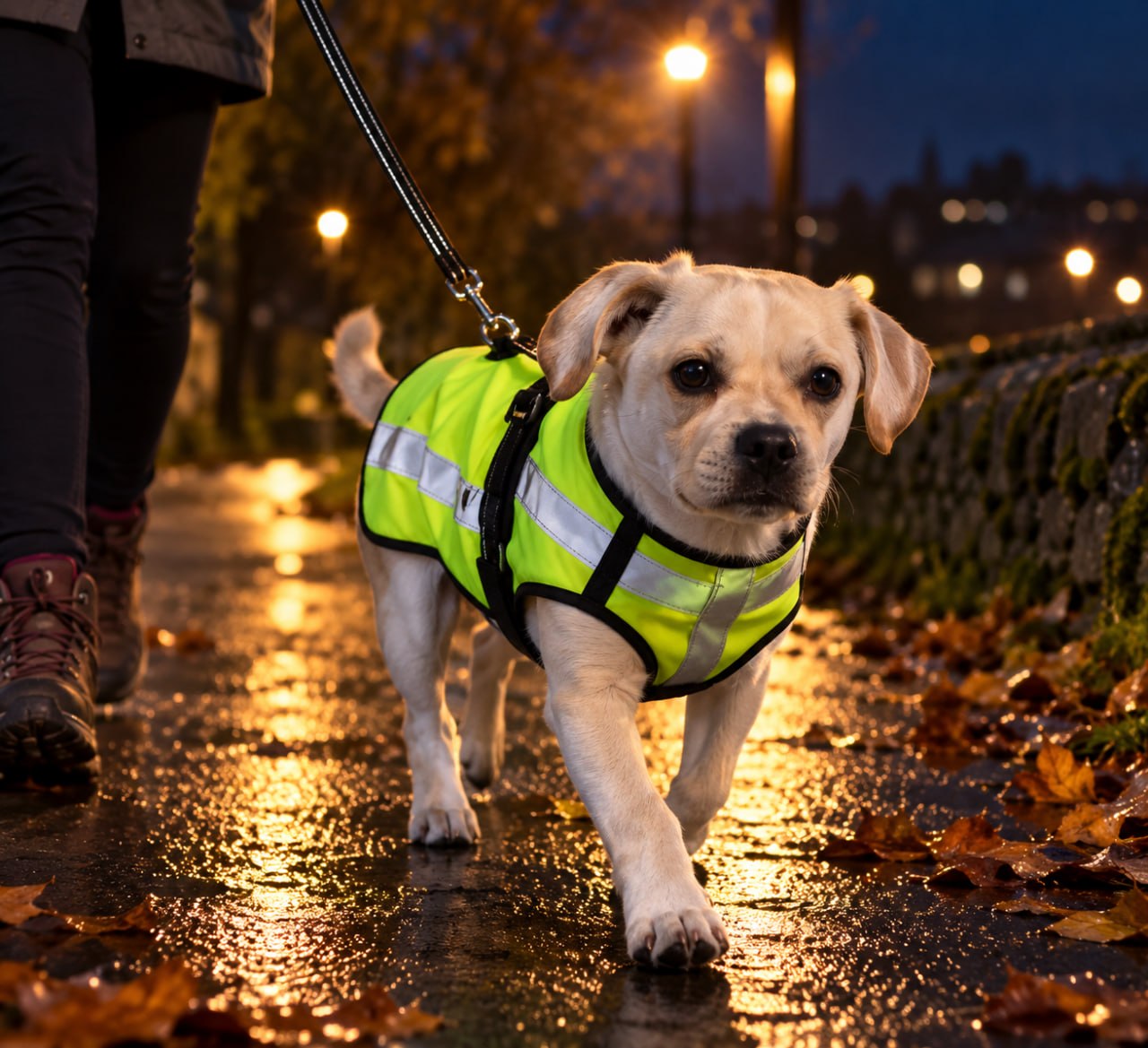
Walking in the dark
Autumn and winter have an unfortunate habit of turning perfectly reasonable afternoon walks into night-time excursions.
Reflective strips, lights and high-visibility accessories can help make you and your dog easier to see.
But visibility products don’t replace a secure lead or sensible road awareness.
If you use clip-on lights, check that they’re securely attached and aren’t irritating your dog as they move.
And don’t forget yourself.
Making the dog visible while the human remains dressed entirely in black from head to toe rather defeats part of the exercise.
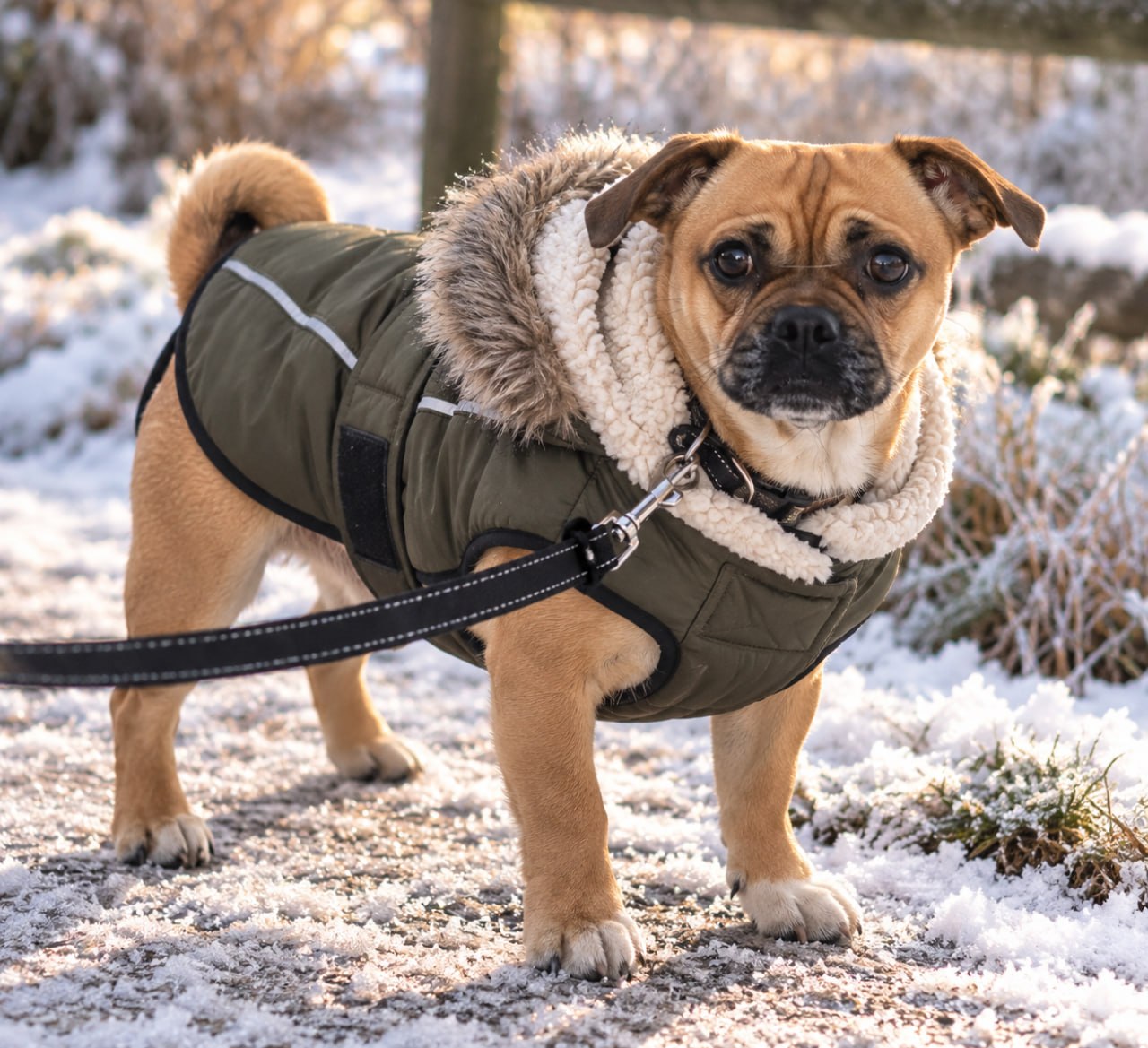
Does your dog need a coat?
Some dogs cope perfectly well without one.
Others may benefit from additional protection in cold or wet conditions.
Age, coat type, body condition, health, activity level and the weather itself can all make a difference.
A coat should allow your dog to move comfortably without rubbing around the legs, chest or shoulders.
Check that straps and fastenings sit securely and don’t interfere with toileting.
For wet-weather use, practical waterproofing may be more useful than enormous amounts of padding.
For colder conditions, warmth may matter more.
And sometimes the answer is simply that your dog would rather be indoors.
Buy for the weather and the dog, not because the coat looks adorable.
Don’t forget the human holding the lead
Walking equipment has to work for both ends of the lead.
Consider whether the handle is comfortable, whether clips are easy for you to operate and whether you can safely manage the length and weight of the equipment.
If you have reduced hand strength or mobility, certain fastenings and handles may be much easier to use than others.
A technically excellent lead that you find painful or difficult to hold isn’t an excellent lead for you.
A quick walking-gear checklist
Before buying, ask:
Is it the right size for my dog?
Can it be adjusted appropriately?
Does it allow normal movement?
Could it rub anywhere?
Is my dog likely to escape from it?
Are the clips and fastenings suitable for my dog’s size and strength?
Does the lead length suit where we normally walk?
Can I comfortably and safely handle it?
Is it easy to clean?
Will my puppy grow out of it soon?
Am I buying a useful feature or simply another feature?
The best walking equipment is often the equipment you barely notice once the walk begins.
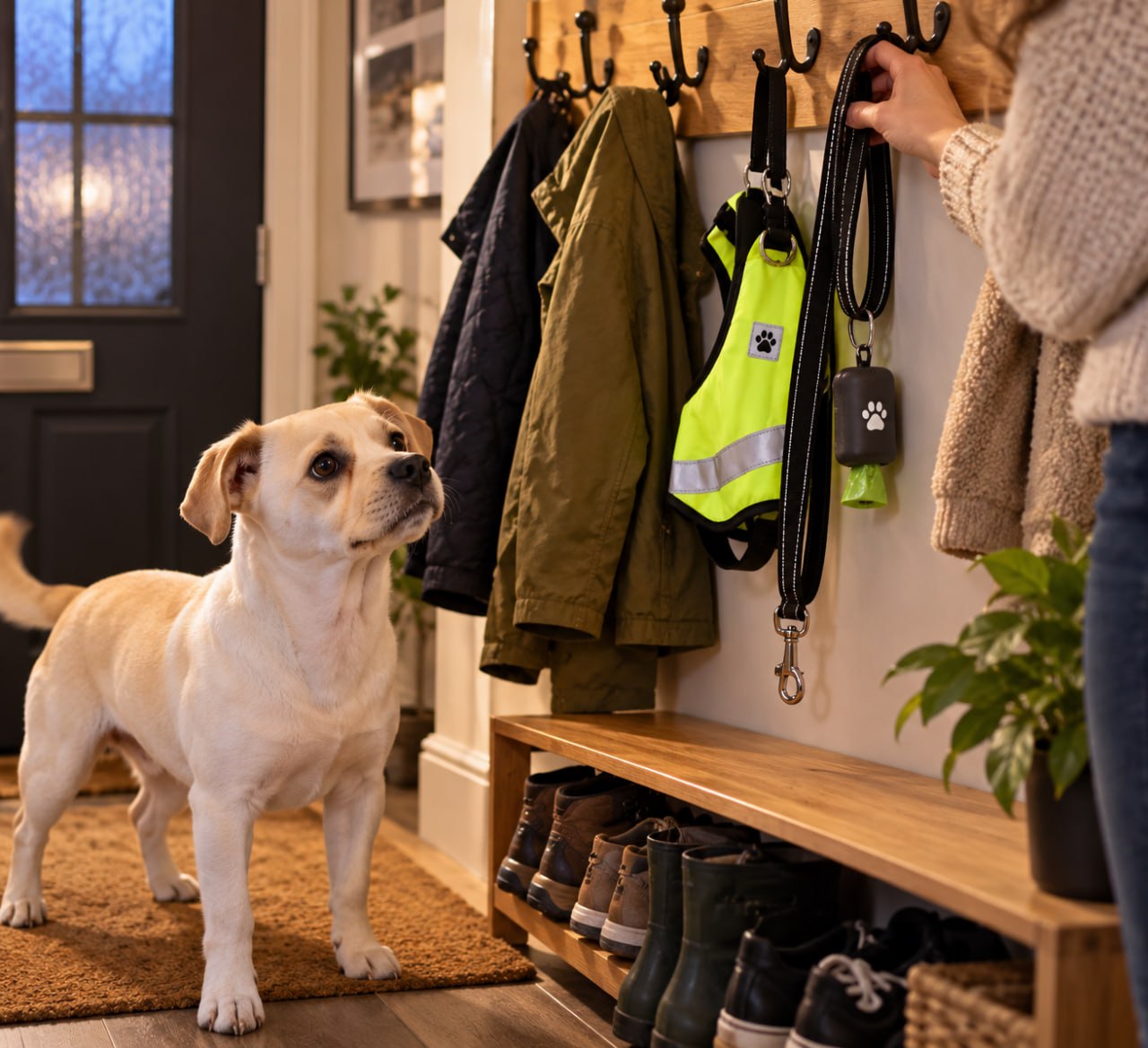
Our product picks
As this guide develops, we’ll bring together walking equipment for different dogs, people and situations.
Rather than declaring one harness or lead the universal winner, we’ll look for options such as:
Good everyday harness
Comfortable, adjustable equipment suited to ordinary daily walks.
Worth considering for dogs who need additional security
Harness designs with features that may make backing out more difficult when fitted correctly.
Good everyday lead
Straightforward, practical options without unnecessary complications.
Useful long-line options
Different lengths and materials for recall practice and controlled freedom.
Visibility and wet-weather choices
Practical accessories for darker walks and less cooperative British weather.
We’ll explain what each product offers, where it may be useful and any limitations worth knowing about.
Affiliate links will be clearly identified where used.
Before buying more walking equipment…
Check what you already own.
Does it fit?
Is it comfortable?
Is it secure?
Does it actually solve the problem you’re trying to solve?
If the answer is yes, you may not need anything else.
And if the problem is that your dog pulls, lunges, struggles with recall or finds the outside world overwhelming, buying another piece of equipment may not be the whole answer.
Our Training & Behaviour section can help you work out what to tackle next.
Good equipment should make walking together safer and more comfortable. It shouldn’t promise to replace understanding, training or time.