PRODUCT GUIDES STAGE 04
Feeding & Drinking
Choosing practical feeding and drinking equipment that suits your dog and your daily routine.
Feeding your dog doesn’t require an elaborate collection of equipment.
For most homes, the essentials are refreshingly ordinary: suitable bowls, somewhere sensible to store food, a reliable way to measure portions and constant access to fresh drinking water.
Then there are the extras.
Slow feeders. Raised bowls. Feeding mats. Travel bowls. Storage containers. Scoops. Automatic feeders. Products promising to make every part of dinner better.
Some can be genuinely useful.
Others solve problems you may not actually have.
The best place to start is by considering what your dog needs and which products will genuinely make feeding time easier.
Choosing a food bowl
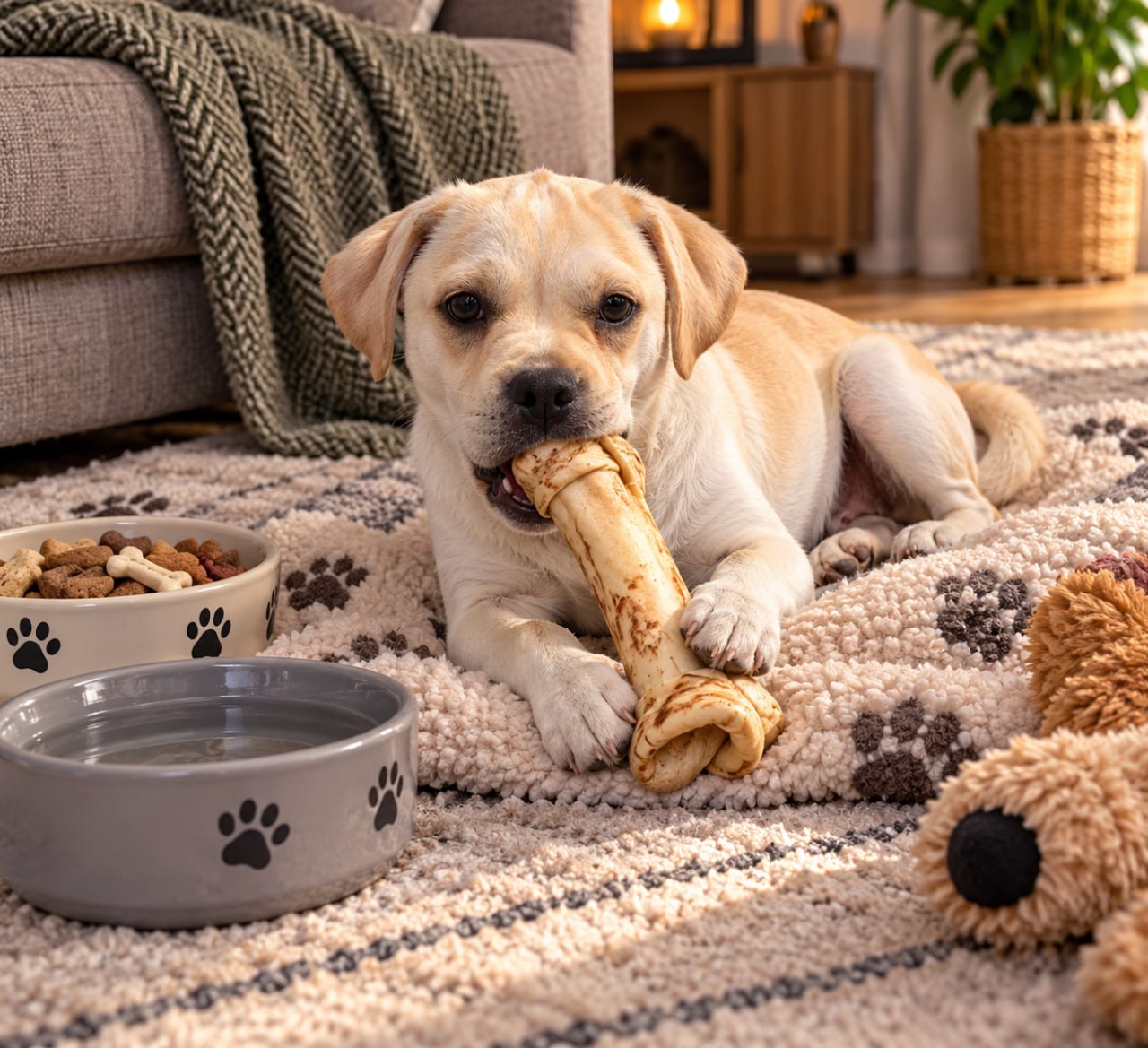
A dog bowl has one fairly important job.
It needs to let your dog eat comfortably and safely.
Stainless steel, ceramic and other suitable materials all have advantages and disadvantages.
Whatever you choose, look for a bowl that’s the right size for your dog, stable enough for the way they eat, easy to clean thoroughly, free from cracks, chips or damaged surfaces, and suitable for regular contact with food.
A lightweight bowl that travels halfway across the kitchen during dinner may be perfectly usable, but probably isn’t ideal for a particularly enthusiastic eater.
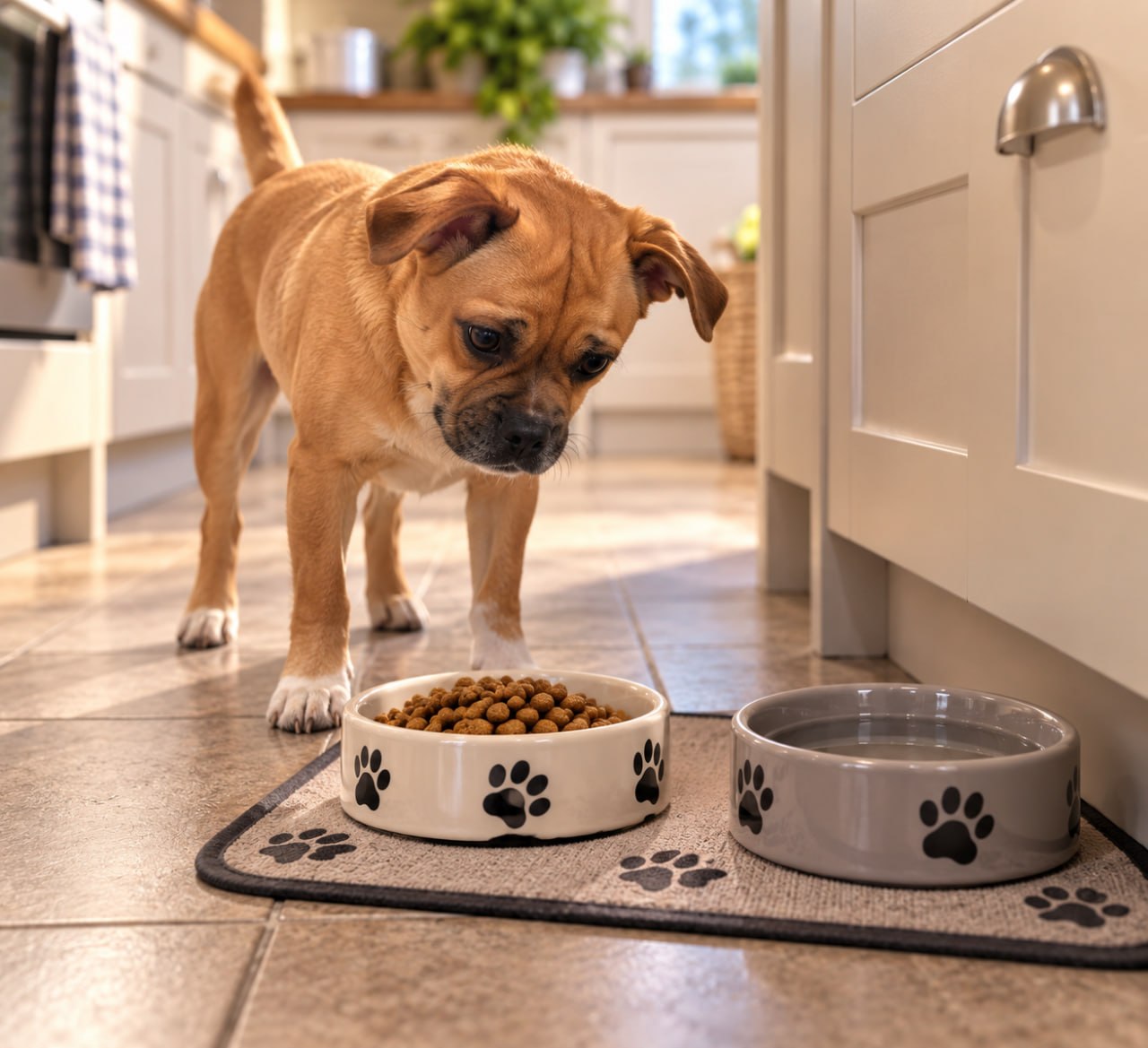
Non-slip bases or feeding mats can help where bowls move around.
And although matching designer bowls may look lovely in the kitchen, your dog remains spectacularly uninterested in whether they coordinate with the cupboards.
Keep bowls clean
Food and water bowls need regular cleaning.
Food residue, saliva and moisture don’t improve with age.
Wash bowls using an appropriate method for the material and follow any manufacturer’s cleaning instructions.
Replace damaged bowls rather than continuing to use something with cracks, chips, sharp edges or areas that can no longer be cleaned properly.
Water bowls deserve attention too.
A bowl containing water isn’t automatically a clean water bowl.
Fresh water should always be available
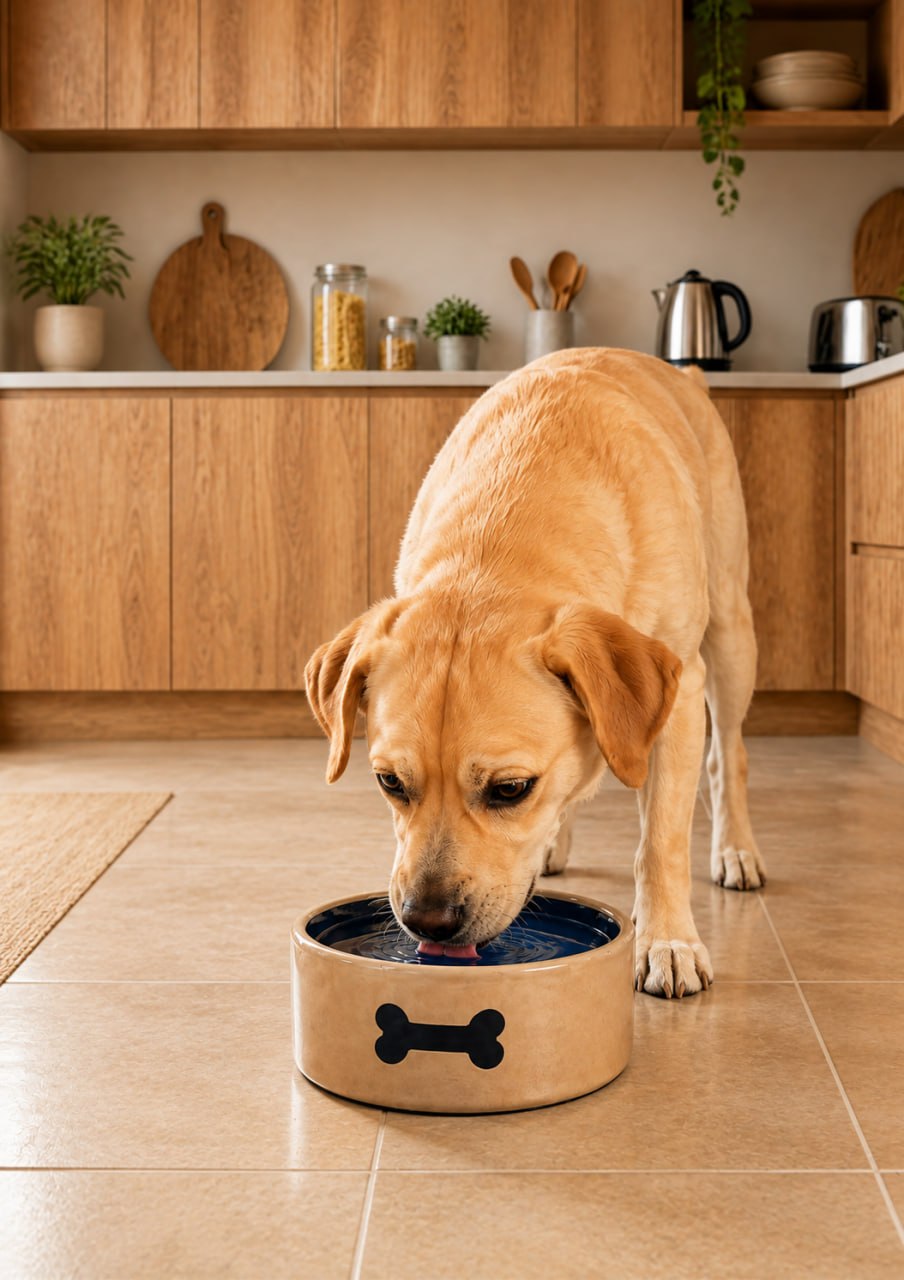
Dogs need access to fresh drinking water.
That sounds obvious, but it’s worth thinking about where bowls are positioned and whether they’re easy for your dog to reach throughout the day.
Some households benefit from having more than one water station, particularly in larger homes or during warmer weather.
Check water regularly.
Refill it.
Clean the bowl.
And if you’re heading out for longer journeys or days away, think about how you’ll provide water while you’re out.
A portable bowl or suitable travel water container can be far more useful than many of the cleverer products marketed to dog owners.
One bowl or several?
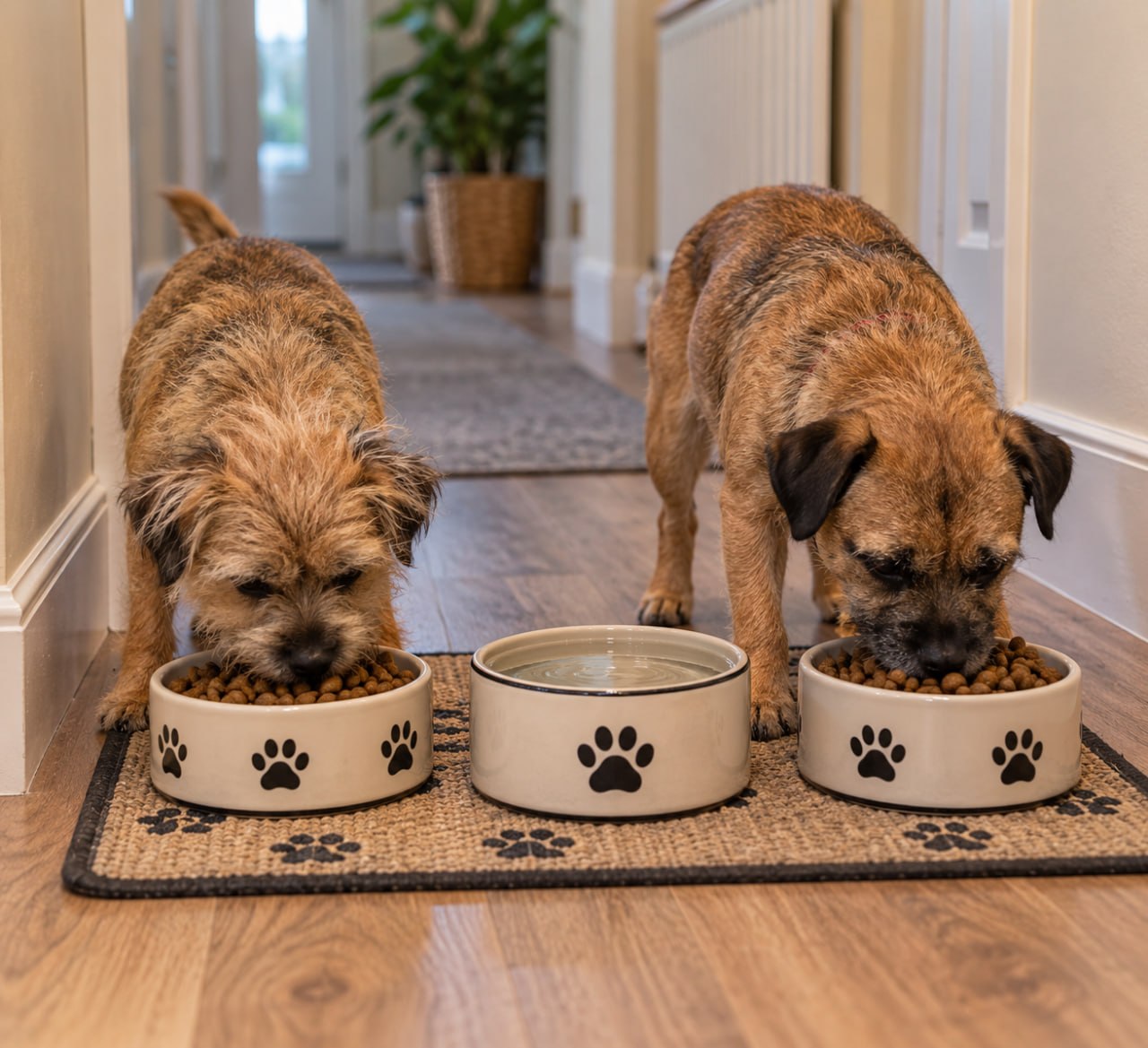
In multi-dog households, feeding side by side isn’t always the best arrangement.
Some dogs are perfectly relaxed eating near one another.
Others may eat faster, attempt to swap bowls or become uncomfortable when another dog approaches their food.
Separate feeding spaces can make mealtimes calmer and allow you to see how much each dog has actually eaten.
This becomes particularly useful when dogs eat different foods, have different portion sizes or need medication with meals.
If a dog growls, freezes, guards food or becomes worried about another dog or person approaching, don’t punish the warning.
Manage feeding safely and see our Training & Behaviour guidance on resource guarding and professional support.
Dinner shouldn’t need to become a competitive sport.
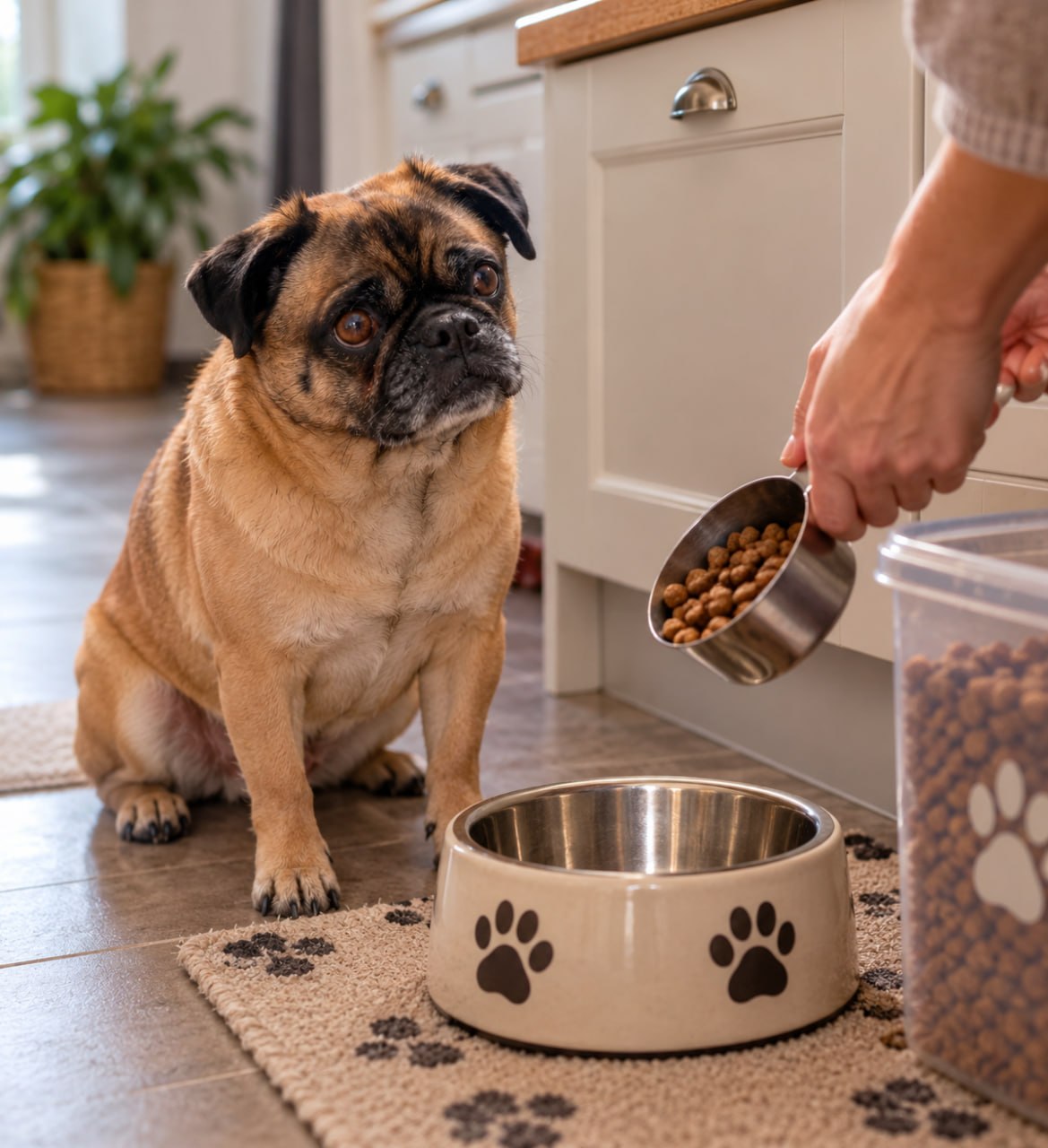
Measure portions rather than guessing
It’s remarkably easy for portions to grow when they’re measured by eye.
A little extra in the morning.
Another little extra at dinner.
A few treats.
Someone else in the house who didn’t realise the dog had already been fed.
Suddenly “roughly the right amount” isn’t particularly rough at all.
Use the feeding guidance for your dog’s food as a starting point and adjust appropriately for the individual dog with professional advice where needed.
A measuring scoop can be convenient, but remember that volume isn’t always the most accurate way to measure food.
For greater consistency, particularly when portion control matters, kitchen scales can be useful.
And if several people feed the dog, agree on a system.
Food storage
How food is stored matters.
Follow the storage instructions on the packaging and pay attention to use-by or best-before information as appropriate.
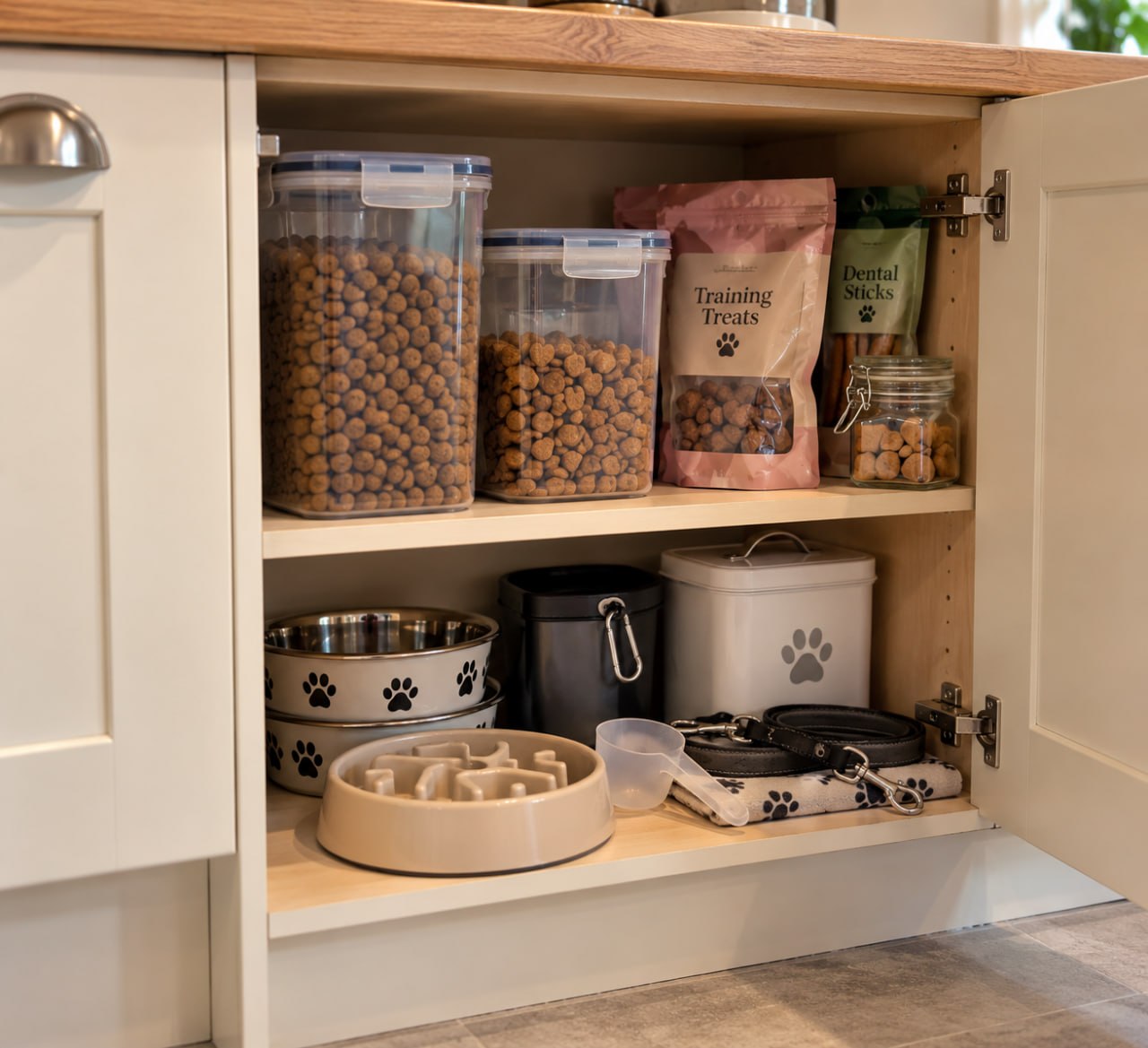
Dry food should generally be kept somewhere cool and dry and protected from moisture and pests.
If you use a separate storage container, choose one that can be cleaned properly and closes securely.
Keeping the food in its original packaging inside the container can also preserve useful information such as the product name, batch details, feeding instructions and expiry information.
That’s particularly helpful if you ever need to check a recall or discuss the food with the manufacturer.
An unlabelled storage container may look tidier, but keeping the original packaging means you’ll still have important information such as the batch number, feeding instructions and expiry date when you need it.
Slow feeders: useful for some dogs
Some dogs inhale dinner as though another appointment begins in thirty seconds.
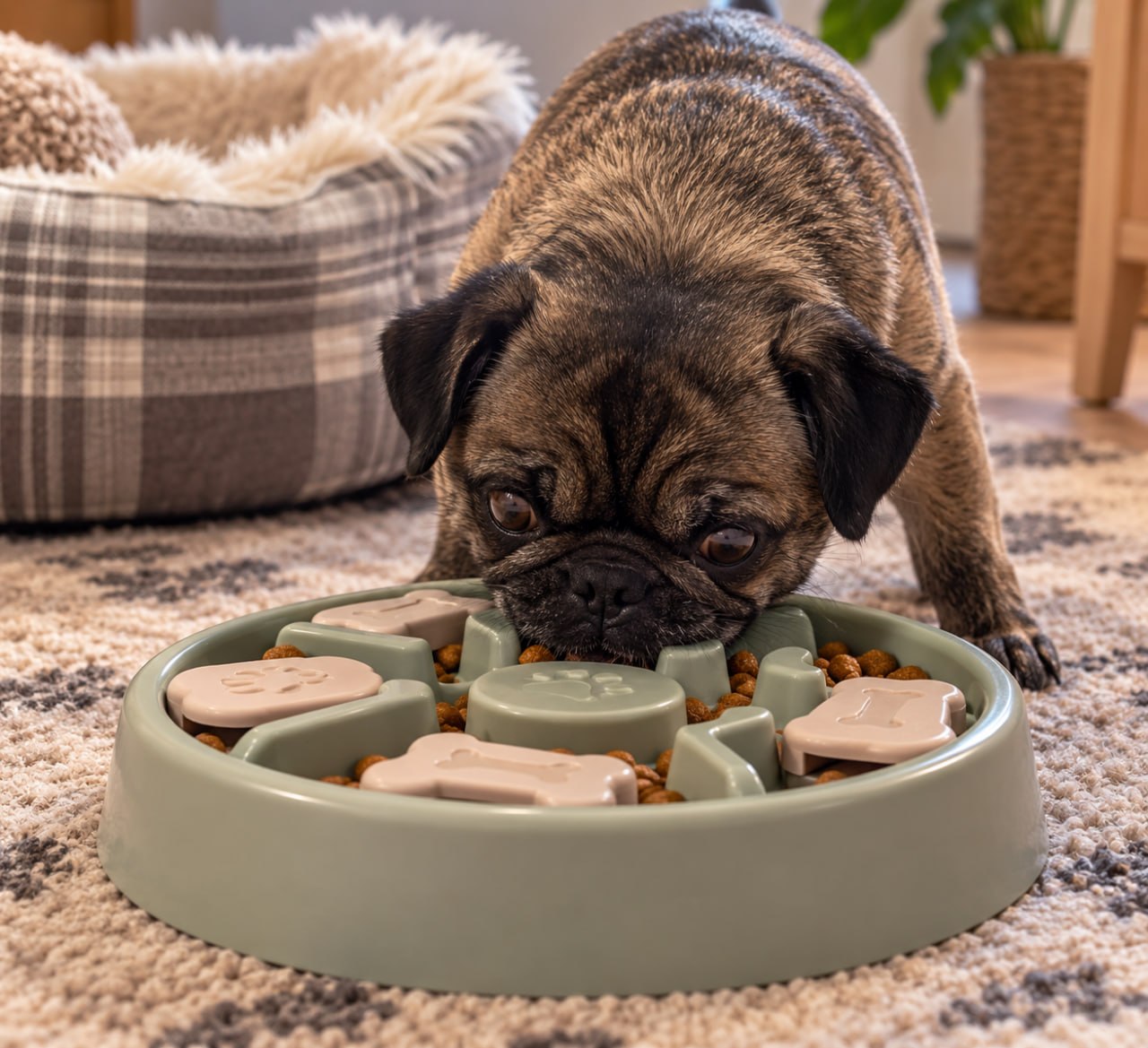
Slow-feeder bowls and suitable food-dispensing products can extend mealtimes for some dogs.
But don’t assume every dog needs one.
The design should be appropriate for your dog’s size and shape, and your dog should still be able to access the food comfortably.
Watch how your dog uses it.
If a complicated feeder simply creates frustration, it’s not providing a better mealtime because the packaging used the word “enrichment”.
Start simply.
The goal is a calmer, manageable meal, not an entrance examination.
Raised bowls
Raised feeders are often marketed for comfort, posture or particular types of dog.
They aren’t automatically necessary for every dog.
Some individual dogs may benefit from a different feeding height because of specific physical or medical needs, but that’s a conversation worth having with your vet rather than relying on a broad marketing claim.
If you do use a raised feeder, make sure it’s stable, appropriately positioned and allows your dog to eat comfortably.
We won’t label raised bowls as universally “better” because the evidence and individual circumstances don’t support treating them that way.
Feeding mats
This is one of those extremely unglamorous purchases that can be genuinely handy.
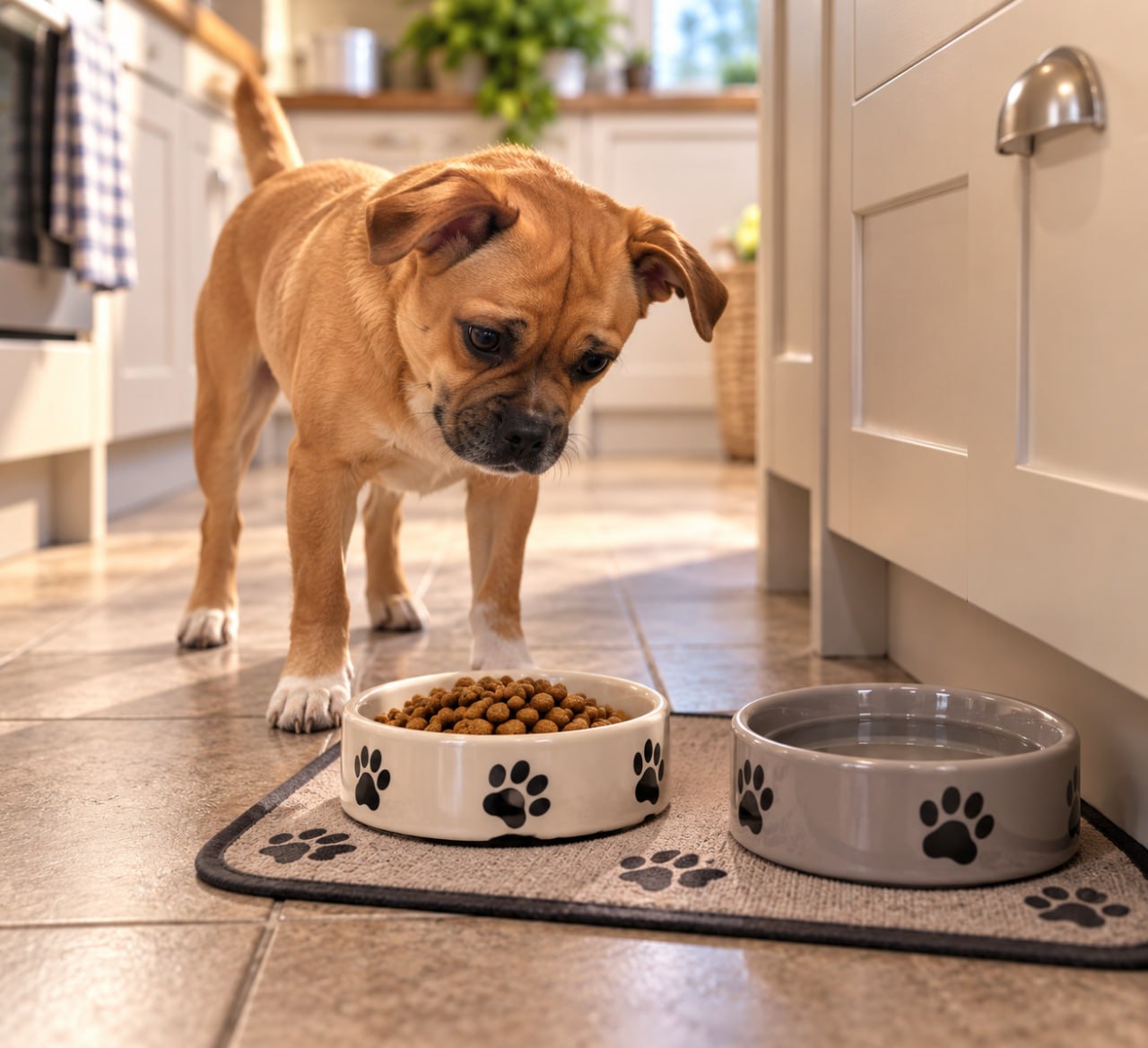
A washable mat beneath bowls can:
catch dropped food
contain some water spills
reduce bowl movement
make the feeding area easier to clean
Choose something with an appropriate non-slip surface and clean it regularly.
If your dog considers the mat itself an exciting chew toy, you’ll need to factor that into the choice too.
Nothing says “practical kitchen accessory” quite like finding half of it in the living room.
Automatic feeders
Automatic feeders can be useful in some circumstances.
They may help deliver a measured meal at a particular time or support certain household routines.
But they’re not a replacement for checking on your dog.
Machines can jam, batteries can fail and extremely determined dogs occasionally regard an automatic feeder as a puzzle whose correct solution is burglary.
If you use one, choose a design appropriate for the type of food, learn how it works and check it regularly.
For dogs with medical needs or strict feeding schedules, discuss appropriate routines with your vet rather than relying solely on technology.
Travel bowls and feeding away from home
A collapsible or lightweight travel bowl is one of the simplest pieces of dog equipment and often one of the most useful.
Keep one in the car or walking bag if you’re regularly away from home with your dog.
For longer trips, think about:
enough of your dog’s usual food
access to fresh water
a secure food container
any medication
a familiar bowl if your dog is particular about eating away from home
a simple way to measure normal portions
Changing everything about a dog’s routine simply because you’re travelling isn’t always necessary.
Sometimes familiar and boring is exactly what you want.
Treat storage
Treat pouches, jars and containers range from genuinely practical to hilariously elaborate.
For training walks, a treat pouch that’s easy to access and clean can be useful.
At home, secure storage matters more than aesthetics.
Keep food and treats somewhere your dog can’t help themselves.
And remember that treats are still food.
They need to be considered alongside the rest of your dog’s daily intake, particularly if you’re doing lots of reward-based training.
Our Food, Nutrition & Healthy Weight guide covers feeding and body condition in much more detail.
A quick feeding-equipment checklist
Before buying, ask:
Is it the right size for my dog?
Is it easy to clean?
Is it stable during use?
Is the material suitable for food or drinking water?
Does my dog actually need this feature?
Can everyone in the household use it consistently?
Will it help us measure or manage food more accurately?
Is there a simpler solution?
Can it be stored and cleaned easily?
Am I solving a real problem or buying a very attractive dog gadget?
There is nothing wrong with buying something because you like it.
Just don’t confuse nice to have with necessary.
Our product picks
As this guide develops, we’ll bring together practical feeding products that solve genuine everyday problems.
You may see categories such as:
Good everyday bowls
Stable, easy-to-clean options for normal food and water use.
Useful slow-feeding options
Products for dogs who may benefit from a more measured mealtime.
Food storage and measuring
Practical containers, scoops and scales that make consistent feeding easier.
Feeding mats
Simple washable options for messier eaters and drinkers.
Travel feeding essentials
Portable bowls and containers that are genuinely useful away from home.
Treat and training storage
Practical ways to keep rewards accessible when you need them.
We’ll explain why we’ve included each product, who it may suit and any drawbacks worth considering.
Affiliate links will always be clearly identified.
Before buying another feeding gadget…
Look at the problem first.
If your dog’s bowl slides across the floor, perhaps you need something more stable.
If portions keep creeping upwards, better measuring may help.
If two dogs keep swapping dinners, separate feeding spaces may solve more than buying two expensive new bowls.
And if everything already works perfectly well?
You may not need to change anything.
Good feeding equipment should make everyday care simpler, safer or easier to manage. If it doesn’t, it’s probably just taking up cupboard space.