PRODUCT GUIDES STAGE 02
Toys, Chews & Enrichment
Play isn’t just entertainment. It’s part of being a dog.
Open the average dog’s toy box and you may find a strange collection of balls, ropes, squeakers, chews and unidentified objects that were once considerably more intact.
Some dogs adore toys.
Some have one particular favourite.
Some destroy anything with a squeaker in approximately seventeen seconds.
And others would rather spend twenty minutes investigating an interesting smell in the garden.
There isn’t one type of play that suits every dog.
The useful question isn’t simply:
What’s the best dog toy?
It’s:
What does my dog actually enjoy doing?
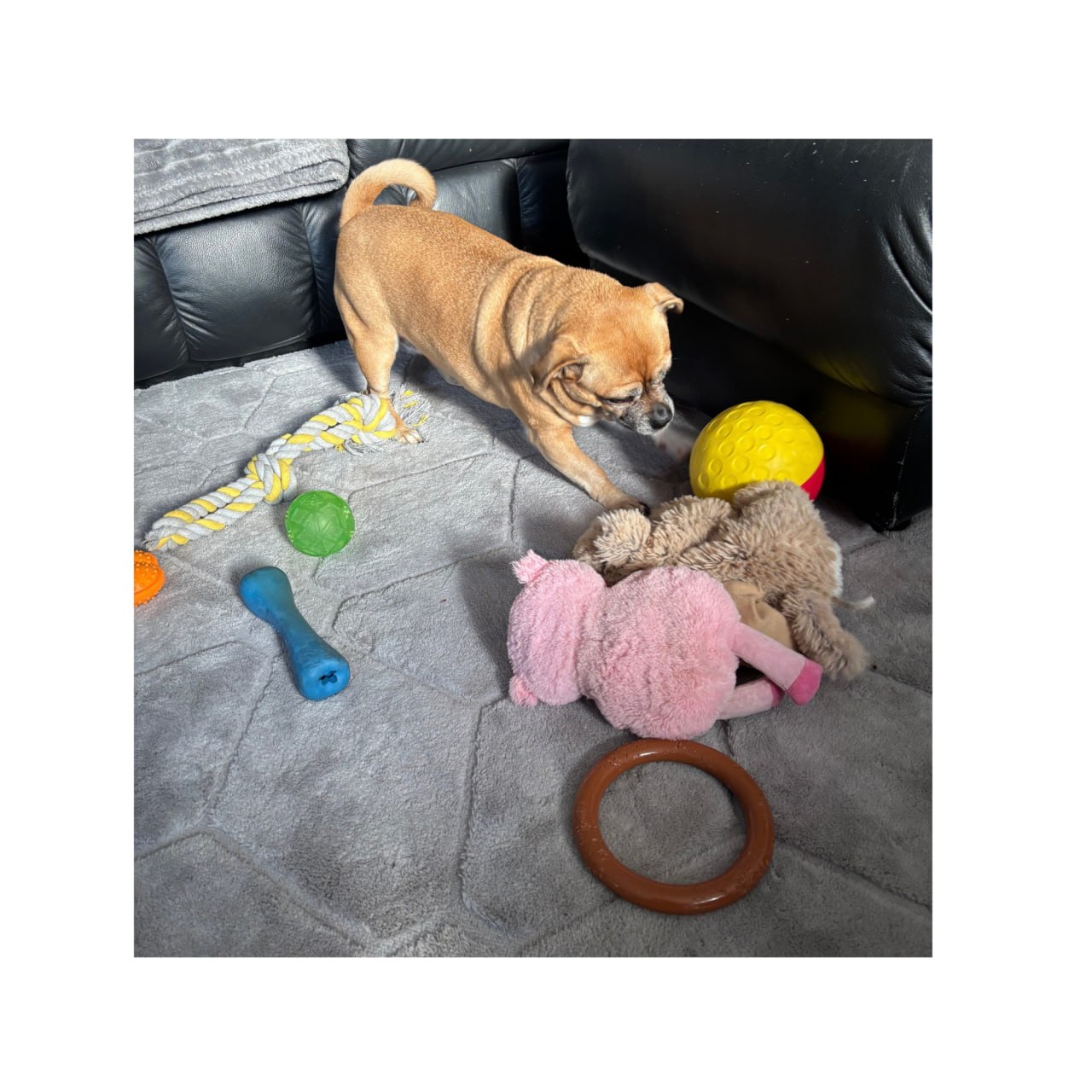
Choose Toys That Suit How Your Dog Likes to Play
Watch how your dog naturally likes to play.
Do they chase?
Carry things?
Tug?
Chew?
Search?
Shred?
Solve problems to reach food?
Prefer playing with you rather than entertaining themselves?
A dog who loves chasing a moving object may have little interest in a complicated puzzle.
A dog who enjoys chewing may value something completely different from one who wants to carry a soft toy around the house.
Some dogs enjoy several different types of play, so offering a variety of suitable toys can help keep them interested.
Understanding how your dog likes to play makes choosing toys considerably easier.
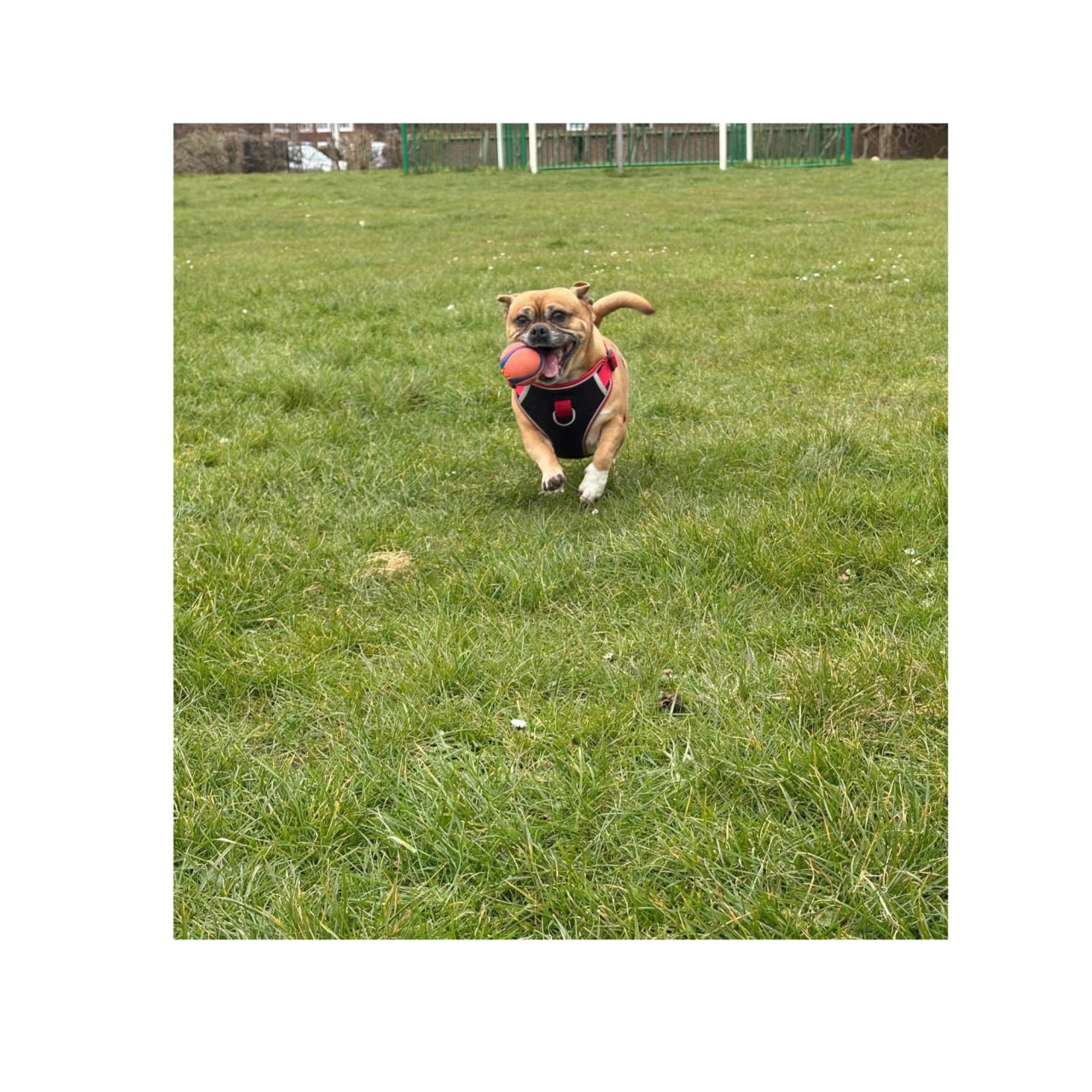
Balls and chase toys
Balls are simple, but even they come with choices.
Size matters.
A ball should be large enough that it isn’t an obvious choking risk for your particular dog while still being comfortable for them to carry.
Material matters too.
Some dogs are gentle carriers. Others can dismantle a supposedly sturdy ball surprisingly quickly.
Inspect toys regularly for splits, loose pieces and damage.
And remember that throwing a ball repeatedly isn’t the only way to play.
You can hide it, roll it, use it during a search game or simply play together for a few minutes.
For dogs who become extremely excited by repetitive chasing, mixing ball play with calmer activities can help make the outing more varied.
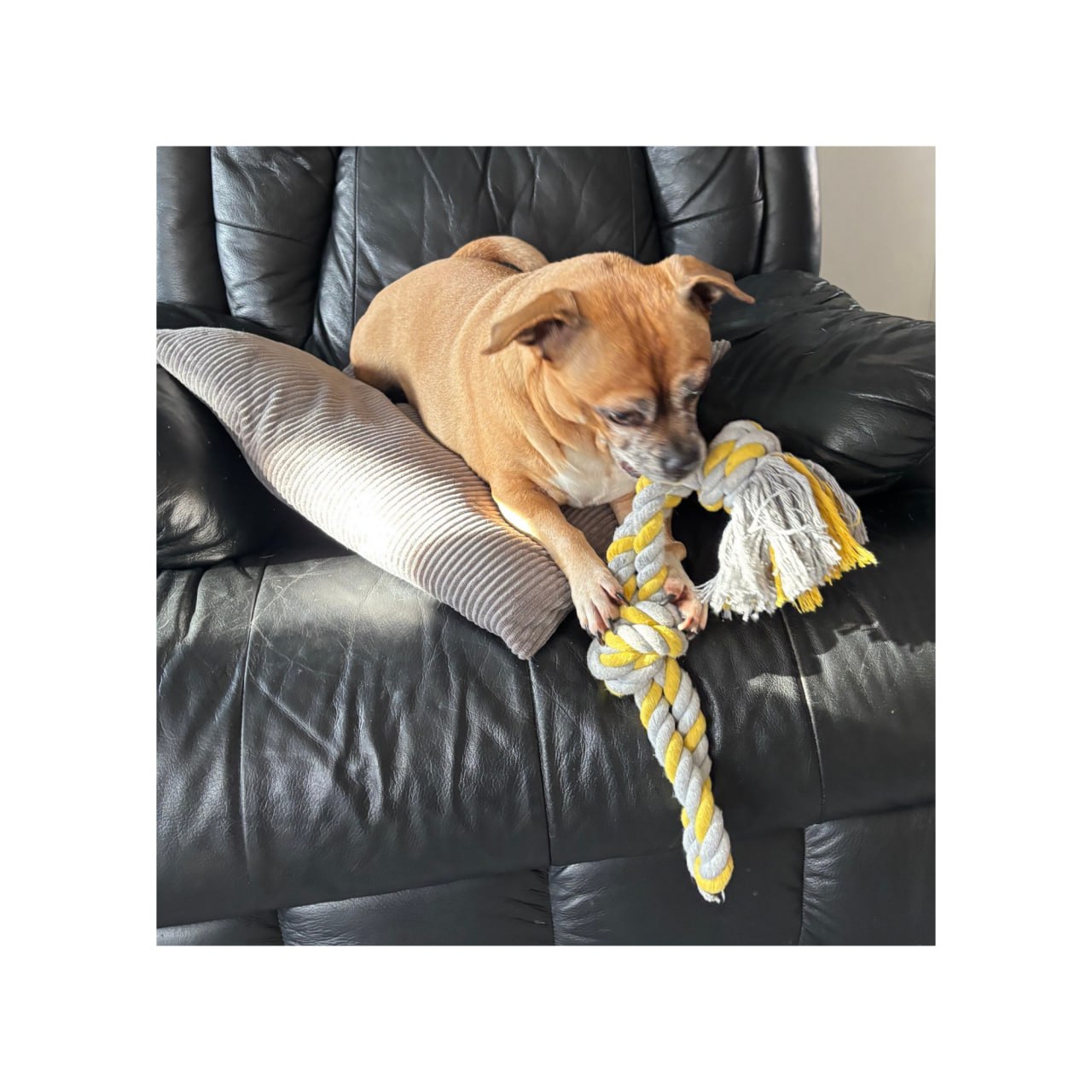
Tug toys
Tug can be a brilliant interactive game.
A suitable tug toy gives both you and your dog somewhere comfortable to hold, with enough length to keep enthusiastic teeth away from fingers.
Let the game involve some give and movement rather than violently jerking your dog’s neck from side to side.
Teach a reliable drop or trade so the game can pause and restart easily.
Despite some outdated advice, there’s nothing wrong with letting your dog win a game of tug. Allowing them to take the toy occasionally can be part of an enjoyable game together. What matters is that play stays safe, your dog is comfortable, and you can both stop when needed.
Soft toys
Some dogs carry soft toys gently, sleep with them or parade them proudly around the house.
Others immediately conduct a full internal investigation.
If your dog removes stuffing, squeakers, eyes or other pieces, supervise carefully and remove damaged toys before pieces can be swallowed.
Check seams regularly.
A soft toy that’s perfectly suitable for one dog may last only minutes with another.
That doesn’t necessarily make either dog unusual.
It simply means we need to choose and supervise accordingly.
Chew toys
Chewing is normal dog behaviour.
Providing appropriate things to chew can give dogs an outlet for that behaviour while helping your furniture retain something resembling its original shape.
Choose chews and chew toys that are appropriate for your dog’s size, chewing style and individual needs.
Anything that breaks into pieces, becomes small enough to swallow or develops sharp edges needs attention.
Very hard products can also carry a risk of dental damage.
If you’re unsure whether a particular chew is appropriate, especially for a dog with dental problems, ask your vet.
“Indestructible” is a marketing word, not a guarantee.
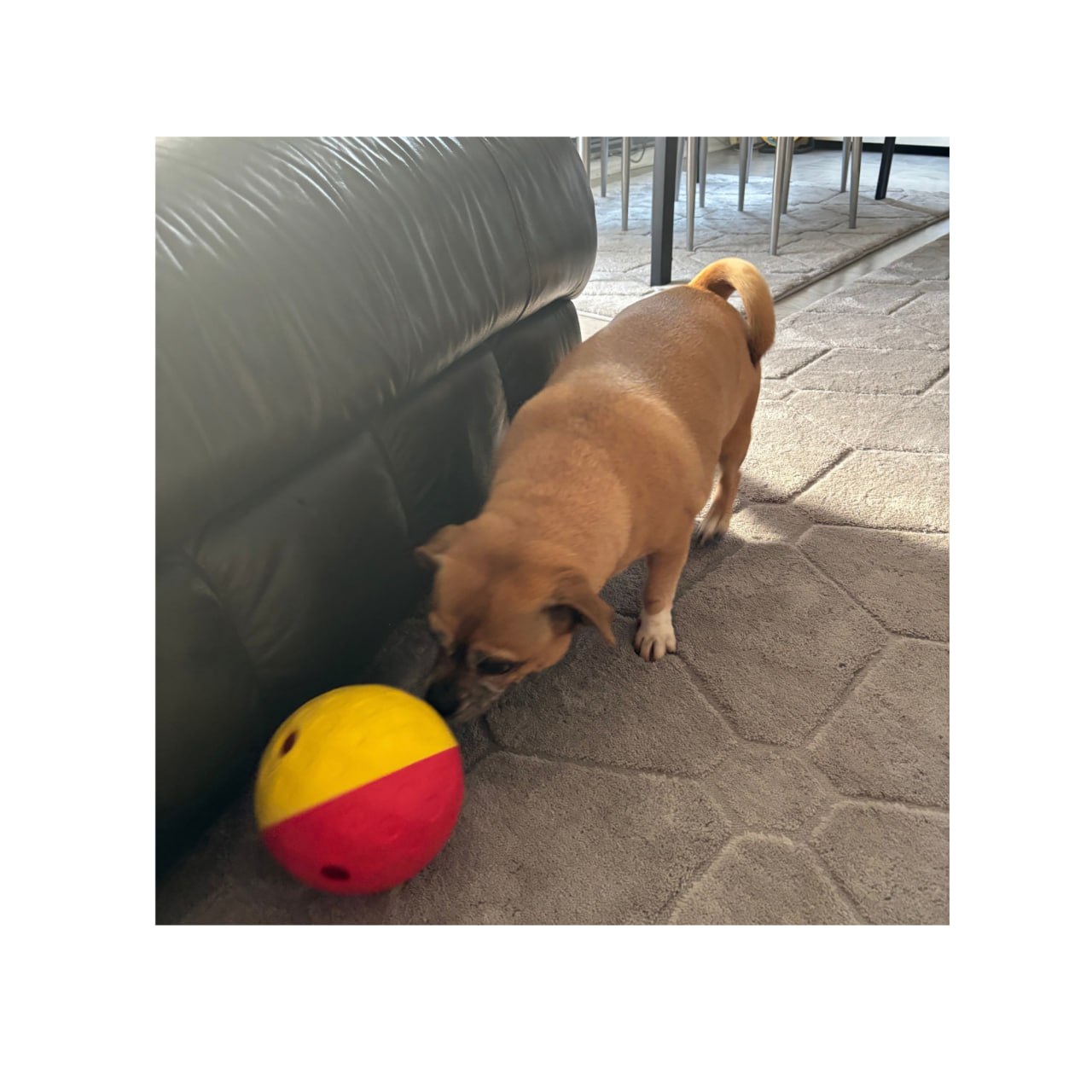
Food toys and puzzle feeders
Food doesn’t always have to arrive in a bowl.
Suitable food-dispensing toys, puzzle feeders and other enrichment activities can encourage dogs to sniff, lick, manipulate objects and work things out.
Start easy.
A puzzle that’s too difficult isn’t automatically more enriching.
If your dog can’t work out how to access the food and simply becomes frustrated, make the task easier.
Once they understand the game, you can gradually increase the challenge.
Puzzle feeders can provide valuable mental stimulation, but remember that any food or treats used still contribute to your dog’s daily calorie intake.
Sniffing counts as enrichment
You don’t necessarily need to buy anything.
Scatter some of your dog’s food safely in grass and let them search.
Hide suitable treats around a room.
Use cardboard boxes for supervised searches where appropriate.
Allow plenty of time to investigate interesting smells during a walk.
Try simple “find it” games.
Enrichment is about giving dogs appropriate opportunities to use their brains and natural behaviours.
It isn’t about owning the most elaborate collection of puzzle toys on the internet.
Some of the best enrichment costs absolutely nothing.
Rotate rather than accumulate
If your dog’s toy box is beginning to require its own postcode, you probably don’t need another twelve toys available at once.
Try keeping a smaller selection out and rotating them.
A toy that disappeared into a cupboard for a week or two can suddenly become interesting again when it returns.
Rotation also gives you a useful opportunity to inspect toys properly for damage.
Keep genuine favourites available where appropriate, particularly if your dog uses them for comfort.
The objective isn’t to confiscate everything interesting.
It’s simply to keep play varied without continually buying more.
When dogs destroy toys
Toy destruction doesn’t necessarily mean your dog is being naughty.
For some dogs, pulling, ripping and dissecting are part of what makes the activity rewarding.
The challenge is allowing appropriate behaviour without creating unnecessary risk.
Supervise dogs who are likely to dismantle toys.
Remove loose stuffing, fabric, rope strands, squeakers or other pieces before they can be swallowed.
If your dog routinely eats non-food items rather than simply destroying them, speak to your vet.
And if every soft toy ends its life looking like a small explosion occurred in the living room, perhaps stop buying expensive soft toys.
Children, dogs and toys
Children and dogs can have wonderful relationships, but toys can add excitement and sometimes competition.
Teach children not to snatch toys, food or chews from a dog.
If a dog is uncomfortable about people approaching valued items, growls, freezes or shows other concerning behaviour, don’t turn it into a confrontation.
Manage the situation safely and seek appropriate professional help.
Our Training & Behaviour section explains more about resource guarding and where to look for qualified support.
Choosing a Toy That’s the Right Size for Your Dog
Toy size is an important safety consideration. Manufacturers often label toys as suitable for small, medium or large dogs, but these labels are only a guide. Consider your dog’s mouth size, chewing strength and how they play. A toy that’s too small could become lodged in their mouth or throat, or be swallowed, so always check that it’s an appropriate size for your individual dog.
Something appropriate for a tiny dog may be dangerously small for a much larger one.
Equally, a toy designed for a large powerful dog may be too heavy or awkward for a small dog to use comfortably.
Look at manufacturer size guidance, but use your judgement too.
Consider your dog’s mouth size, strength and how they actually interact with toys.
If something can become lodged in your dog’s mouth or swallowed whole, it isn’t the right size.
A quick toy-buying checklist
Before buying, ask:
Does this suit how my dog actually likes to play?
Is it an appropriate size?
Is the material suitable for my dog’s chewing style?
Are there small parts that could become detached?
Does this need supervision?
Can it be cleaned?
Is it replacing something useful, or simply joining the pile?
Could I provide the same kind of enrichment without buying anything?
If food is involved, have I accounted for those calories?
Taking a moment to check that a toy is safe and suitable for your dog can help you avoid unnecessary purchases and reduce the risk of accidents or injuries.
Our product picks
As this guide develops, we’ll bring together toys and enrichment products for different types of play.
Rather than producing one enormous “best dog toys” list, we’ll organise recommendations by what the product is actually useful for.
You may see categories such as:
Good for interactive play
Tug toys and other products designed for dogs and people to enjoy together.
Good for chasing and retrieving
Appropriately sized balls and chase toys for dogs who enjoy movement.
Good for food enrichment
Food-dispensing toys and puzzles with different levels of challenge.
Good for dogs who love to chew
Options selected with size, material and chewing style in mind.
Soft and comfort toys
For dogs who enjoy carrying, cuddling or gentler play.
We’ll explain why we’ve included something, what type of dog it may suit and any limitations worth knowing about.
Affiliate links will be clearly identified.
Before buying another toy…
Before buying another toy, take a moment to think about the toys your dog already owns and which ones they genuinely enjoy playing with.
Which toys do they actually choose?
Which ones have been ignored since the day they arrived?
Which activities make your dog come alive?
Those answers are more useful than the words “must-have dog toy” on an advert.
The best toy isn’t necessarily the cleverest one. It’s the one that gives your dog a safe, enjoyable way to do something they love.