PRODUCT GUIDES STAGE 05
Grooming & Everyday Care
The right grooming kit isn’t the biggest one. It’s the one that suits your dog.
Walk into the grooming aisle of a pet shop and you’d be forgiven for wondering whether owning a dog requires professional qualifications and a spare cupboard.
Brushes. Combs. Rakes. Clippers. Shampoos. Conditioners. Paw cleaners. Towels. Nail grinders. Toothbrushes. Sprays for things you didn’t previously know needed spraying.
Some are genuinely useful.
Some are designed for particular coats or needs.
And some may spend several years looking impressive in a drawer.
The best place to start isn’t with the product.
It’s with your dog.
Choose Grooming Tools That Suit Your Dog’s Coat Type
Dogs don’t all need the same grooming equipment.
A short, smooth coat has very different requirements from a long coat, a curly coat, a dense double coat or one that’s particularly prone to tangles.
Before buying a brush because it has excellent reviews, ask whether it’s designed for your dog’s type of coat.
Depending on the dog, useful tools might include:
A soft or bristle brush, a rubber grooming brush or mitt, a pin brush, a slicker brush, a comb, an undercoat rake, and specialist detangling equipment.
You probably don’t need all of them.
If you’re unsure what suits your dog’s coat, a good professional groomer can be an excellent person to ask.
The most expensive brush in the shop is still the wrong brush if it’s uncomfortable or inappropriate for the dog using it.
Brushing should be comfortable
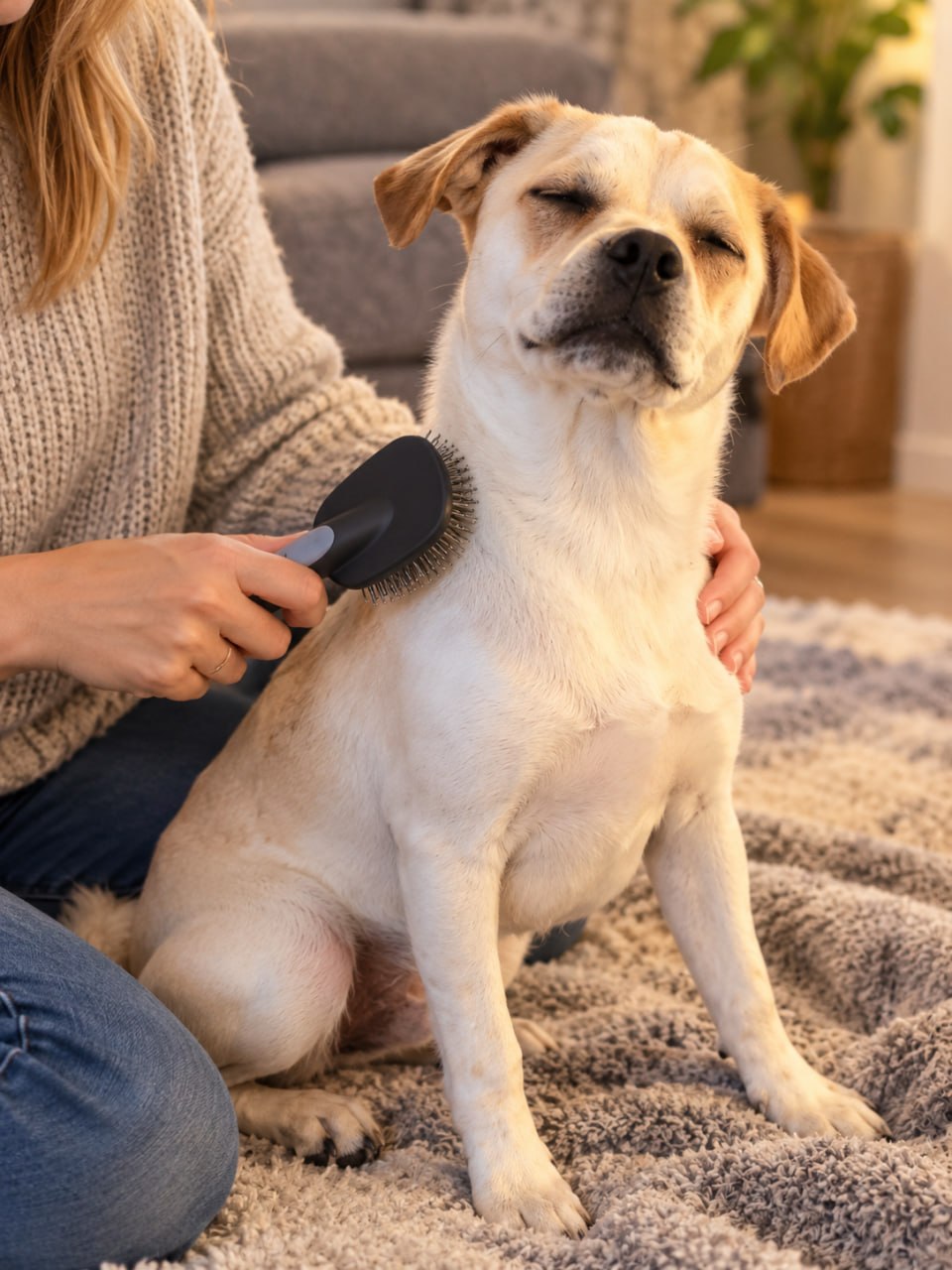
A useful grooming tool should remove loose hair, help you manage the coat and allow you to work without repeatedly pulling at your dog’s skin.
Use brushes and combs gently.
Pay particular attention to areas where tangles can develop, which may include behind the ears, under collars or harnesses, around the legs and other friction points depending on the dog’s coat.
Don’t drag a brush through a difficult mat.
Tight matting can be uncomfortable and may sit very close to the skin. Attempting to cut it out with household scissors can cause injury surprisingly easily.
If you’re faced with significant matting or aren’t confident dealing with it, ask a professional groomer for help.
Regular, manageable grooming is much nicer than turning occasional grooming into an endurance event for everybody involved.
Help puppies learn that handling is normal
Grooming becomes considerably easier when a dog is comfortable being handled.
You don’t need to wait until a puppy desperately needs a full grooming session.
Briefly and gently get them used to having their paws touched, ears looked at, body brushed and mouth handled.
Keep sessions short.
Reward calm cooperation.
Let grooming equipment become ordinary rather than something that suddenly appears twice a year followed by forty minutes of negotiation.
The aim isn’t to force a dog to tolerate everything.
It’s to build familiarity gradually so everyday care becomes easier for both of you.
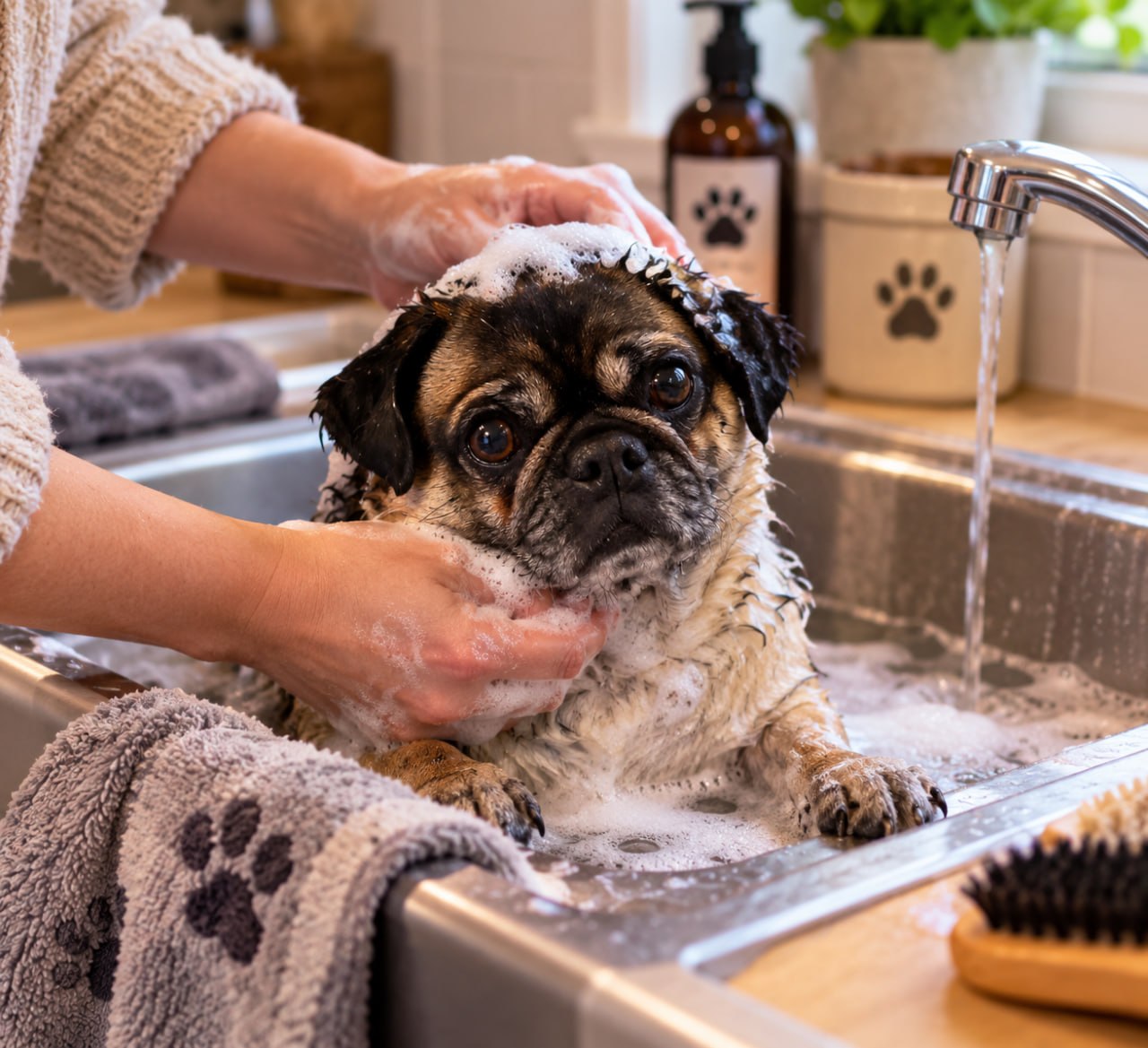
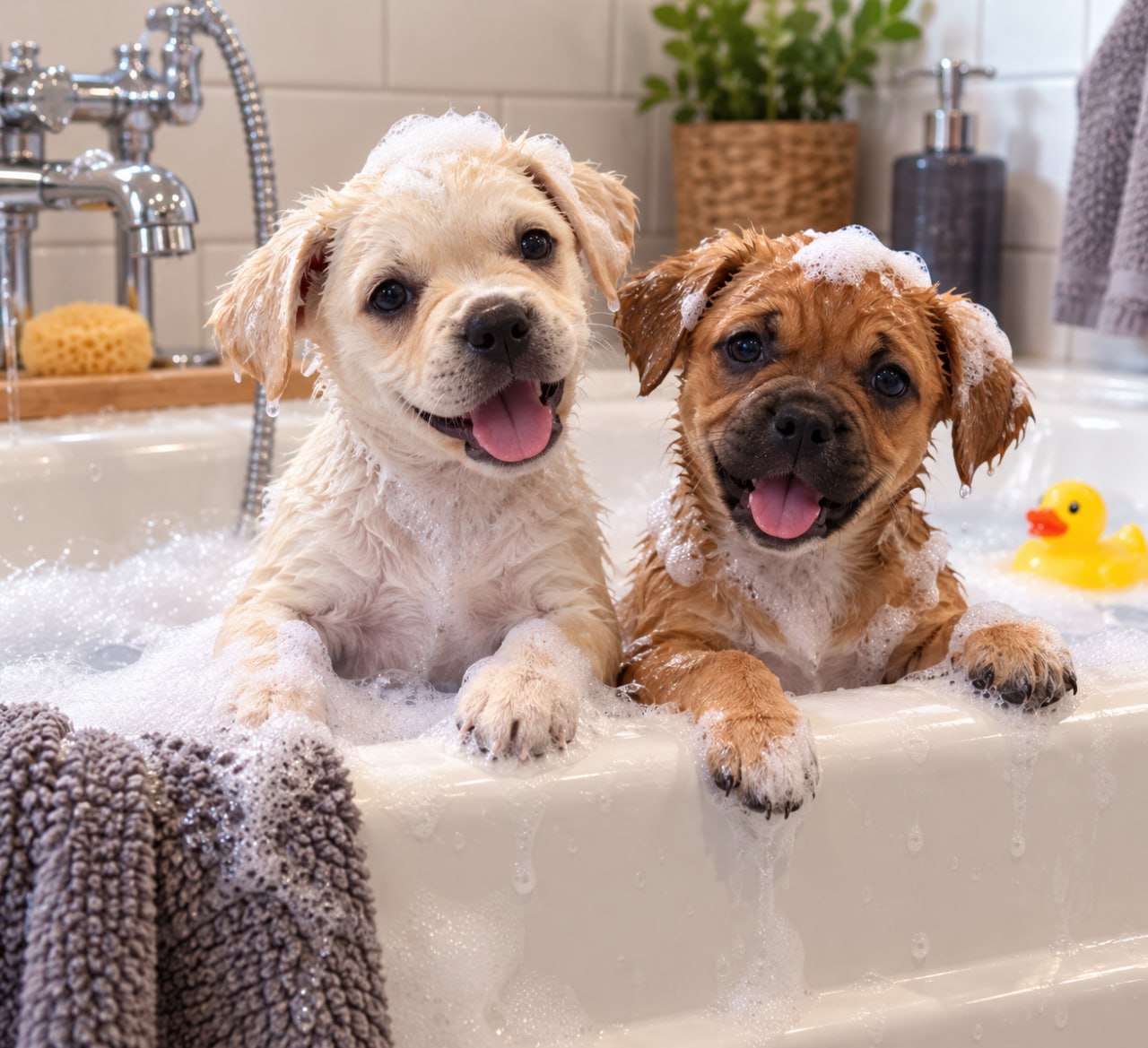
How Often Should You Bathe Your Dog?
Dogs need bathing sometimes.
That doesn’t mean every dog needs a weekly spa appointment.
How often a dog needs bathing depends on their coat, lifestyle, skin and individual circumstances.
When you do bathe them, choose a product intended for dogs rather than reaching for your own shampoo.
Human and canine skin aren’t the same, and products designed for people aren’t automatically appropriate for dogs.
If your dog has a skin condition, persistent itching, soreness, unusual odour or another concern, speak to your vet before experimenting with an assortment of shampoos and treatments.
If your dog needs a medicated shampoo or treatment, ask your vet which product is appropriate rather than choosing one based solely on online reviews.
Choosing dog shampoo
For routine bathing, you usually don’t need a bathroom shelf containing twelve different bottles.
Look for a dog shampoo appropriate for your dog’s age, coat and needs, and follow the instructions carefully.
Be cautious about products making extravagant claims.
Words such as *natural*, *luxury* or *premium* don’t automatically tell you whether a product is suitable for your particular dog.
If you’re trying a new routine product, watch for any signs that your dog’s skin doesn’t agree with it.
And remember that shampoo is for cleaning.
If you’re trying to treat a health problem, that’s a different job.
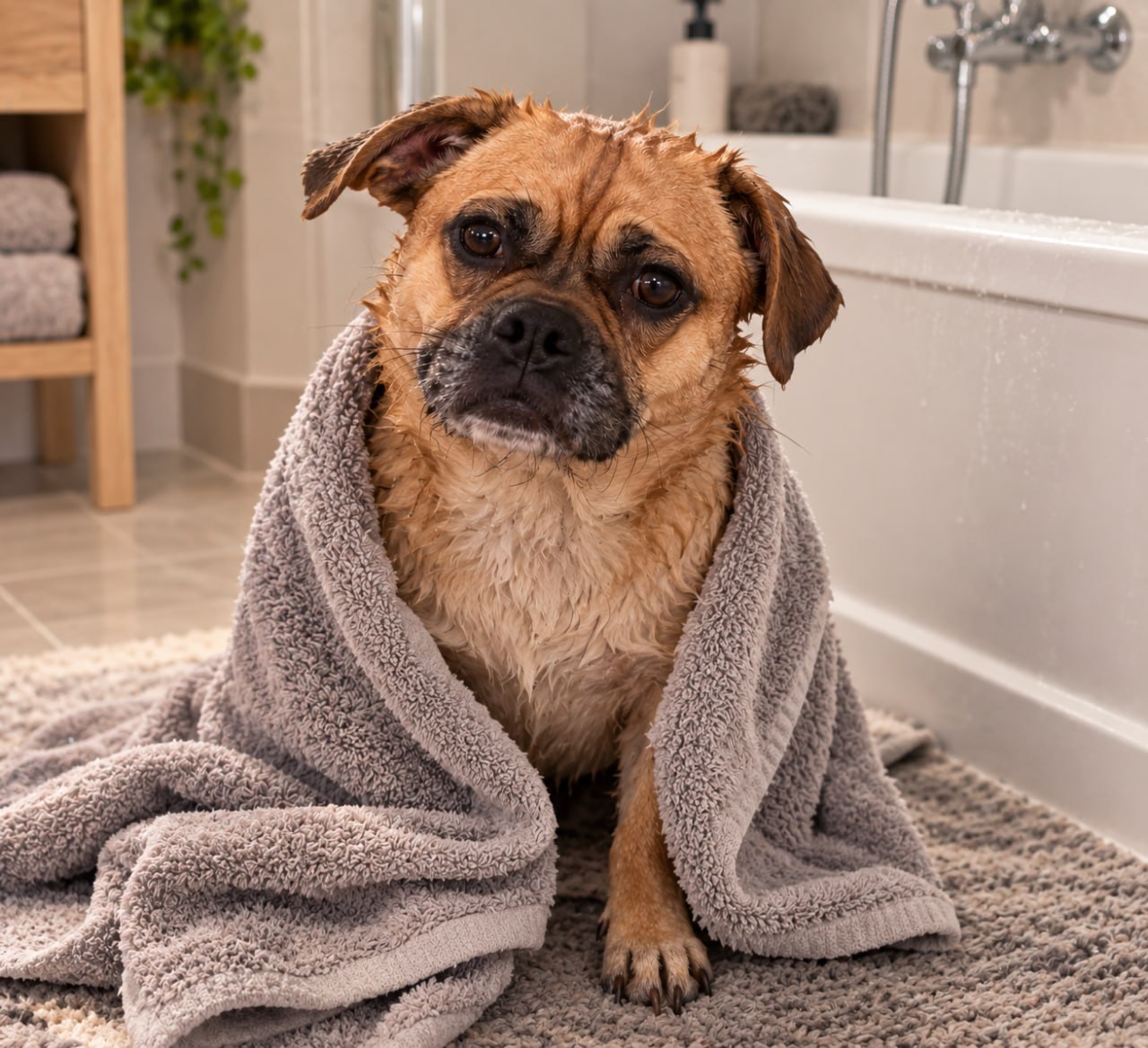
How to Dry Your Dog After a Bath
There is something almost impressive about how much water one relatively small dog can transfer to an entire house.
A good absorbent towel is therefore not glamorous, but it is useful.
Microfibre dog towels can be convenient because they’re absorbent and generally easier to manage than sacrificing the household’s best bath towels every time somebody finds a muddy puddle.
Dry gently, particularly around sensitive areas.
Dogs with thicker or longer coats may take considerably longer to dry than they appear to.
If you use electrical drying equipment, it needs to be appropriate and used safely. Heat, noise and airflow can all be uncomfortable or frightening if poorly managed.
For many ordinary wet walks and baths, however, the technological breakthrough known as a decent towel remains remarkably effective.
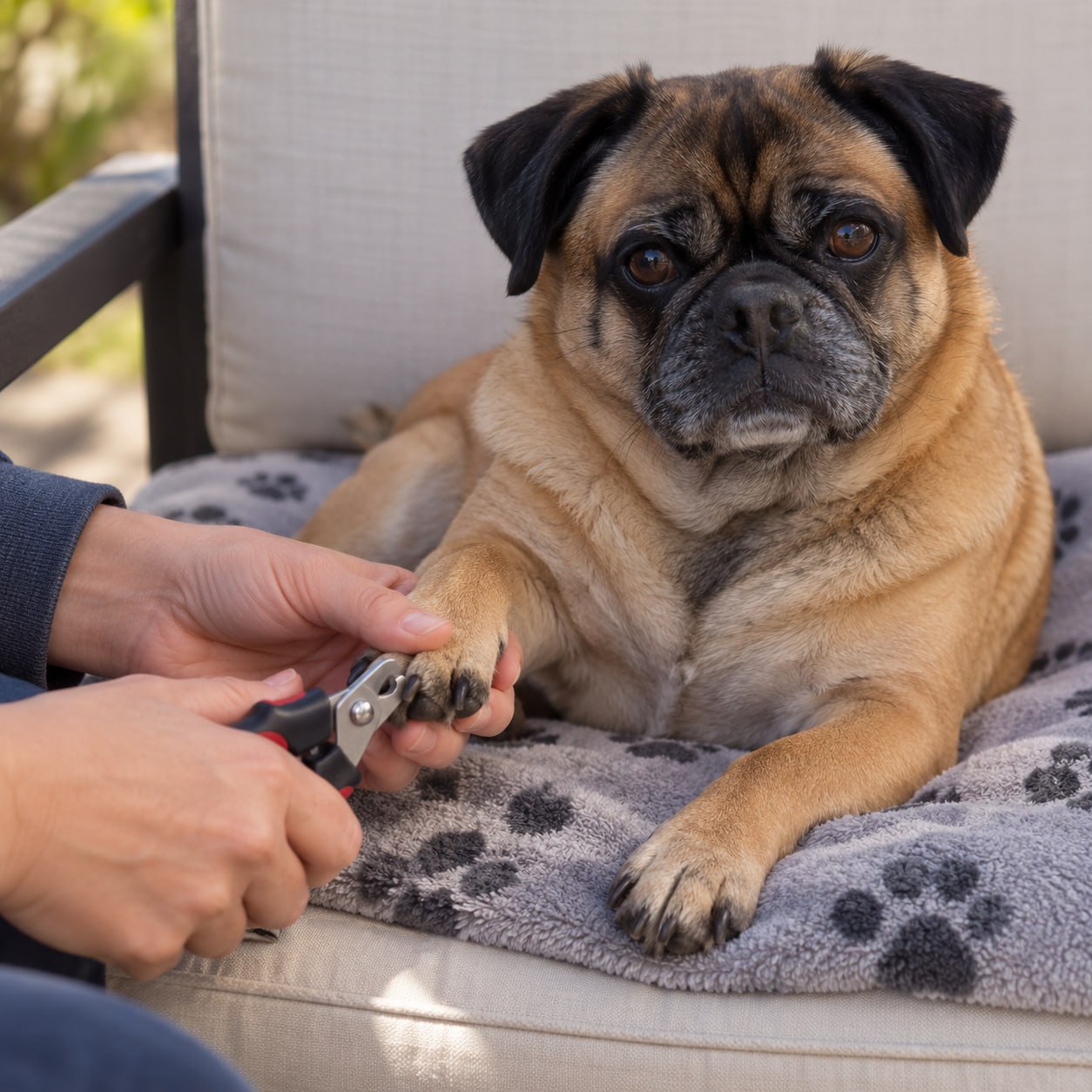
Nail care
Nails that become too long can affect comfort and movement, so checking them should be part of normal care.
There are several options for home nail maintenance, including:
Traditional dog nail clippers, scissor-style clippers, guillotine-style clippers, and nail grinders.
Which works best depends partly on the dog’s nails and partly on what both dog and owner are comfortable using.
Whichever tool you choose, learn how to use it before approaching the paw.
Inside a dog’s nail is living tissue commonly called the quick. Cutting into it is painful and causes bleeding.
The quick can be particularly difficult to see in dark nails.
If you’re not confident, ask your vet, veterinary nurse or groomer to show you what to do, or let them take care of the nails for you.
There is no medal for doing every aspect of dog care yourself.
Nail grinders
Electric grinders are popular because they allow small amounts of nail to be removed gradually.
Some owners prefer the control.
Some dogs prefer clippers.
Some dogs hear the grinder switch on and immediately file a formal complaint.
Noise and vibration can take time to get used to, so introduce equipment gradually rather than expecting instant cooperation.
A grinder isn’t automatically safer simply because it’s electric. It still needs to be used correctly and carefully.
Choose the method that works safely for the dog in front of you.
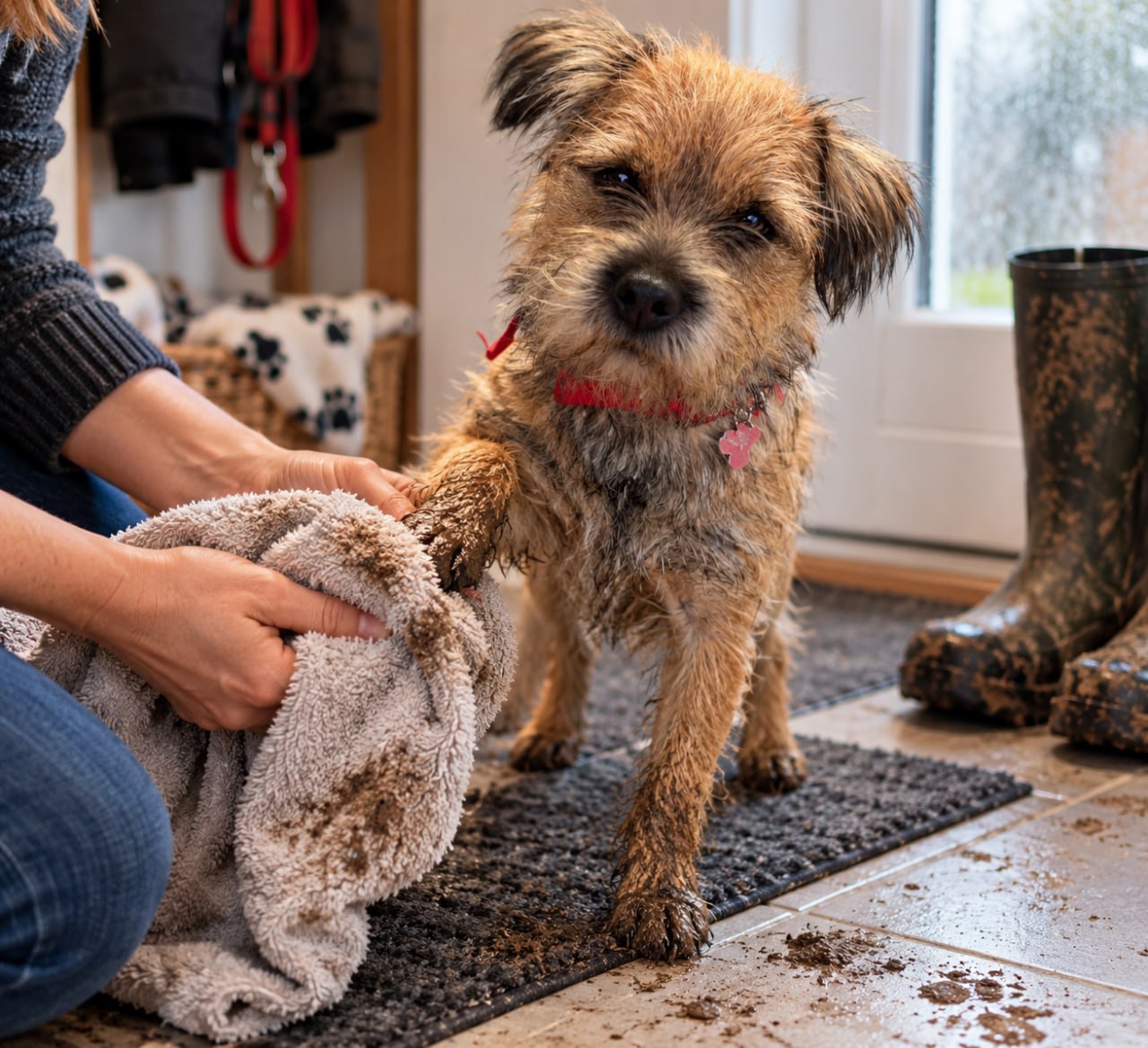
Paws after walks
Paw care doesn’t require an elaborate beauty routine.
Often it means simply checking feet after walks, particularly after muddy outings or walks where grit, debris, ice or other irritants may have been encountered.
A towel near the door may be one of the hardest-working pieces of dog equipment you own.
Paw-cleaning cups and similar products can be useful for some households, especially with particularly muddy dogs, but they’re optional rather than essential.
If you use paw balms or other topical products, choose something specifically suitable for dogs and remember that anything applied to a paw may subsequently be licked.
Persistent licking, soreness, swelling, broken skin or changes to the pads deserve proper attention rather than repeated experiments with grooming products.
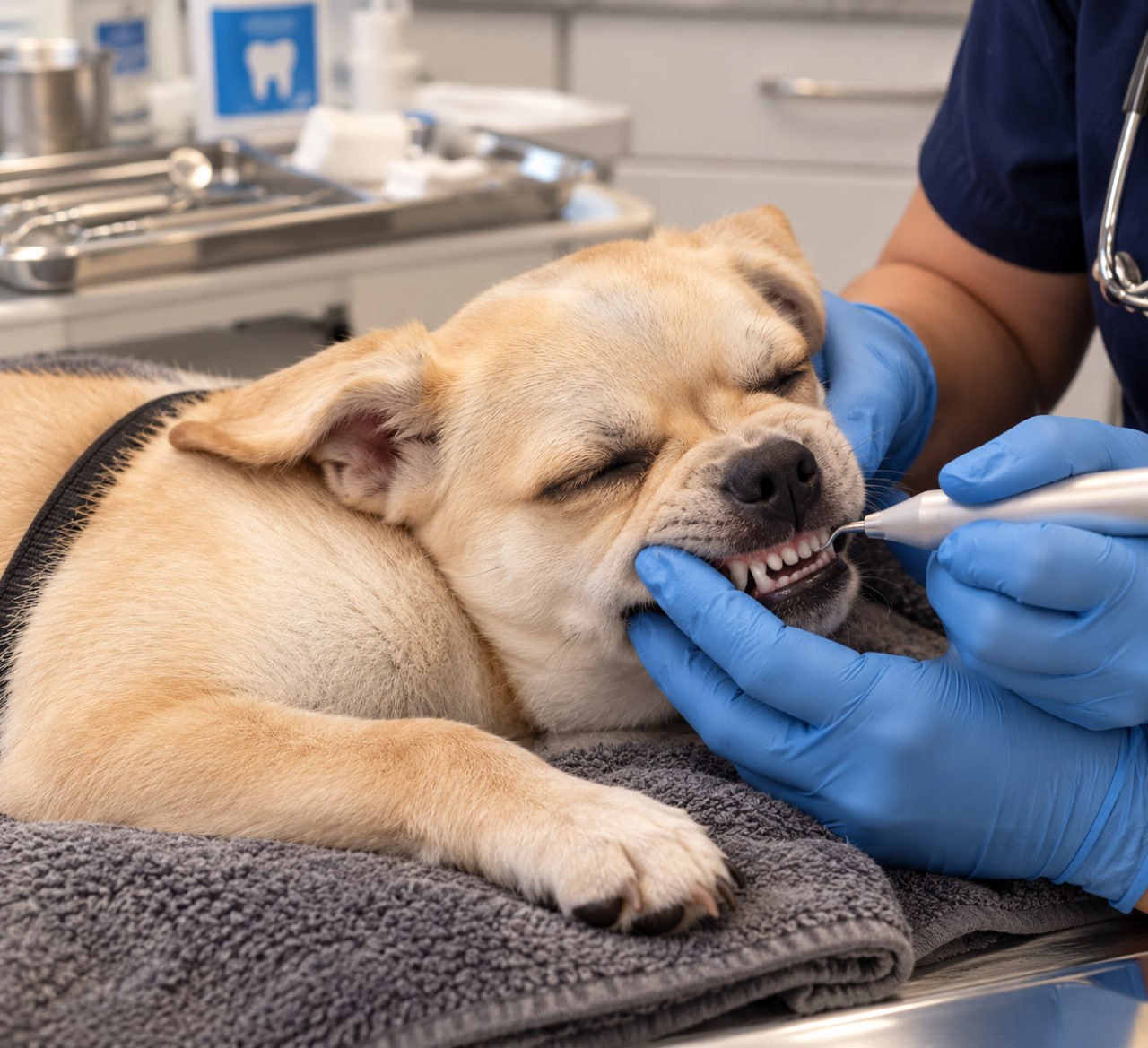
Choosing the Right Toothbrush and Toothpaste for Your Dog
There are lots of dental care products available for dogs, but the basic equipment for brushing their teeth is straightforward.
A dog-appropriate toothbrush and toothpaste are the usual starting point.
Never use human toothpaste for your dog. Some ingredients used in human products can be unsuitable or dangerous for dogs.
Choose dental products intended specifically for dogs and introduce brushing gradually.
Finger brushes can suit some dogs and owners, while others find a conventional dog toothbrush easier.
What matters most is having an appropriate routine that you can actually maintain.
Our Grooming, Teeth, Skin & Coat guide covers everyday dental care in more detail.
Dental products aren’t all equal
You’ll find dental chews, powders, water additives, gels, sprays and an ever-growing collection of products promising fresher breath or cleaner teeth.
Don’t assume that every product labelled “dental” provides the same benefit.
Where possible, look for products supported by credible evidence rather than relying entirely on packaging claims.
And don’t use dental products to disguise a problem.
Persistent bad breath, pain, difficulty eating, bleeding gums, damaged teeth or heavy tartar need veterinary attention.
Mint flavouring is not a dental diagnosis.
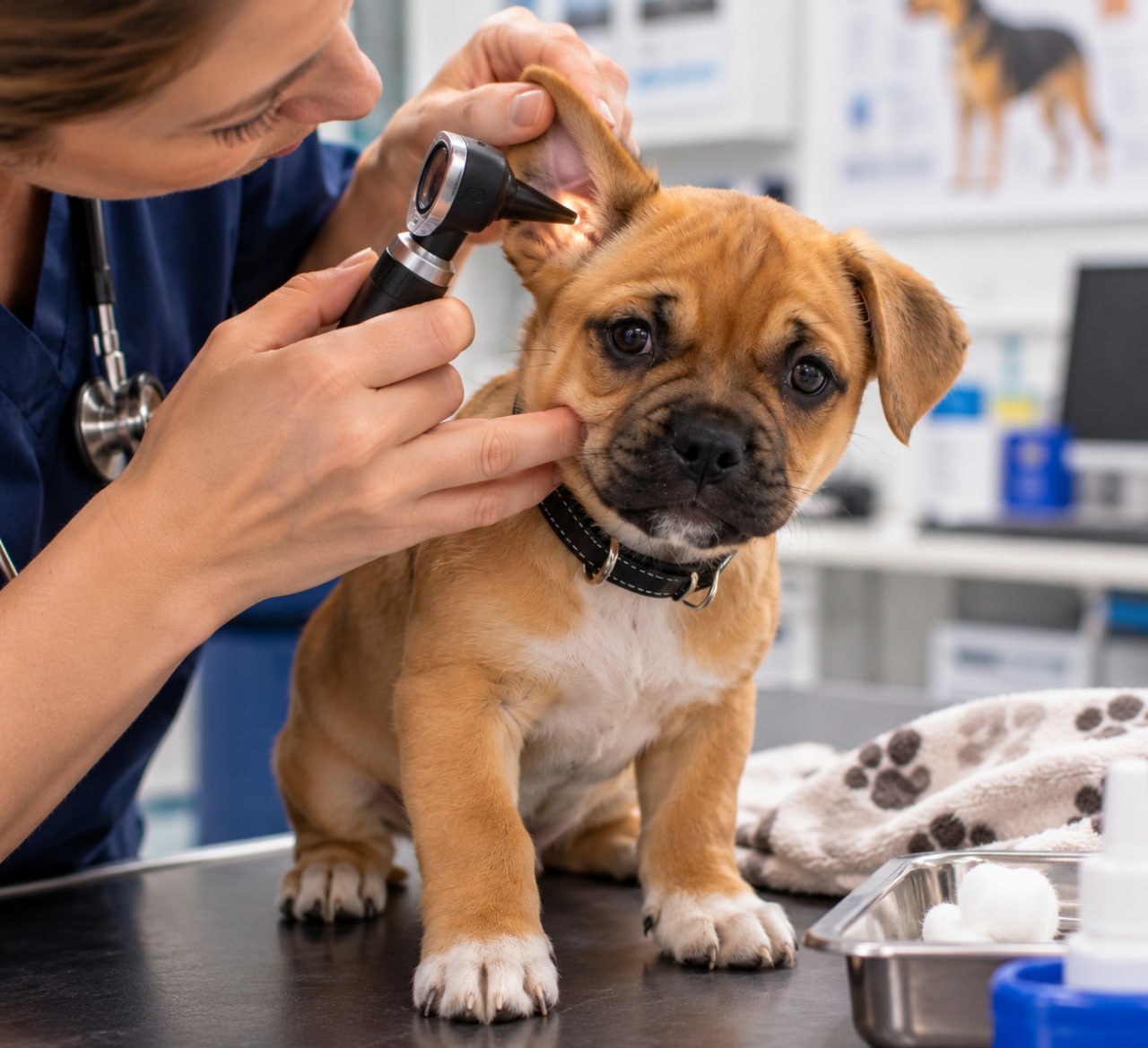
Eyes and ears: cleaning isn’t always the answer
Everyday grooming gives you an opportunity to notice changes around your dog’s eyes and ears.
But that doesn’t mean routinely putting cleaning products into them without a reason.
If your vet or groomer has recommended a particular ear-cleaning routine, use an appropriate product as directed.
Otherwise, be wary of treating redness, discharge, persistent scratching, smell or discomfort as something that simply needs a stronger bottle of cleaner.
Those signs can have different causes.
Sometimes the most useful grooming tool is knowing when to stop grooming and make an appointment.
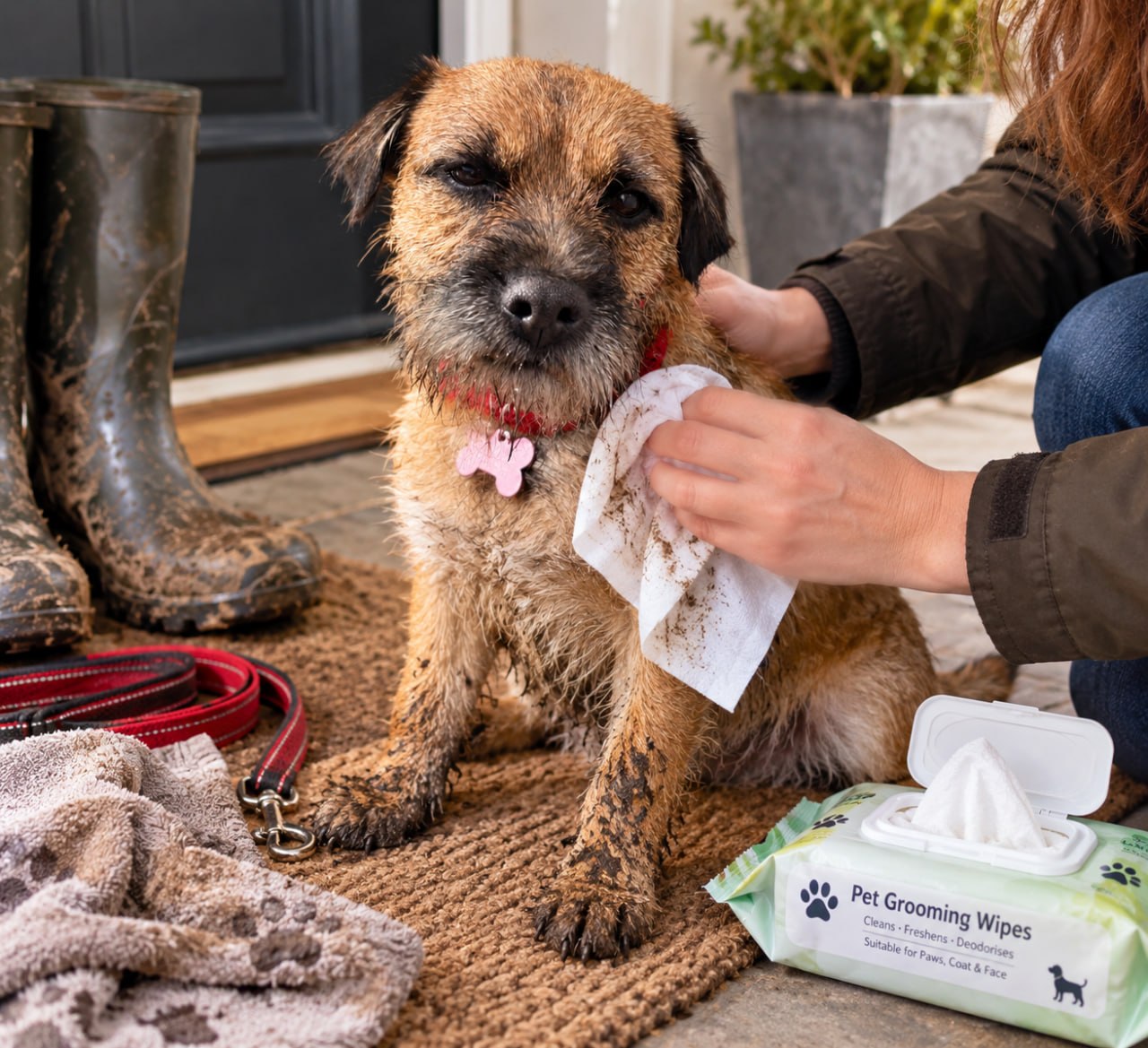
Grooming wipes and everyday clean-ups
Dog wipes can be convenient for small cleanups, particularly for muddy paws or surface dirt, when a full bath isn’t necessary.
Choose products designed for dogs and use them only as intended.
They’re a convenience, not a substitute for bathing when a dog genuinely needs washing, and certainly not a treatment for skin disease.
For many minor disasters, a damp cloth or towel will perform the job perfectly well.
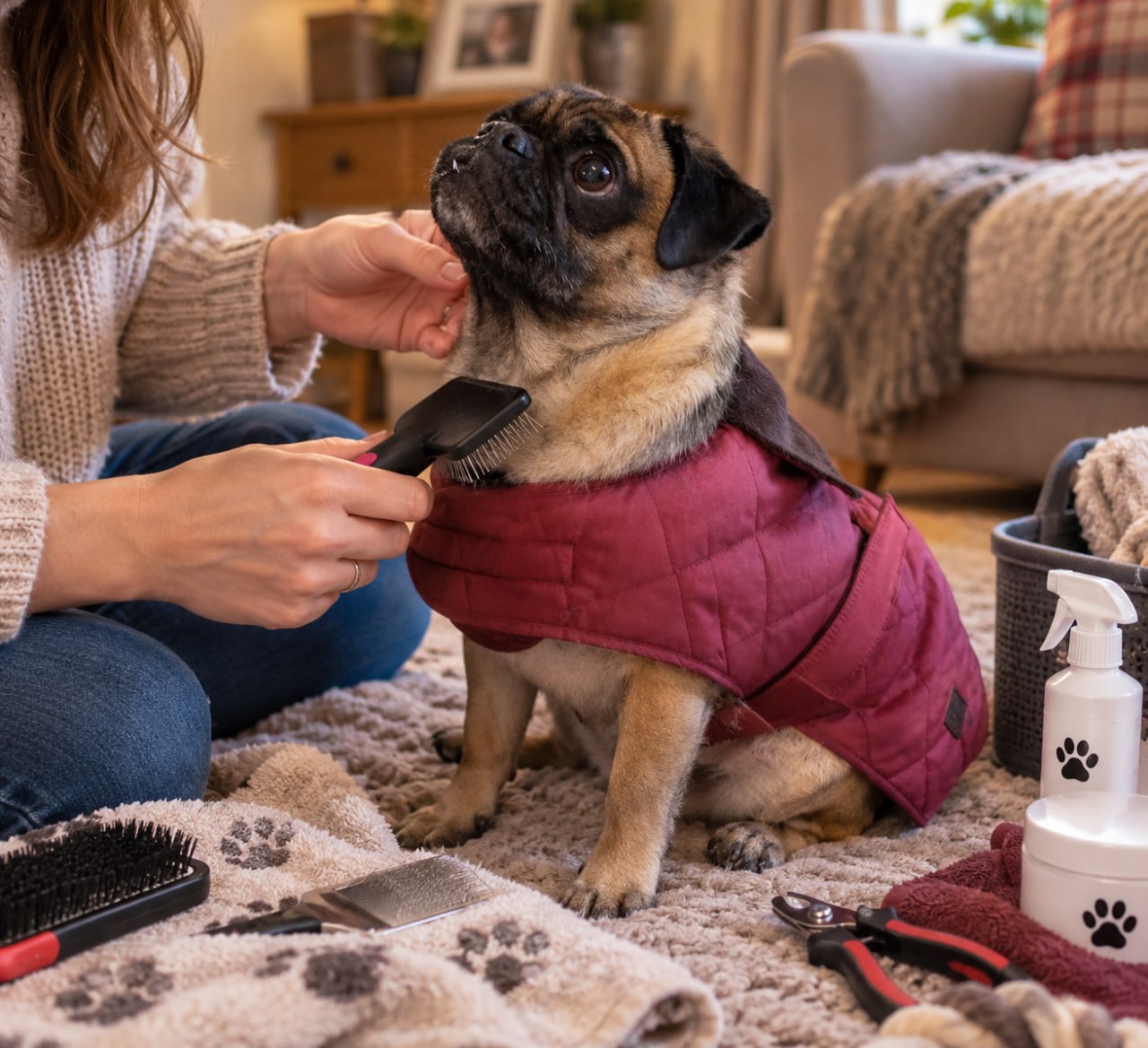
Home grooming or professional groomer?
Doing some grooming at home can save money and make everyday coat care easier.
That doesn’t mean you have to do everything.
A professional groomer may be particularly helpful for:
coats requiring clipping or specialist maintenance
significant matting
dogs whose nails are difficult to manage safely
owners who aren’t confident using particular tools
coat or grooming requirements you’re unfamiliar with
Choose your groomer thoughtfully.
Ask how dogs are handled, what methods are used and what happens if a dog becomes frightened or distressed.
A good grooming experience isn’t simply about how tidy the dog looks afterwards.
How the dog is treated matters too.
Keep grooming equipment clean
Brushes collect hair.
Combs collect debris.
Towels stay damp.
Toothbrushes live in mouths.
None of this equipment improves through indefinite neglect.
Remove accumulated hair from brushes and combs and clean equipment according to the manufacturer’s instructions.
Wash towels and reusable cloths regularly and allow them to dry properly.
Store grooming products safely and check containers, blades and electrical equipment for damage.
Replace anything that can no longer be used hygienically or safely.
Looking after the kit helps it do its job properly.
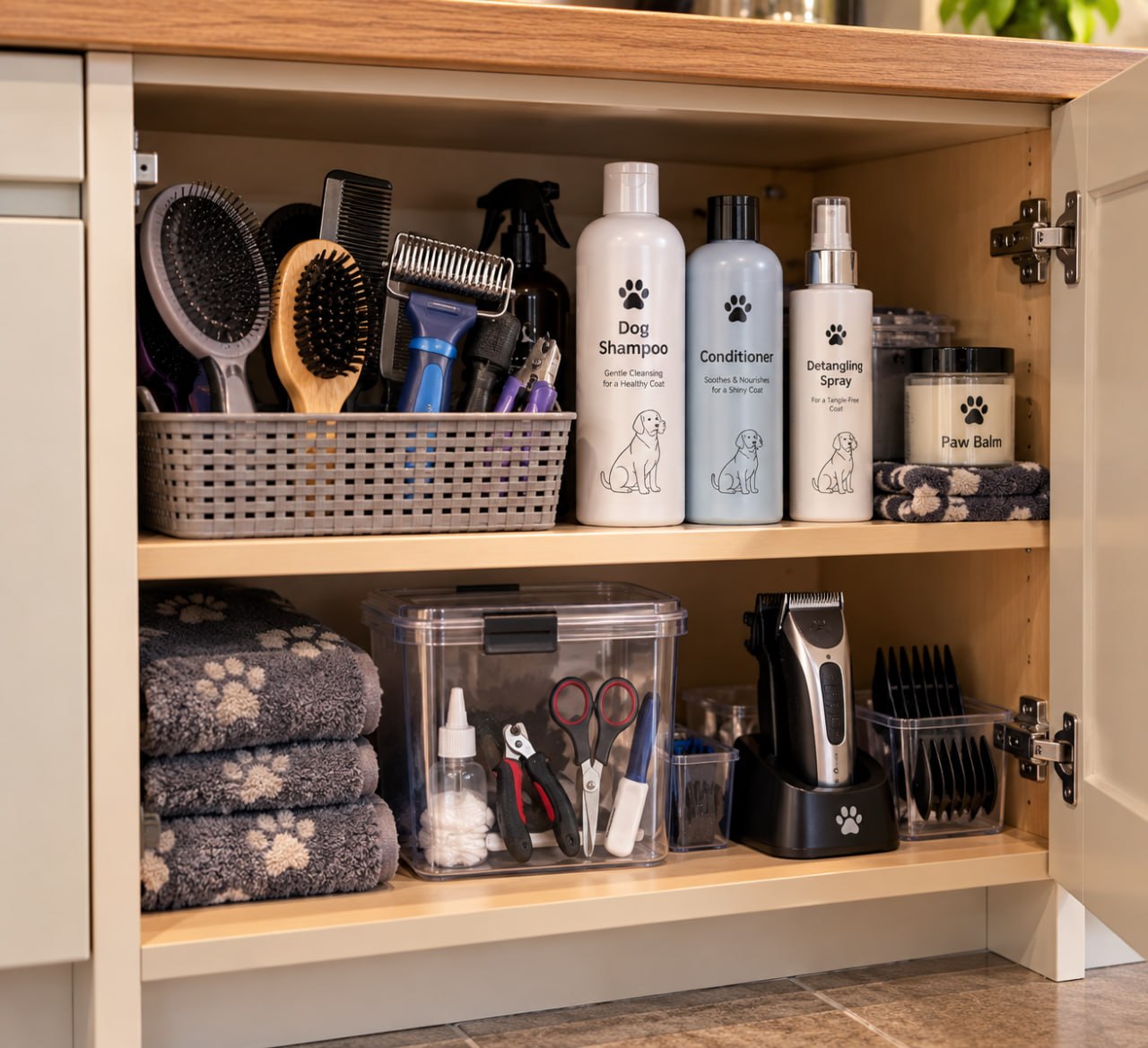
A quick grooming-kit checklist
Before buying something, ask:
Is it appropriate for my dog’s coat, skin or size?
What problem am I actually trying to solve?
Is there a simpler tool that will do the job?
Can it be cleaned properly?
Am I confident using it safely?
Will my dog need time to become comfortable with it?
Does it make an unsupported health claim?
Is this routine grooming or am I actually trying to treat a medical problem?
Would professional help be more appropriate?
The answer may occasionally be:
I don’t need to buy anything.
That’s allowed.
Our product picks
As our Product Guides grow, we’ll add carefully chosen grooming and everyday-care products where we think they genuinely earn their place.
You may see recommendations for:
Brushes & combs
Different options for different coat types, with clear explanations of who they’re actually for.
Bathing & drying
Practical dog shampoos, absorbent towels and useful bathing accessories.
Nail care
Clippers and grinders with attention to usability, size and safety.
Dental care
Dog toothbrushes, toothpaste and other products where there is a sensible reason to consider them.
Paw & clean-up essentials
Useful equipment for muddy walks and everyday mess rather than an entire canine skincare cabinet.
Grooming storage & accessories
Only where they make routine care genuinely easier.
We’ll explain what we like, who a product may suit, what limitations we’ve noticed and whether a cheaper or simpler option may do the job just as well.
Where a recommendation contains an affiliate link, we’ll identify it clearly.
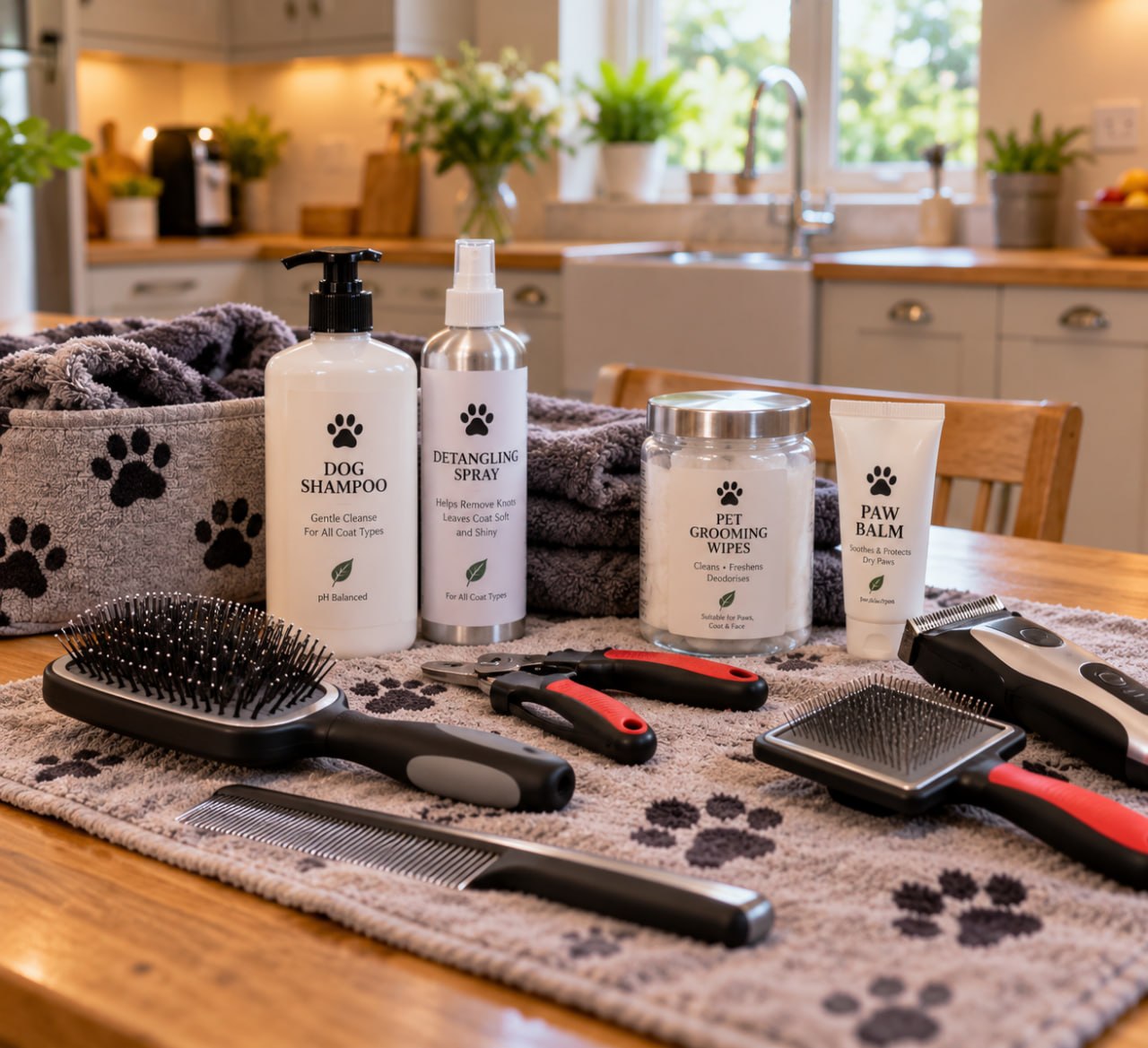
Before filling the grooming cupboard…
Before filling the grooming cupboard, start with your dog’s individual needs. Think about their coat, their paws, their teeth, their daily routine, and which grooming tasks you’re comfortable doing at home.
Buy the tools that help with those things.
You can always add more grooming equipment later if your dog’s needs change.
Good grooming equipment should make everyday care easier, safer and more comfortable. The dog doesn’t care how impressive the grooming kit looks when the cupboard door opens.