Care & Wellbeing · Stage 03
Preventative Healthcare
Taking care of the things you can
Not every health problem can be prevented, and owning a dog will always come with the occasional worry.
But there are some simple things we can do to help protect their health.
Keeping vaccinations up to date, protecting against parasites, attending routine vet appointments and making sure important details and records are current can all become part of normal life with your dog.
It doesn’t need to feel like a never-ending medical checklist.
A little organisation goes a long way.
Routine veterinary care
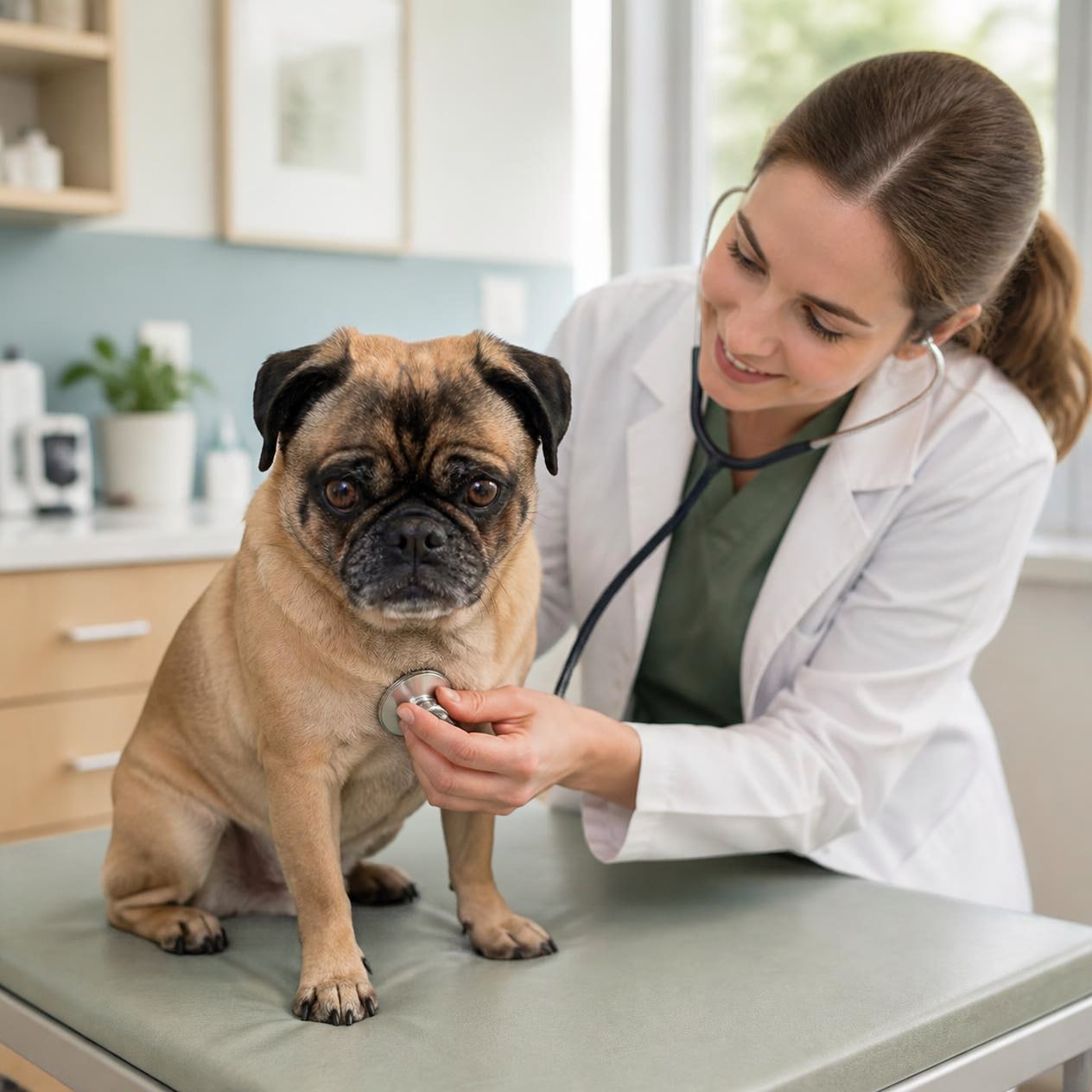
Your vet isn’t only there for the days when something is wrong.
Routine appointments give your veterinary team the chance to check your dog’s general health, keep preventative care up to date and talk through anything you’ve noticed or aren’t sure about.
They’re also an opportunity to ask questions.
Perhaps your dog’s weight has changed slightly. Maybe you’re wondering about their teeth, vaccinations or parasite protection. Or you’ve noticed something that doesn’t feel urgent but you’d rather have checked.
Getting to know your veterinary practice while your dog is well also means you already know where to turn when you do need help.
And because every dog is different, your vet can help you make decisions based on your dog’s age, health, lifestyle and individual needs.
PRACTICAL RESOURCE
MY VET & APPOINTMENTS
Keep your vet details and appointment notes together
When your dog needs veterinary care, it helps to have important contact information and the things you want to discuss all in one place.
Our printable My Vet & Appointments record gives you space to keep your veterinary practice, out-of-hours and insurance details together, plus a reusable appointment page for questions, advice and next steps.
DOWNLOAD & PRINT MY VET & APPOINTMENTS
Vaccinations
Vaccinations help protect dogs against serious infectious diseases.
Puppies usually begin with a primary course of vaccinations, followed by further vaccination as they grow. Adult dogs continue to need protection, although not every vaccination is necessarily given at the same interval.
Your vet will recommend an appropriate vaccination schedule for your dog.
Keep a record of what they’ve had and when their next vaccination or review is due.
If you’ve brought home an adult dog and don’t know their vaccination history, or you realise their vaccinations may have lapsed, don’t worry about trying to work it out yourself. Speak to your vet and they can advise you what to do next.
It’s also worth checking requirements well in advance if you’re planning to use boarding kennels, daycare or certain dog activities, as they may require evidence of particular vaccinations.

Fleas, ticks and worms
They’re tiny.They’re irritating.And unfortunately, they’re part of dog ownership.
Dogs can be affected by a variety of parasites, including fleas, ticks and different types of worms.
The protection your dog needs can depend on where you live, where they walk, whether they hunt or scavenge, their age, lifestyle and other individual factors.
Your vet can help you decide on an appropriate parasite-control routine.
One useful thing to remember is that not every product protects against every parasite.
Rather than simply picking something from a shelf and assuming you’re covered, know what you’re treating or protecting against and keep a note of when the next treatment is due.
If you’re using a treatment, make sure it’s suitable for your dog’s current weight and follow the instructions carefully.
If you share your home with other pets, particularly cats, check that any product you’re using is safe around them too. Some flea treatments intended for dogs can be extremely dangerous to cats.
Give your dog a quick check after every walk
A muddy dog isn’t the only thing that can come home from an adventure.
Ticks can attach themselves while your dog is exploring grassy, wooded or other outdoor areas, so it’s worth getting into the habit of giving them a quick check after walks.
Run your hands gently over their body and pay particular attention around areas such as the head, ears, tummy, armpits and groin.
If you find a tick, it should be removed carefully using the correct technique. A tick-removal tool is useful to keep at home or with your walking kit, and your veterinary practice can show you how to use one if you’re unsure.
Those little checks have another benefit too.
The more familiar you become with how your dog normally feels, the easier it becomes to notice something new.
Keep their microchip details up to date
Your dog’s microchip is tiny, but the information attached to it can be enormously important if they ever go missing.
Dogs in the UK are required to be microchipped, with only limited exemptions, and the registered keeper’s details need to be kept up to date.
So when you bring a dog home, don’t stop at checking that they have a microchip.
Make sure the registration details have been transferred or updated correctly.
Then remember the microchip whenever your contact details change.
New house?New phone number?Update the database.
A useful habit is to check the details once a year even if you don’t think anything has changed.
Pick a date you’ll remember, perhaps your dog’s birthday or gotcha day, and make it one of those tiny annual jobs that takes minutes.
Don’t forget their collar and tag
A microchip doesn’t replace the identification your dog needs when they’re out and about.
In the UK, dogs in public places are generally required to wear a collar with the keeper’s name and address on it, or on an attached plate or badge.
A telephone number isn’t legally required, but adding one can make it much easier for somebody to contact you quickly if they find your dog.
It’s a simple thing, but worth checking occasionally.
Tags become worn.
Details change.
Collars get replaced.
And dogs have an extraordinary ability to lose things you were absolutely certain were securely attached.

Thinking about neutering
Whether and when to neuter your dog is a decision to make with your vet.
There isn’t one age that’s automatically right for every dog.
Your dog’s sex, breed, age, development, health and individual circumstances can all form part of the discussion.
Rather than feeling pressured by conflicting opinions, ask your vet to talk you through the potential benefits and considerations for your dog.
You might want to ask:
- Why would you recommend neutering for my dog?
- Is there a particular age or stage you would recommend?
- Are there any breed-specific considerations?
- What will the procedure and recovery involve?
- Will I need to make any changes to their food or activity afterwards?
You don’t need to arrive knowing all the answers.
That’s what the conversation is for.
Be prepared for veterinary costs
Dogs cost money when they’re perfectly healthy.
They can cost considerably more when they’re not.
Planning for veterinary costs before you need veterinary treatment can take away at least one piece of stress when something unexpected happens.
Some owners choose pet insurance. Others put money aside themselves. Veterinary practices may also offer healthcare plans designed to spread the cost of certain routine treatments.
These things aren’t necessarily the same.
A healthcare plan might include some routine preventative care, while pet insurance is generally intended to provide cover for eligible unexpected illness or injury according to the terms of the policy.
Whatever approach you choose, understand what it does and doesn’t cover.
If you’re considering pet insurance
Don’t judge a policy by the monthly price alone.
Look at the actual cover.
Policies can differ in how much they’ll pay towards veterinary fees, the excess you’ll need to contribute, how long they’ll cover a condition and whether there are exclusions or limits.
Pay particular attention to how ongoing conditions are treated.
A cheaper policy isn’t necessarily poor cover and a more expensive one isn’t automatically better.
The important question is whether you understand what you’re buying and whether it suits the level of protection you’re looking for.
And don’t wait until your dog develops a health problem before thinking about insurance.
Pre-existing conditions are commonly excluded from new policies, although the exact definition and exclusions vary between insurers.
Take your time, read the terms and ask questions if something isn’t clear.
Know what happens in an emergency
This is one of those jobs that’s much easier to do when everything is fine.
Find out what happens if your dog needs veterinary help when your usual practice is closed.
Some practices provide their own out-of-hours service. Others direct clients to a separate emergency clinic.
Save the relevant telephone number and address somewhere easy to find. Hopefully, you’ll rarely, if ever, need to use these emergency contact details. But if you do, you’ll be very glad you aren’t trying to find the information for the first time while you’re worried about your dog.
Keep your dog’s important information together
Dog ownership produces a surprising amount of admin.
Vaccination records.
Microchip information.
Medication.
Parasite treatments.
Insurance.
Vet appointments.
Keeping your dog’s important health information together makes everyday care easier and can be particularly helpful if somebody else ever needs to look after them.
Useful things to keep include:
- your vet’s contact details
- emergency or out-of-hours vet details
- microchip information
- vaccination records
- parasite treatments and due dates
- current medication
- insurance details
- important health information
- upcoming appointments
You don’t need a complicated filing system. What matters is keeping your dog’s important details together, somewhere you can easily find them when needed.
With a little organisation now, life can be easier later
Preventative healthcare isn’t particularly glamorous.
There aren’t many people eagerly posting:
“Exciting Saturday night. I’ve just checked the microchip database.”
But these quiet little jobs matter.
Keeping appointments.
Checking dates.
Updating details.
Following the healthcare plan you’ve agreed with your vet.
Knowing who to call when you need help.
None of it guarantees that your dog will never become ill.
That’s not what preventative care means.
It’s simply about reducing the risks we reasonably can, keeping an eye on their health and being prepared for the things we can’t predict.
You can’t plan for everything. But you can take care of the things within your control.
PRACTICAL RESOURCE
DOG PREVENTATIVE HEALTHCARE RECORD
Keep your dog’s preventative care information together in one handy place
From vaccinations and parasite prevention to routine health checks and dental care, there can be quite a lot to keep track of over the years.
Our printable Dog Preventative Healthcare Record gives you one place to record treatments, dates, review information and notes from your vet, with space for the things you want to ask at your next visit.
DOWNLOAD & PRINT YOUR DOG PREVENTATIVE HEALTHCARE RECORD