Care & Wellbeing · Stage 02
Food, Nutrition & Healthy Weight
Feeding your dog shouldn’t require a degree in nutrition.
Walk into a pet shop or search for dog food online and suddenly you’re faced with an enormous wall of choice.
Dry. Wet. Fresh. Raw. Grain-free. High-protein. Breed-specific. Life-stage. Complete. Complementary.
Then there are feeding guides, portion sizes, treats, supplements and somebody on the internet insisting that everything you’ve ever fed a dog is wrong.
It can become confusing very quickly.
But underneath all the noise, the goal is actually quite simple:
Feed your dog an appropriate, balanced diet in an amount that helps them stay healthy.
What that looks like won’t necessarily be identical for every dog.
Age, size, activity level, health, body condition and individual needs can all influence what and how much a dog should eat.
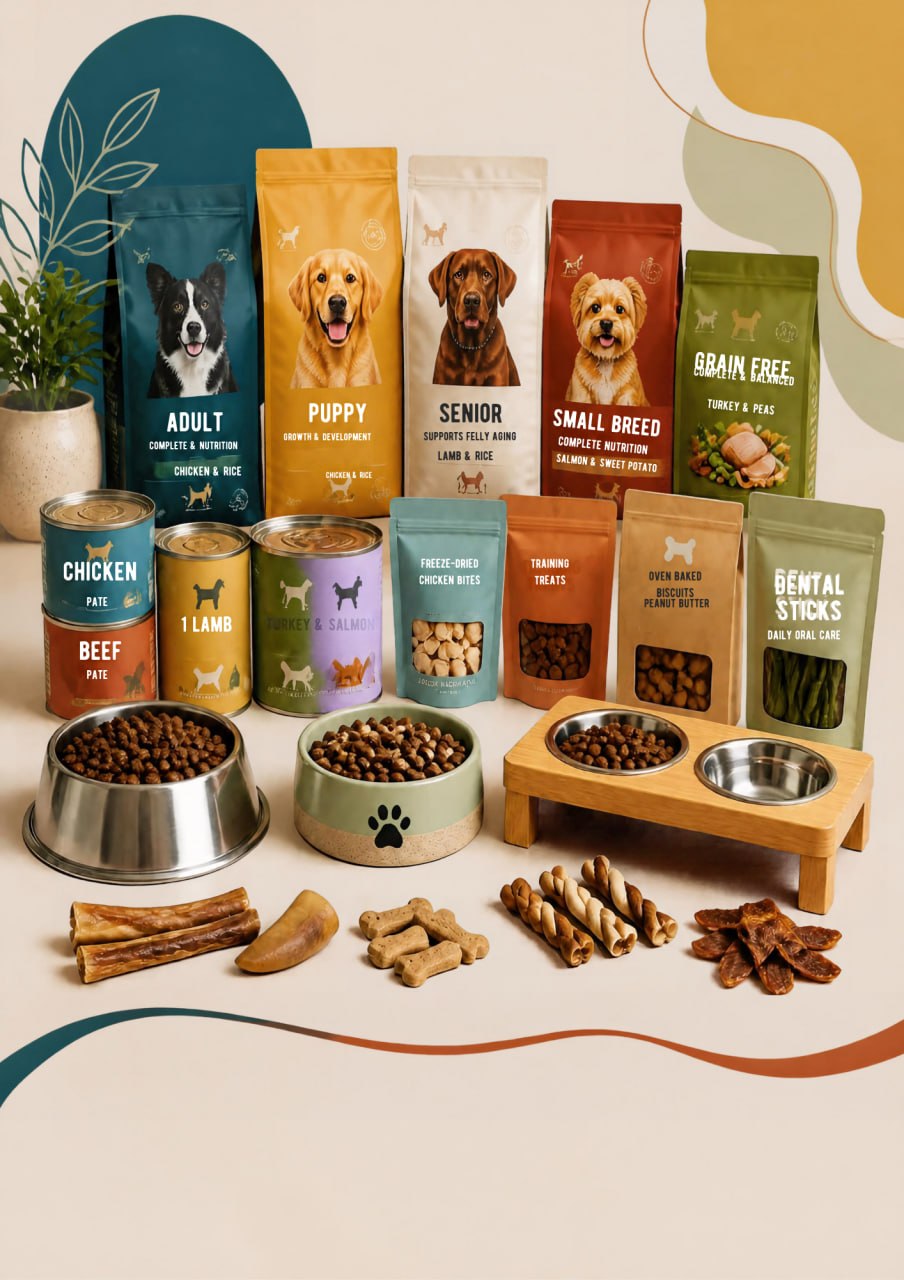
Start with a complete diet
One of the most useful words to look for on dog-food packaging is:
Complete
In the UK, a food described as complete is designed to provide all the nutrients your dog needs when fed as directed.
A food described as complementary isn’t intended to provide a complete diet on its own. It might be a treat, mixer or another product designed to be fed alongside other food.
That distinction matters considerably more than whether the packet has a photograph of a wolf standing dramatically on a mountain.
When choosing your dog’s everyday food, look for something appropriate for their life stage and individual needs.
Puppies have different nutritional requirements from adult dogs, and older dogs or dogs with particular medical conditions may need something different again.
If your dog has a health condition, suspected food intolerance, allergy or requires a specialist diet, that’s a conversation to have with your vet rather than something to diagnose through trial and error at the pet-food aisle.
Wet, dry, fresh or something else?
There isn’t one universally perfect format.
Dogs can be fed appropriately in different ways provided their overall diet meets their nutritional requirements.
Dry food
Convenient to store and measure, widely available and often easy to use in enrichment toys or as training rewards.
Wet food
Often very palatable and contains considerably more moisture than dry food. Some owners feed it alone and others combine it with dry food.
Fresh or commercially prepared diets
These have become increasingly available. As with any everyday diet, the important question is whether the product provides complete nutrition appropriate for your dog, rather than simply whether the ingredients sound appealing to us.
Raw feeding
Raw feeding deserves a little more care than a fashionable yes-or-no answer.
UK veterinary and welfare organisations raise concerns around nutritional balance and the risks from bacteria and parasites associated with raw meat, including potential risks to people in the household.
If you’re considering raw feeding, discuss it with your vet and make sure you understand how to provide an appropriately balanced diet.
The Doggie Addition won’t tell you that you must feed one particular style of diet.
We will tell you to look beyond the marketing and ask:
Is it nutritionally complete? Is it appropriate for my dog? And is my dog doing well on it?
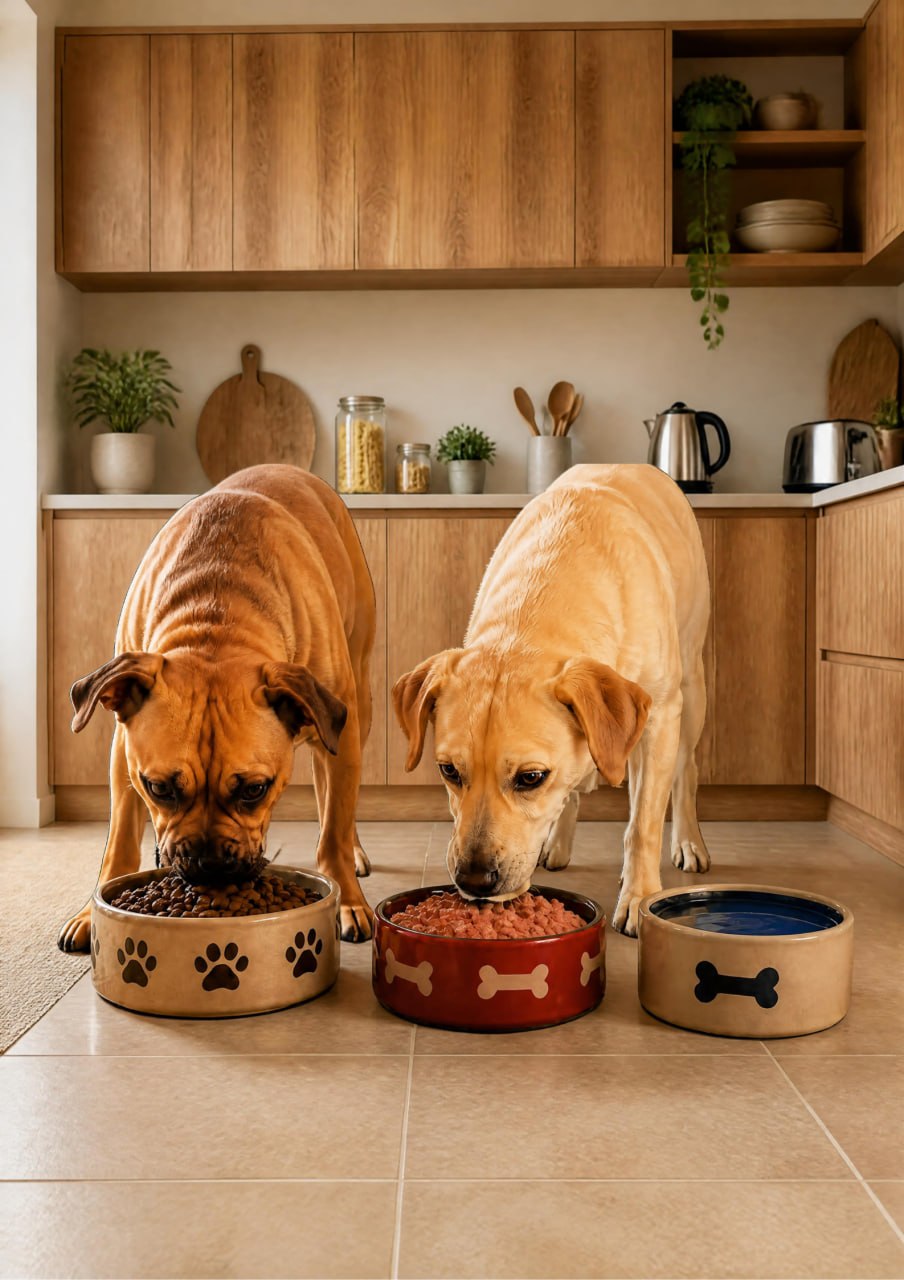
How much should I feed my dog?
There’s no single feeding amount that’s right for every dog. The feeding guide on the packet is a useful starting point, but the amount your dog needs may vary depending on their age, activity level, body condition and metabolism. Even two dogs of the same weight may need different portions.
Start with the manufacturer’s guidance for your dog’s appropriate weight and life stage, then monitor what is actually happening to your dog.
If they’re gaining unwanted weight, losing weight or you’re uncertain about the right amount, ask your veterinary practice for guidance.
And remember to check what the recommended amount represents.
If the packet says a particular quantity per day, that is the total daily amount, not the amount for every meal.
Yes, dogs everywhere are disappointed that we’ve clarified that.
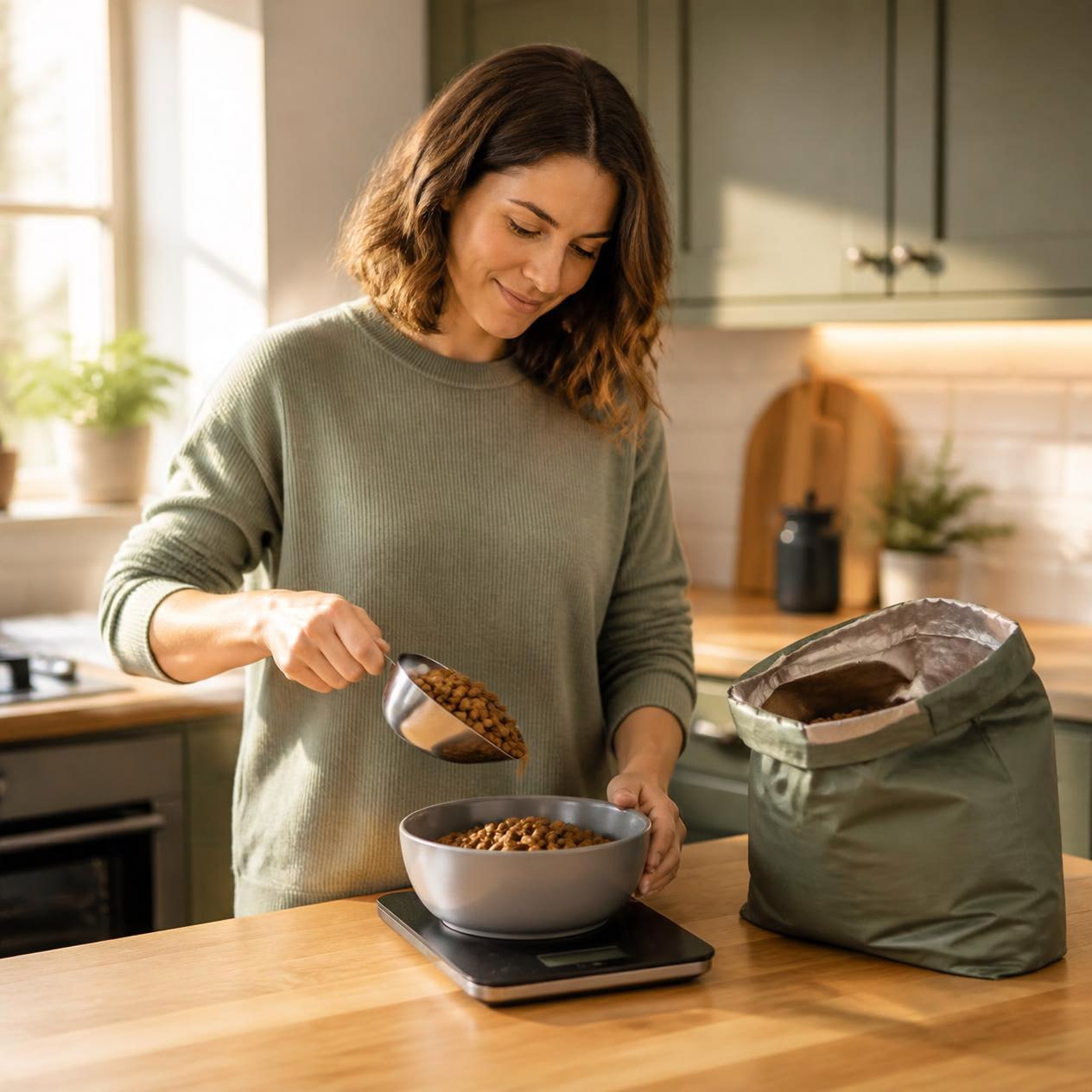
Measure rather than guess
It’s easy to give your dog a little more food than intended, especially when you’re estimating portions by eye. Add in training treats, dental chews and the occasional extra snack, and their daily calorie intake can quickly become higher than you realize.
Measuring food consistently can make weight management much easier.
Measuring food consistently can make weight management much easier.
For dry food, weighing the portion on digital kitchen scales is generally more accurate than relying on a cup or scoop, particularly when different foods have different shapes and densities.
Meals or grazing?
For many adult dogs, dividing their daily food allowance into two or more meals works well.
Puppies generally require smaller meals more frequently while they’re growing, with the number reducing as they mature.
Leaving food available all day can make it harder to know exactly how much a dog is eating and harder to notice changes in appetite.
A regular meal routine can therefore give you another useful little piece of information about what’s normal for your dog.
If the dog who normally appears at the sound of a food packet from three rooms away suddenly isn’t interested…
And because you know their usual routine, you’re more likely to notice when something changes.

Treats count too
Treats are still food.
Your dog may disagree with this ruling, but unfortunately the calories don’t.
Treats can be brilliant for training, enrichment and occasionally just because your dog has perfected that face.
But they should form a relatively small part of the overall diet.
One simple trick is to take some of your dog’s normal daily food allowance and use it for training or enrichment rather than automatically adding extra food on top.
If you’re using higher-value treats, remember these contribute to your dog’s daily food intake too. Even small extras, such as a little piece of cheese, can add up. What seems like a tiny amount to us may represent a significant number of extra calories for a small dog.
Human food: sharing isn’t always caring
Those eyes.
You know the ones.
You’re eating something and your dog hasn’t been fed for at least eleven minutes.
Clearly an emergency.
Some foods can be dangerous for dogs
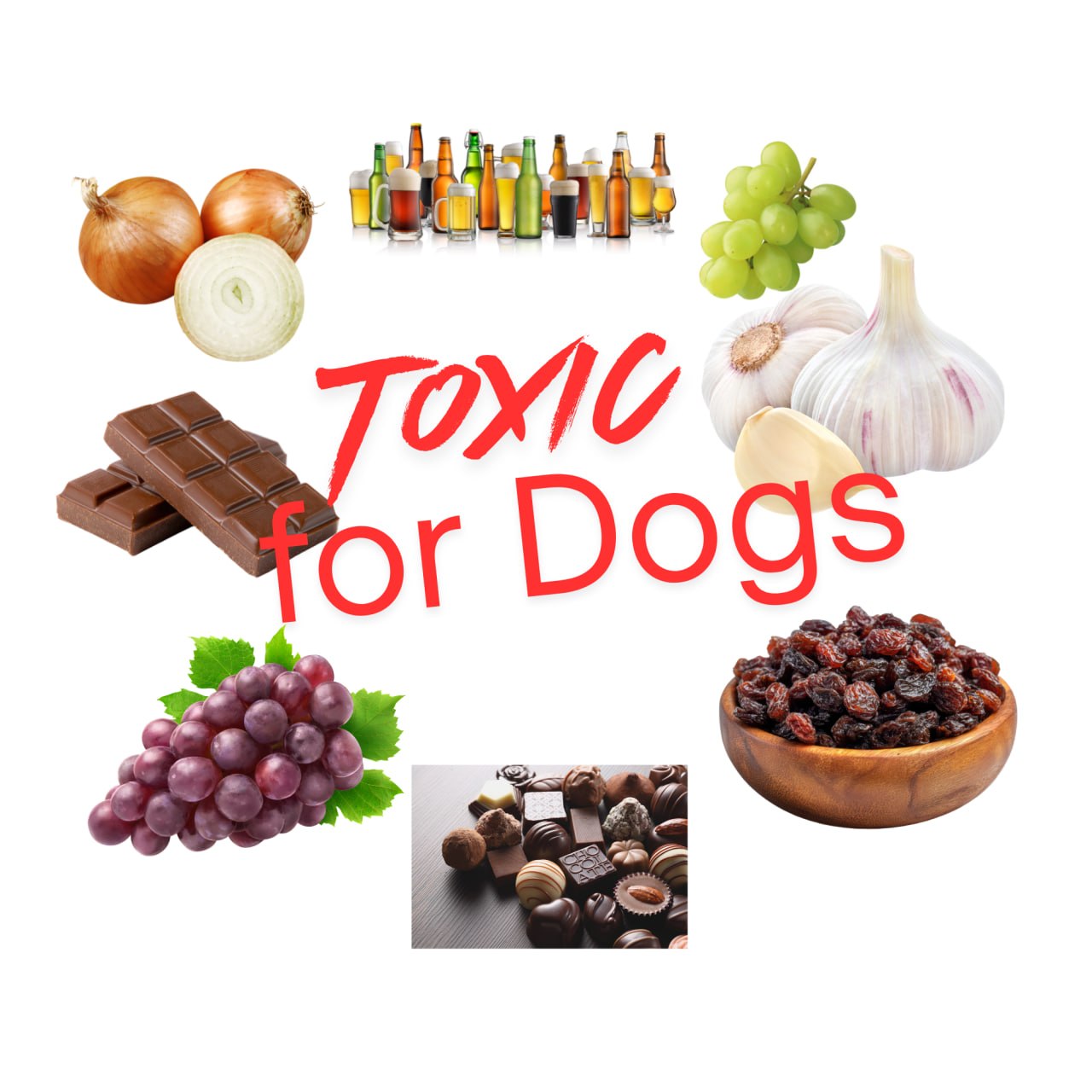
Some human foods are unsuitable for dogs and others can be toxic.
Important examples include:
chocolate • grapes, raisins, sultanas and currants • onions, garlic and related alliums • products containing xylitol • alcohol
There are other potentially harmful foods and substances too.
If you think your dog may have eaten something potentially poisonous, contact your vet immediately. Don’t wait for symptoms to appear, and don’t try to make your dog sick unless a veterinary professional specifically tells you to.
Further reading
- Dogs Trust: Toxic foods for dogs
- Blue Cross: Poisonous foods for dogs
- PDSA: Poisons and hazards for pets
- RSPCA: Common dog poisons and poisoning symptoms
If you think your dog may have eaten something toxic, contact your vet immediately. Don’t wait for symptoms to appear.
Changing your dog’s food
Dogs don’t generally appreciate having their entire diet changed overnight.
Neither does their digestive system.
If you’re moving from one food to another and there isn’t a medical reason requiring a different approach, a gradual transition is usually kinder on the gut.
That normally means introducing increasing amounts of the new food while reducing the old food over several days.
If your vet has prescribed a diet or given you specific feeding instructions, follow their advice instead.
Persistent vomiting, diarrhoea, loss of appetite or other signs of illness shouldn’t simply be blamed on “changing food”. Speak to your vet if you’re concerned.

Is my dog a healthy weight?
This is about much more than appearance.
Maintaining an appropriate weight can support a dog’s health and mobility, while carrying excess weight is associated with health and welfare problems.
Body condition matters as well as weight, because the number on the scales doesn’t tell the whole story.
And this is where our hands become useful again.
Look from above
Can you see a waist behind the ribs?
Look from the side
Does the abdomen tuck upwards rather than continuing straight across?
Have a gentle feel
Can you feel the ribs without having to press through a thick covering of fat?
Different breeds and body shapes vary, so we’re not trying to turn every dog into the same silhouette.
We’re monitoring that dog’s body condition.
A veterinary nurse can be particularly useful here because many practices can help owners assess body condition and establish a sensible weight-management plan.
Weight can creep on quietly
This is one of those things that’s difficult to notice when you see your dog every day.
A little extra food here.
A little less exercise during winter.
A few more treats.
And because the change happens gradually, your eyes adjust along with it.
Regular weighing can help.
For a small dog, you may be able to weigh yourself holding the dog and subtract your own weight, although home methods aren’t as accurate as veterinary scales.
For larger dogs, your veterinary practice may allow routine weight checks.
Keep a record.
Then instead of:
“Hmm… I think he’s got a bit chunkier?”
you’ve actually got something to compare.
What if my dog needs to lose weight?
Don’t simply slash their food dramatically.
First establish whether weight loss is actually appropriate and what a sensible target would be.
Your vet or veterinary nurse can help rule out medical factors, assess body condition and work out an appropriate feeding and activity plan.
Often the boring things are the effective things:
accurate portions • accounting for treats • appropriate food • suitable activity • regular monitoring • consistency
Not a miracle powder advertised by somebody on social media standing next to an exceptionally lean Labrador.
And what if they’re losing weight?
Unplanned weight loss deserves attention too.
If your dog is losing weight without an obvious reason, particularly alongside changes in appetite, thirst, toileting, energy or behaviour, speak to your vet.
Remember our Care & Wellbeing rule:
We’re not trying to diagnose the reason.
We’re noticing the change.
Slow down the speed-eaters
Some dogs eat dinner.
Some dogs appear to inhale it through another dimension.
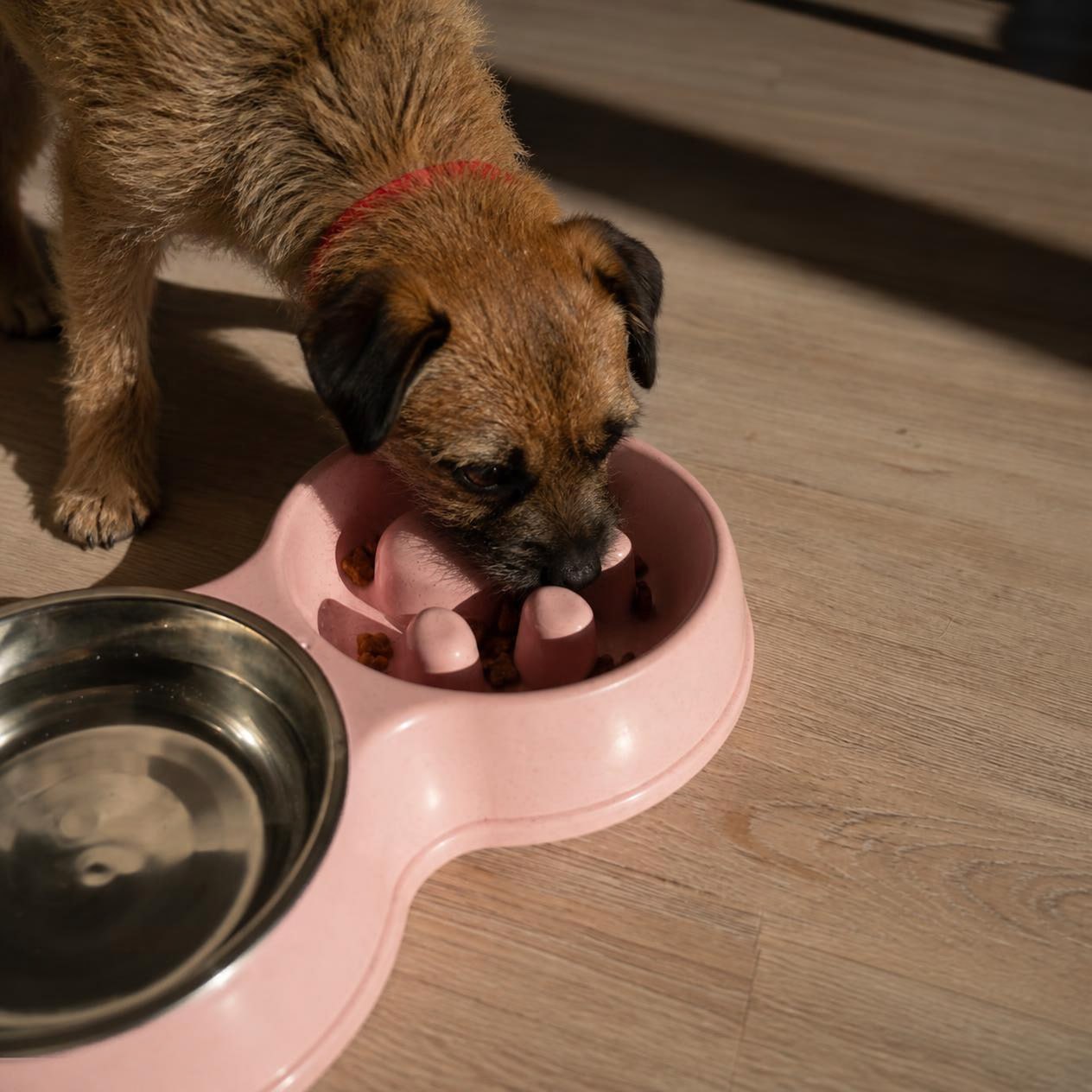
If your dog bolts their food, slowing the meal down can make feeding more interesting and may help prevent them swallowing their entire portion in seconds.
Depending on the dog and the food, options can include:
slow-feeder bowls • puzzle feeders • food-dispensing toys • scatter feeding • snuffle mats
Food doesn’t always have to arrive in a bowl.
Part of a dog’s normal food allowance can sometimes become an activity.
Supplements: does my dog need them?
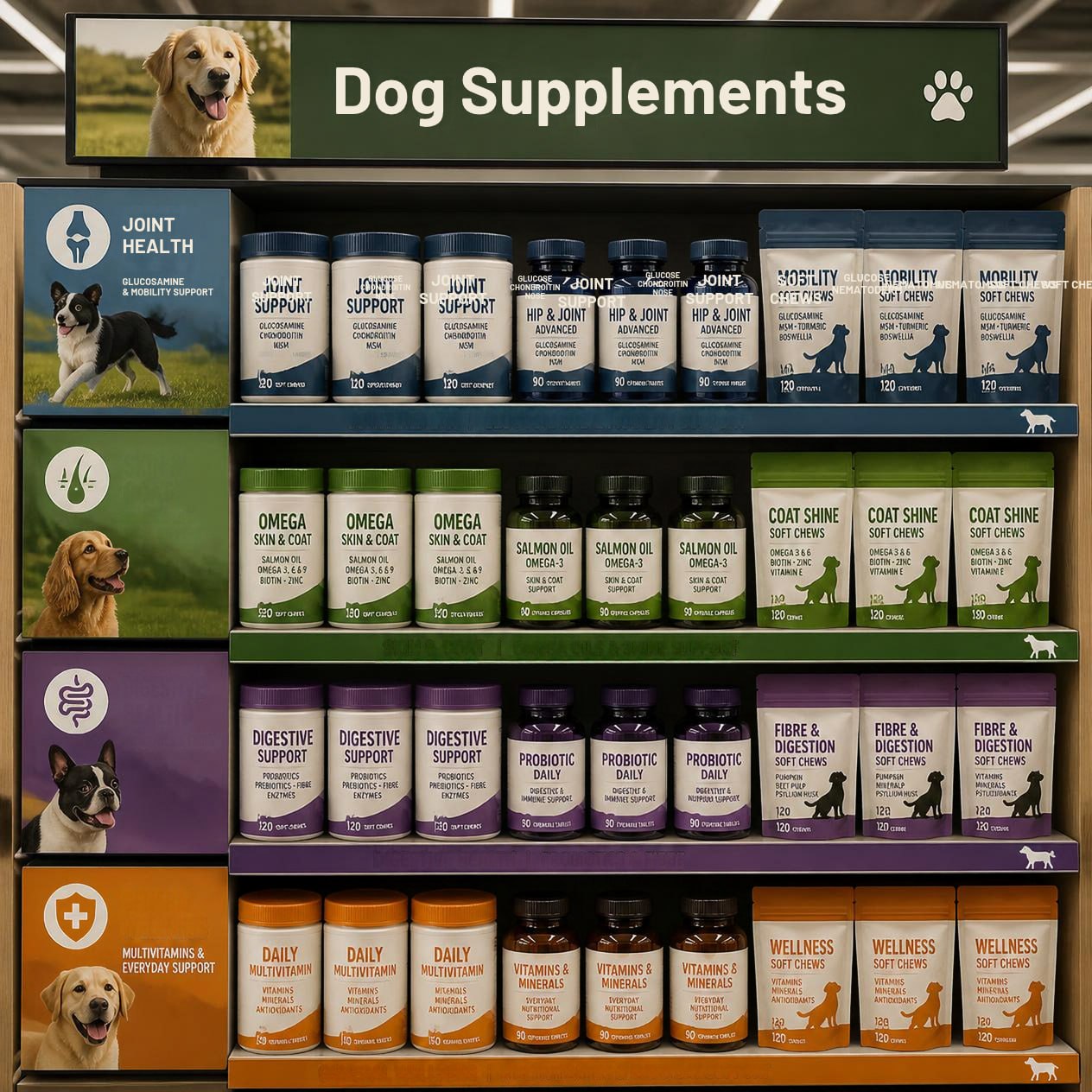
The pet supplement aisle has become enormous.
Joint products. Skin products. Multivitamins. Oils. Gut products. Calming products.
That doesn’t mean every dog needs them.
If your dog is eating an appropriate complete diet, don’t assume that adding more vitamins or minerals automatically makes the diet “healthier”. Some supplements can interact with medications or provide inappropriate amounts of particular nutrients.
If you’re considering a supplement because of a health concern, discuss it with your vet first.
Feeding changes as dogs change
The puppy you brought home won’t eat the same amount or necessarily the same type of food forever.
Needs change with:
growth • adulthood • activity • neutering • pregnancy/lactation • ageing • illness • changes in body condition
That doesn’t mean you need to constantly change food.
It means occasionally asking:
“Is what I’m feeding still right for the dog I have today?”
Don’t make feeding harder than it needs to be
There is an extraordinary amount of noise around dog food.
Beautiful packaging.
Complicated ingredient lists.
Marketing claims.
Online arguments.
People passionately explaining that the only correct way to feed a dog happens to be exactly the way they feed theirs.
Your dog doesn’t need you to win an internet debate.
They need you to provide an appropriate diet, feed a suitable amount, keep an eye on their weight and body condition, notice changes and ask for professional help when you need it.
Look at the dog as well as the bowl.
Are they maintaining an appropriate weight? Is their body condition healthy? Are their stools generally normal for them? Is their coat in good condition? Are they eating comfortably? And do they seem well?
Those everyday observations matter.
One final thought
Food is part of caring for your dog.
But food is also part of life together.
Training treats.
A stuffed enrichment toy while you’re busy.
Dinner after a muddy walk.
The hopeful face watching you make a sandwich.
The tiny piece of something safe you occasionally share simply because you love them.

We don’t need to turn every mouthful into a calculation. Know what you’re feeding, know roughly how much, keep an eye on the dog in front of you, and enjoy them, even when they insist they haven’t been fed five minutes after you’ve just fed them.