Training & Behaviour · Stage 01
How Dogs Learn & Everyday Training
Training isn’t about having a perfectly behaved dog. It’s about helping your dog understand what you’re asking of them, and learning how to understand them in return.
The aim isn’t perfection. It’s communication, confidence and progress.
Understanding How Your Dog Learns
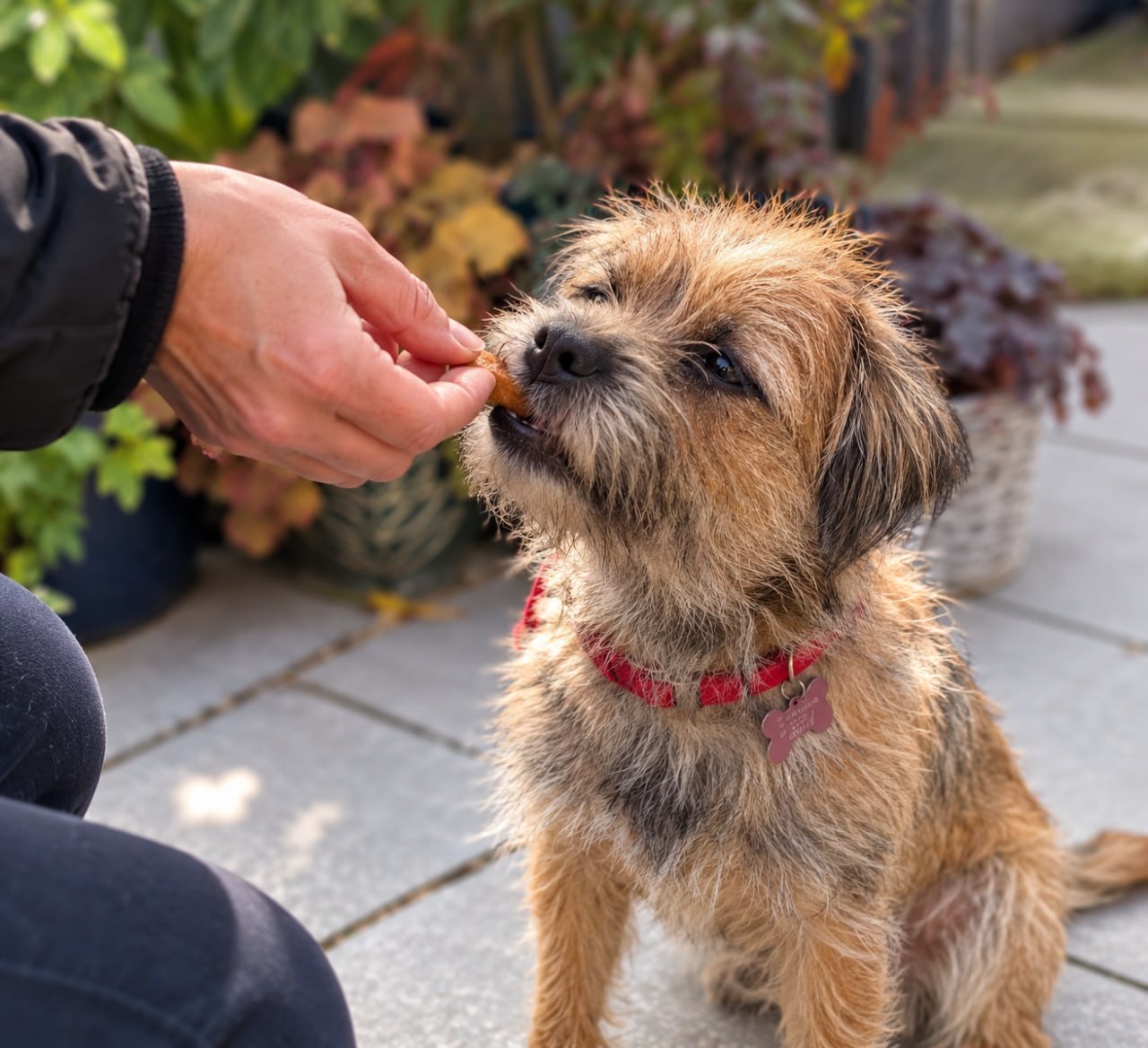
Dogs tend to repeat behaviours that work for them. Reward-based training makes the choices we want to see worthwhile.
The reward needs to matter to the individual dog. For some dogs that’s food. For others it might be a toy, play, attention, access to something they want or the chance to continue doing something they enjoy.
Timing matters too. Mark and reward the behaviour you want as it happens so your dog has the best chance of understanding what earned the reward.
Keep training sessions short and achievable. Training can happen naturally throughout ordinary life rather than only during formal sessions.
Start teaching your dog a new behaviour somewhere quiet and familiar, where there are fewer distractions. Give them plenty of opportunities to practise, and once they’re responding confidently, gradually introduce more challenging environments.
Practicing the same cues in different places helps your dog understand what you’re asking, even when their surroundings change.
Everyday Skills Worth Teaching Your Dog
Name & attention
Say your dog’s name once. Mark and reward the moment they turn their attention towards you.
Gradually practise around more distractions. Repeating their name again and again can eventually turn it into background noise.
Sit
Encourage the movement voluntarily or use a suitable lure rather than physically pushing the dog into position.
Once the movement is predictable, add the verbal cue.
Sit is a useful everyday skill, not something a dog needs to perform constantly.
Wait
Start with tiny successful pauses.
Use a consistent release cue and gradually increase duration, distance and distraction rather than making everything harder at once.
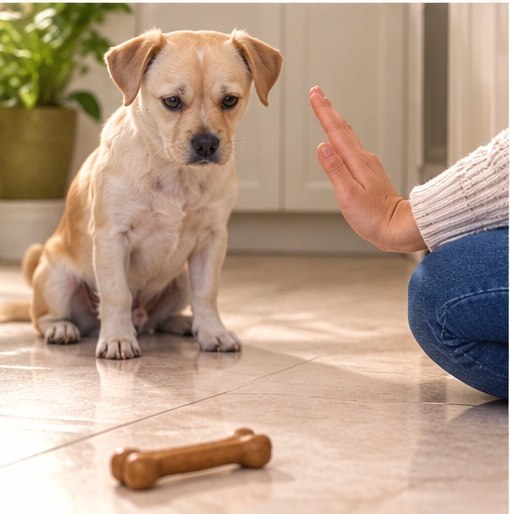
Leave it
Leave it means not picking something up.
Teach the dog that turning away from the item is worthwhile.
Drop
Drop means releasing something already in the dog’s mouth.
Teach trading and releasing as something worthwhile rather than chasing the dog or forcibly removing safe objects.
Settle
Reward naturally calm behaviour and help the dog learn that a bed or mat can be somewhere comfortable to relax.
Sometimes nothing exciting is happening, and that’s okay.
Rewards Aren’t Only Treats
Food is convenient and useful, but it isn’t the only possible reward.
Depending on the dog and situation, rewards can include play, toys, attention, sniffing, exploring, access to something enjoyable or being released to continue an activity.
Pay attention to what your own dog genuinely values.
When Training Suddenly Goes Backwards
Training progress is rarely a perfectly straight line.
A behaviour that seemed reliable yesterday may suddenly become much harder when the environment changes, distractions increase or the dog is tired, excited, stressed or overwhelmed.
Development and adolescence can affect behaviour too.
Before deciding your dog is being stubborn, consider what has changed.
If your dog suddenly struggles with something they previously knew, consider what might have changed and adjust your training to help them succeed.
A sudden or significant behaviour change is different. Pain, illness or discomfort can sometimes contribute to changes in behaviour, so veterinary advice may be the sensible next step.
Training Progress Tracker
Training takes time, and it isn’t always easy to remember how far your dog has come. This printable tracker gives you somewhere to record the skills you’re working on, such as sit, wait, recall and loose-lead walking, and note how your dog is progressing.
You can also add your own training goals and jot down the little successes along the way. It’s a simple way to see what’s improving and what might need a little more practice.
Click here to download or print your Training Progress Tracker