New to Dogs · Stage 02
Choosing Your Dog Responsibly
Once you’ve decided that a dog really could fit into your life, it’s tempting to jump straight to the exciting part: finding one. But choosing where your dog comes from can be every bit as important as choosing what kind of dog you want.
Whether you’re considering a puppy from a breeder or an adult dog through a rescue or rehoming organisation, this isn’t a decision that needs to be rushed. Take your time. Ask questions. Check things. Be prepared to wait. And perhaps most importantly, be prepared to walk away.
Responsible choosing isn’t about finding the perfect dog or perfect breeder/rescue. It’s about giving yourself the best chance of finding a dog whose needs fit your life, while making sure the way you bring them home doesn’t support poor welfare or irresponsible breeding.
Take your heart with you. Just let your head come too.
Puppy, adult dog, or rescue?
Getting a dog doesn’t automatically mean buying a puppy. A puppy brings all the joy of watching a dog grow, alongside the time, patience and consistency needed for toilet training, social experiences and learning to live in a home.
An adult dog may be past some of those demanding stages. Their grown size, personality and day-to-day needs may also be clearer. A rescue or rehoming organisation may be able to tell you about an individual dog’s health, behaviour and the sort of home that might suit them. Ask what they know for certain and what they’re still learning.
Adult doesn’t automatically mean effortless, and puppy doesn’t automatically mean the right choice. The useful question is: What kind of dog would fit best into my life?

How to recognise a responsible breeder
A thoughtful breeder should care about where their puppy is going, as well as whether you want to take one home. Expect a genuine two-way conversation about the puppy’s needs and your home, routine and experience. Questions from the breeder are a good sign.
A responsible breeder should be open about how and where their puppies have been raised, their parents, relevant health information and the records that come with the puppy. You should also be given time to ask questions and make your decision without pressure.
If you’re considering a puppy from a breeder, our Puppy Viewing guide further down this page takes you through what to look for, what to ask and what to check when you visit.

Considering adoption or rehoming
A good rescue or rehoming conversation centres on the individual dog and the home you can offer. The organisation may ask about your household and routine, children, other pets, previous experience and living environment. If one match isn’t right, that doesn’t necessarily mean you are unsuitable to own any dog.
Ask what is known about the dog’s health, behaviour and training, and which details of their past are confirmed, estimated or unknown. Find out what veterinary information is available, what ongoing needs and costs to plan for, and whether advice or support is offered after adoption. Discuss the agreement, microchip keeper transfer and what happens if the placement does not work out.
It is reasonable to check an organisation’s legal identity and address and, if it says it is a charity, its relevant charity registration. A polished website, social media presence or voluntary membership alone cannot tell you everything about its care or the match.
A few UK practical checks
Rules for breeding and selling dogs differ across England, Wales, Scotland and Northern Ireland. Check the current guidance for the place where the puppy is being bred or sold rather than assuming one rule covers the whole UK.
If a seller says they are licensed, ask for the licence details and issuing authority and verify them with that authority. A small breeder may not need a licence, and a licence itself is not a guarantee of welfare.
For current rules, start with official guidance for England, Wales, Scotland or Northern Ireland. Local councils can clarify licensing and welfare concerns.
PUPPY VIEWING
What to Look for, What to Ask & When to Walk Away
Going to see a litter of puppies can make even the most sensible plans disappear remarkably quickly.
There is a puppy in front of you. It may be climbing onto your lap, chewing your shoelaces or falling asleep against you. Suddenly, all those sensible questions you meant to ask can be surprisingly difficult to remember.
That is exactly why it helps to know what you are looking for before you arrive.
A puppy viewing is not simply an opportunity to choose which puppy you like best. It is your chance to learn about where the puppies have come from, how they have been raised, the health and temperament of their parents, and the person who has bred them.
Take your time. Ask questions. Look around.
A responsible breeder should be comfortable with you doing all three.
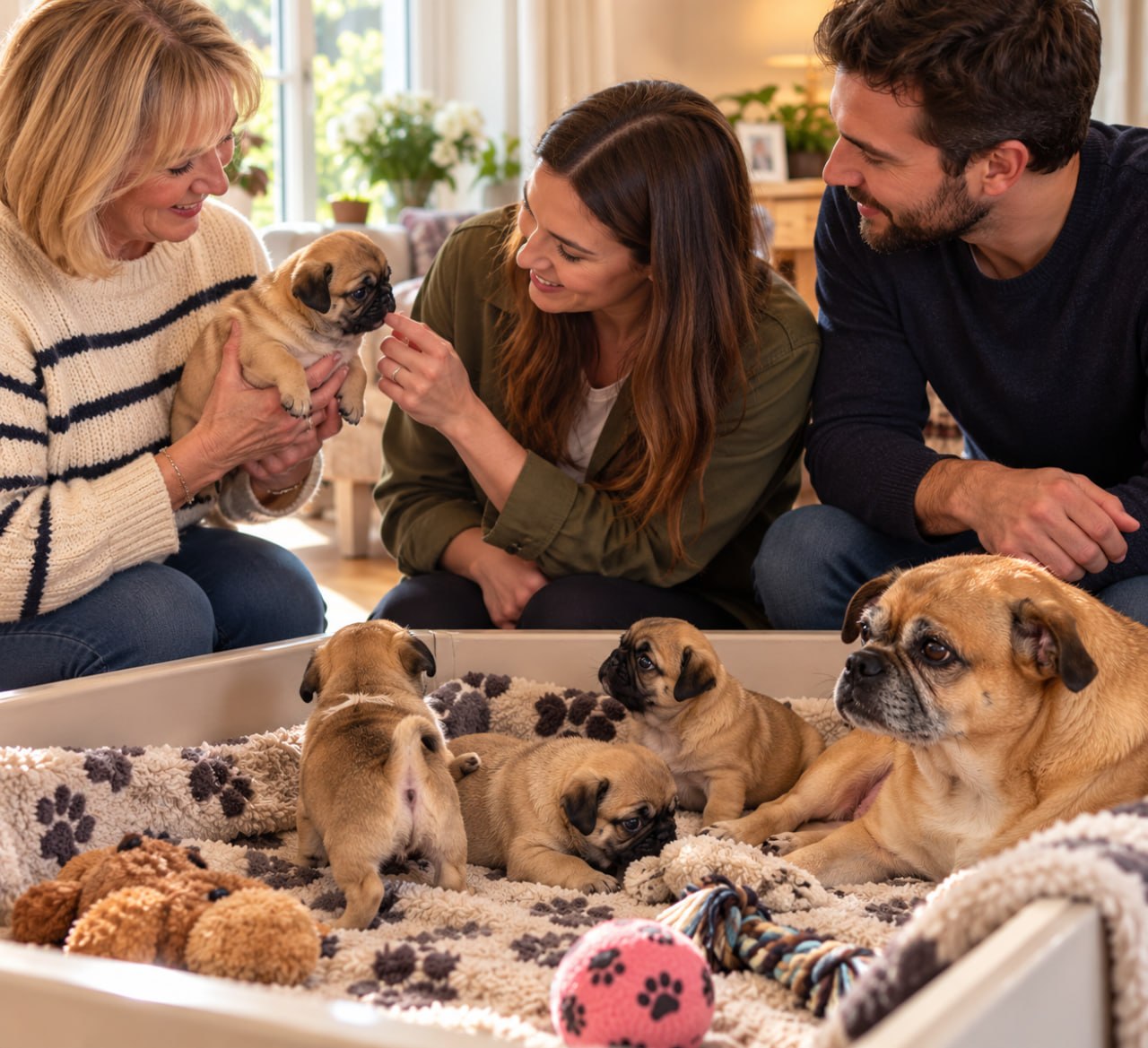
BEFORE YOU ARRANGE A VIEWING
A little checking before you visit can tell you quite a lot.
Read the advertisement carefully and keep a copy of it. Look at the seller’s details, photographs, location and information about the litter.
If the breeder needs a local authority licence, check the licence information they have provided. In England, licensed dog breeders must include their licence number and the issuing local authority in advertisements.
Ask some questions before arranging the visit.
- Who bred the puppies?
- How old are they?
- How many puppies are in the litter?
- Will you be able to see them with their mother?
- Can you see where the puppies have been born and raised?
- Have there been any health problems with the puppies or their parents?
- What health testing has been carried out on the parents?
A genuine breeder should expect questions.
They may have quite a few questions for you too.
That is usually a good thing. Someone who cares where their puppies are going will want to know something about the home and life you can offer.
SEE WHERE THE PUPPY HAS BEEN RAISED
You should expect to visit the place where the puppy has been bred and raised.
Be cautious if somebody offers to bring the puppy to you or suggests meeting somewhere else such as a car park, service station or other convenient location.
Seeing the puppies in their normal environment gives you information that photographs and telephone conversations cannot.
Look around.
- Where do the puppies sleep?
- Where do they eat?
- Do they have space to move, play and explore?
- Does the environment appear reasonably clean and appropriate for raising puppies?
- Do the puppies seem familiar and comfortable with their surroundings?
You’re not looking for a perfectly tidy home. Raising a litter of puppies can be messy, and that’s perfectly normal. What matters is that the puppies are genuinely living there, receiving proper care, and have a clean, safe space to play, explore and rest.
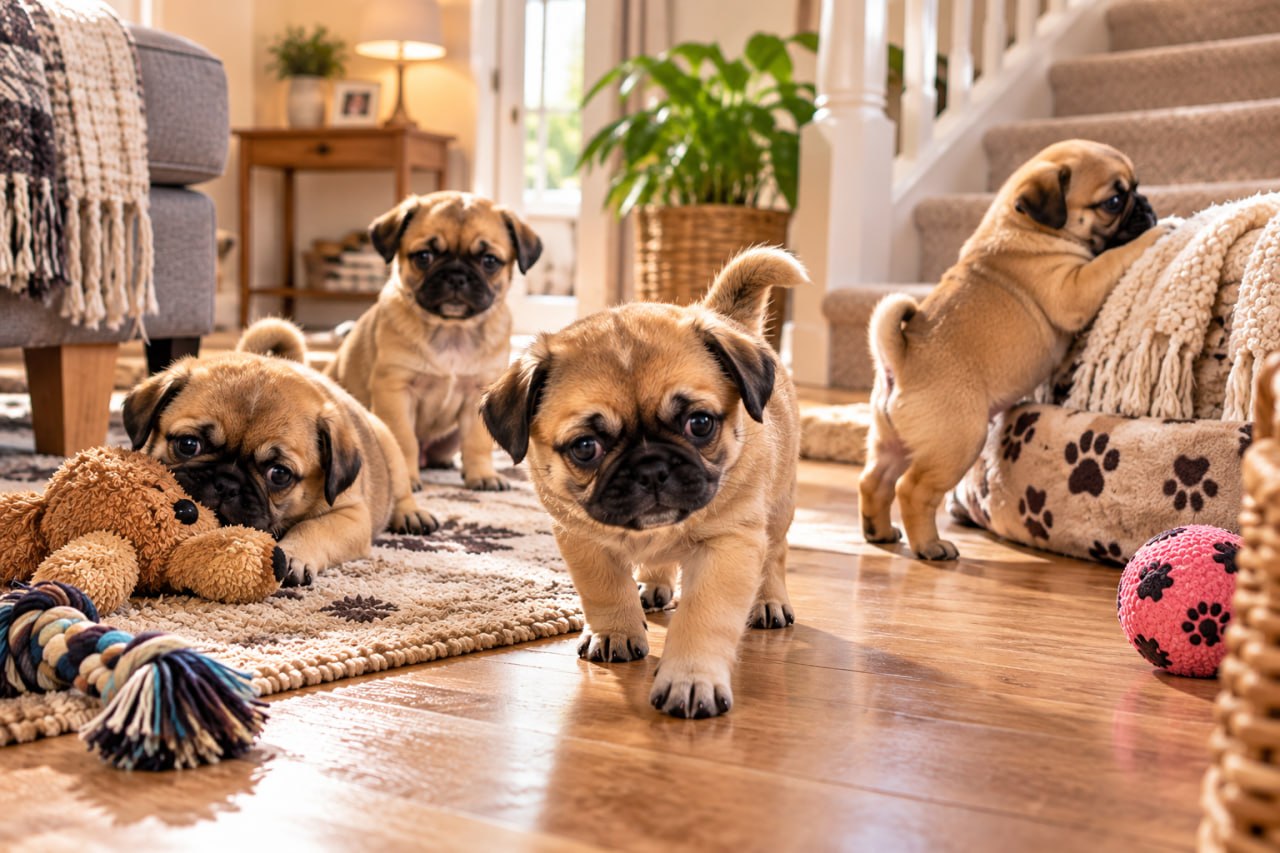
MEET MUM AND WATCH THE FAMILY TOGETHER
One of the most important parts of the visit is seeing the puppy with their mother.
Watch them together rather than simply being shown an adult dog somewhere on the property.
Do the puppies naturally interact with her?
Does she appear familiar and comfortable with them?
How does she behave around the breeder and around you?
Ask about her health, temperament and previous litters.
The father may not live with the breeder, so it is not necessarily concerning if you cannot meet him. You should still be able to ask who he is and about his health, temperament and any relevant health testing.
Seeing the mother also gives you an opportunity to look at her general health and physical features.
A puppy’s parents can tell you considerably more than the puppy’s photograph ever could.
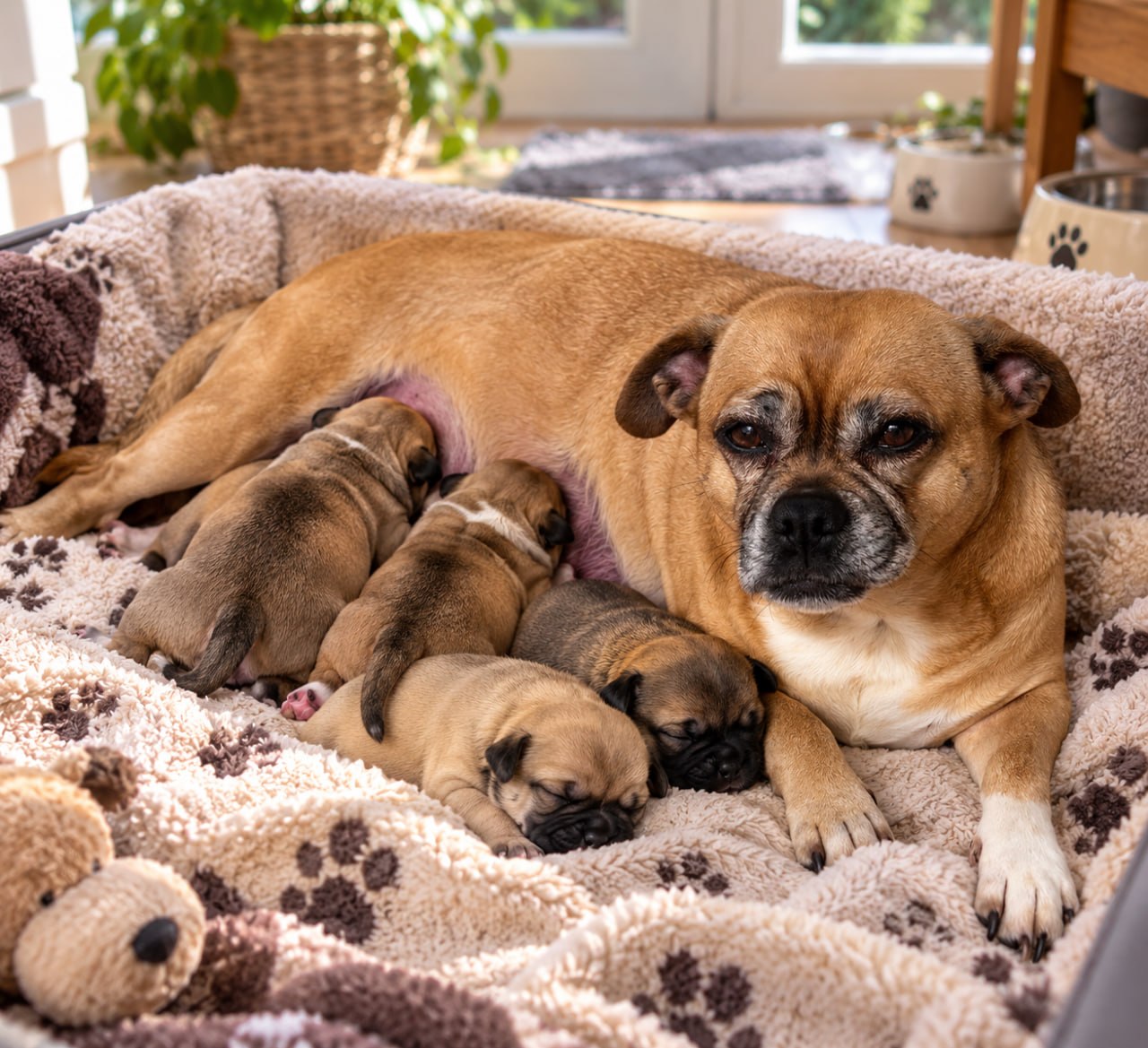
TAKE TIME TO WATCH THE PUPPIES
Try not to make your decision within the first five minutes.
Sit back and watch the litter for a while.
- How do the puppies interact with each other?
- How do they respond to the breeder?
- How do they react to you?
- Are they interested in their surroundings?
- Do they play, explore and settle?
Individual puppies will naturally differ. One may be confident and busy while another is quieter or takes longer to approach.
The aim is not to find the puppy who performs perfectly during your visit.
You are trying to understand the puppy in front of you and whether their temperament, confidence and needs are likely to suit your home and experience.
Do not feel that you have to choose the boldest puppy.
Equally, be careful about choosing a very frightened or withdrawn puppy simply because you feel sorry for them. A puppy who is struggling may need considerably more experienced support than you originally planned for.
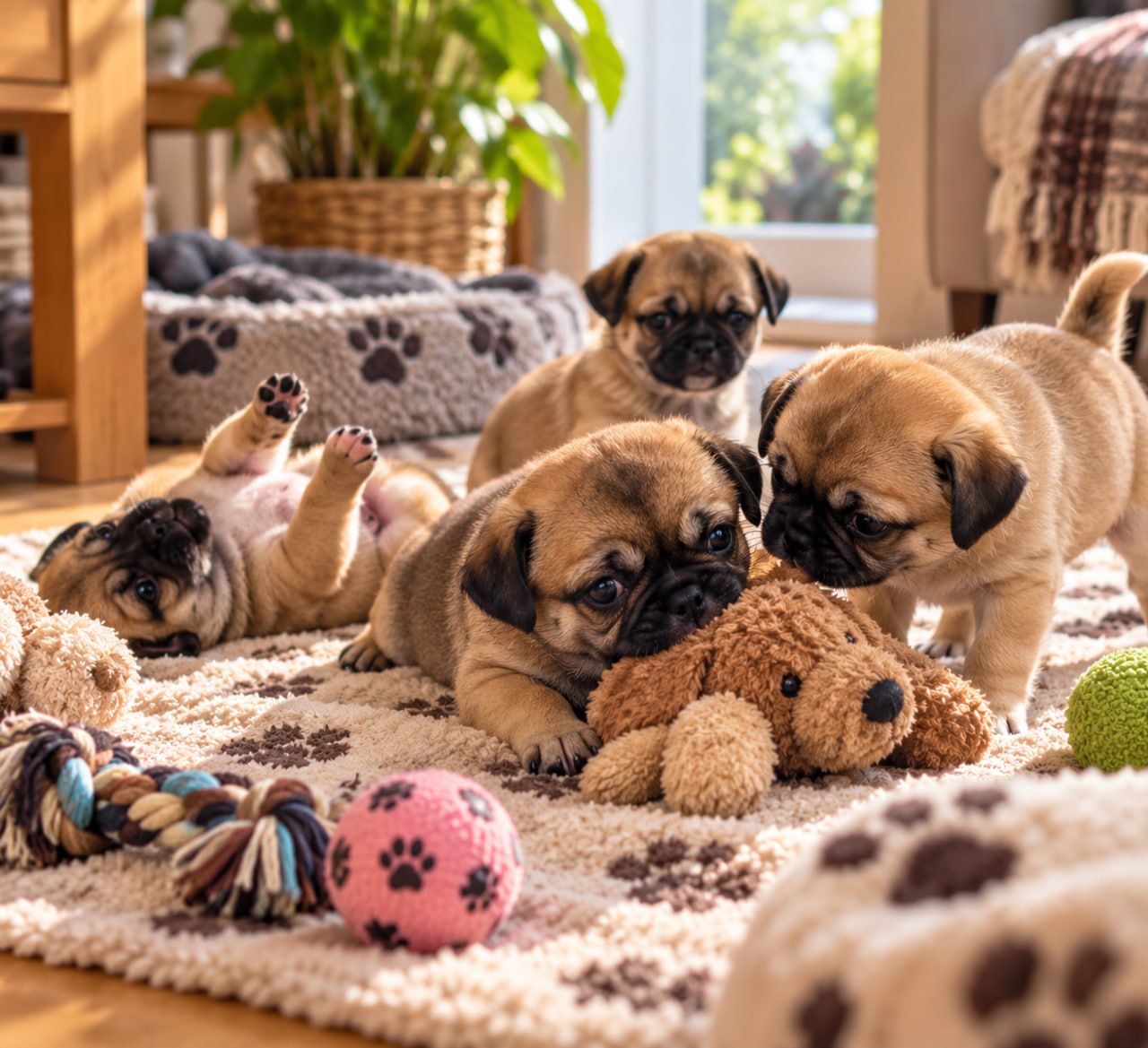
LOOK AT THE PUPPY, NOT JUST AT HOW CUTE THEY ARE
Every puppy deserves the best possible start, and a viewing gives you an opportunity to notice their general condition.
Look at how the puppy moves, breathes and interacts.
Their eyes and nose should not have obvious persistent discharge. Their coat and skin should not appear obviously sore or unhealthy. They should not appear weak, extremely thin or unable to move normally.
Pay attention to breathing too.
Noisy or difficult breathing should not automatically be dismissed because somebody tells you that it is “normal for the breed”.
Some dogs have physical features that can affect their health and quality of life. Appearance should never be considered more important than the dog’s ability to breathe, move, see, sleep and live comfortably.
You are not expected to perform a veterinary examination.
If something about the puppy’s health worries you, ask questions and consider seeking veterinary advice before agreeing to buy.
ASK HOW THE PUPPIES HAVE BEEN RAISED
Those first weeks matter.
Ask what the puppies have experienced so far.
- Have they been gently handled by different people?
- What household noises are they familiar with?
- Have they experienced normal activity around the home?
- Have they met appropriate adult dogs?
- Have they experienced different surfaces, rooms or safe environments?
- How have they responded to new experiences?
This is not about creating a puppy who has encountered everything imaginable before eight weeks old.
It is about finding out whether the puppies have had thoughtful, positive early experiences rather than spending their first weeks with very little interaction or stimulation.
Think about your own household too.
A puppy raised in a very quiet environment may need careful support adjusting to a busy family home. A breeder who knows their puppies well should be able to talk honestly about their individual personalities and experiences.
ASK ABOUT HEALTH AND HEALTH TESTING
This is an area where asking specific questions matters.
Ask whether either parent has experienced health problems and whether there are known inherited conditions associated with the breed or type of dog.
For many breeds there are recommended health screening schemes or DNA tests for particular inherited conditions.
Ask which tests were appropriate for the parents and ask to see the actual results where relevant.
Do not assume that the words “health tested” tell you everything.
Ask:
- What tests were carried out?
- Which parent was tested?
- What were the results?
- Can I see the certificates or results?
Health testing cannot guarantee that a puppy will never develop a health problem, but responsible breeding decisions can reduce the risk of some inherited conditions.
Registration with a breed organisation or pedigree paperwork is not, by itself, a guarantee that a puppy is healthy.
CHECK THE PAPERWORK
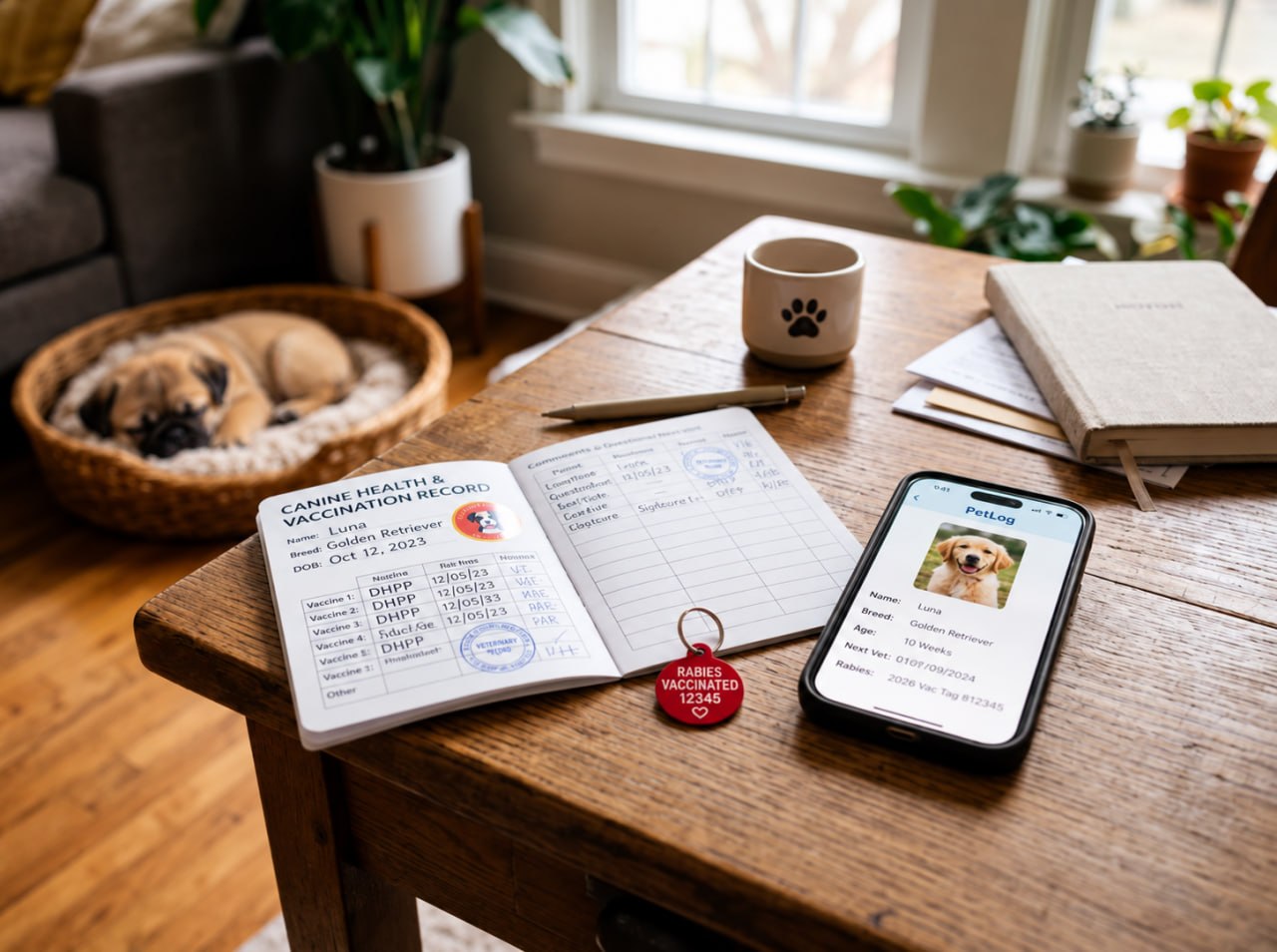
Before agreeing to take a puppy home, make sure you understand what paperwork will be provided.
Depending on the puppy and breeder, this may include:
- Microchip information
- Vaccination records
- Veterinary records
- Details of worming or parasite treatments
- Relevant health-test results for the parents
- Pedigree or registration documents where applicable
- A written contract or receipt
Read documents rather than simply being told that they exist.
If you are shown health-test certificates, check that the details relate to the correct dogs.
If any paperwork or certificates you’ve been promised cannot be shown to you, ask why and make sure you receive a satisfactory explanation before going any further.
MICROCHIPPING AND AGE
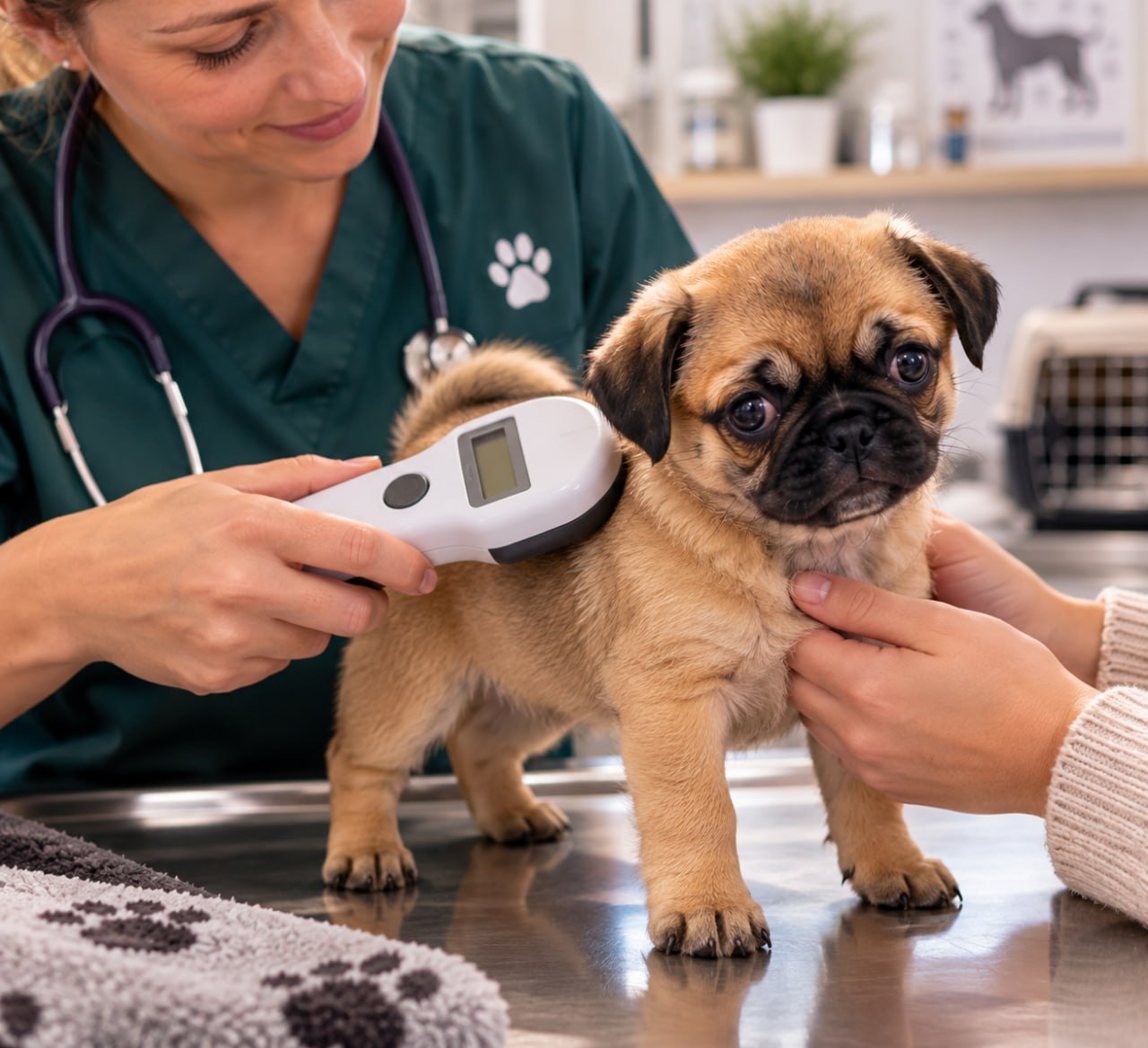
A puppy should normally stay with its mother and littermates until it is at least eight weeks old. During these early weeks, puppies learn important social skills through playing, interacting and spending time together. Leaving too early can affect their development and make adjusting to a new home more difficult.
Eight weeks is also an important age in UK puppy-selling rules, although the legal requirements vary between nations and there are limited exceptions for welfare reasons. Always check the current guidance for where you live.
The breeder should also have arranged for the puppy to be microchipped and registered before sale.
Ask to see the microchip information and make sure you understand what needs to happen to update the keeper details when the puppy becomes yours.
Do not accept “you can get it done later” as a substitute for the breeder’s responsibility.
A GOOD BREEDER WILL BE INTERESTED IN YOU
A viewing should not feel like a one-way interview.
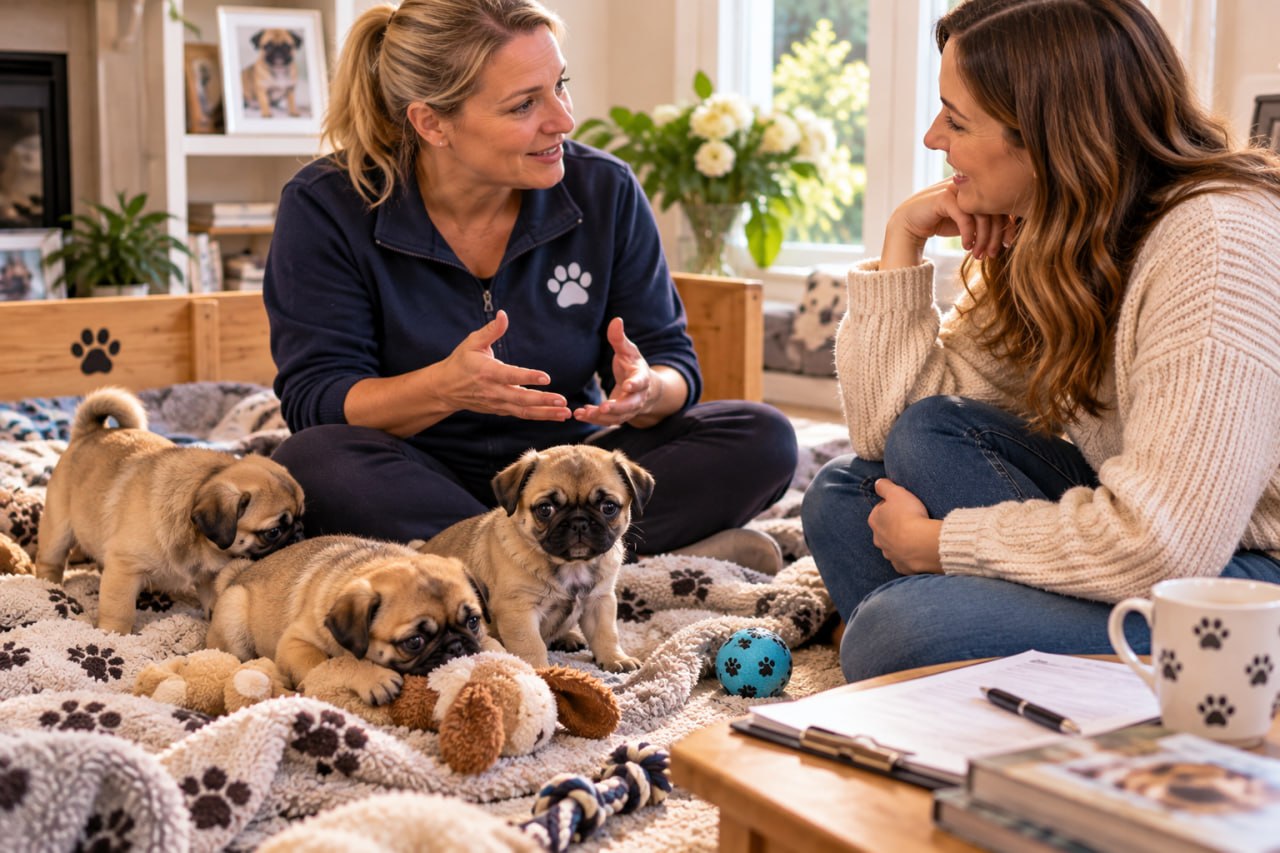
A responsible breeder is choosing homes for their puppies too.
They may ask about your home, working arrangements, who lives with you, other pets, children, your experience with dogs, how long the puppy may be left alone, what you know about the breed and what sort of life you expect to give the dog.
These questions are a good sign. A responsible breeder who has spent weeks raising and caring for their puppies will naturally want to know that each one is going to a safe, loving and suitable home.
A seller who seems interested only in how quickly you can pay deserves considerably more caution.
WATCH FOR PRESSURE
You should be given time to think.
Be wary if you are told things such as:
- “Someone else is coming in an hour.”
- “You need to pay now if you want this one.”
- “I’ll knock some money off if you take the puppy today.”
- “There’s no need to come back again.”
Buying a puppy is a commitment that may last well over a decade.
You are allowed to go home.
You are allowed to discuss it.
You are allowed to ask more questions.
And you are absolutely allowed to say no.
A responsible breeder should not need to manufacture urgency to persuade you to take one of their puppies.
RED FLAGS — WHEN TO SLOW DOWN OR WALK AWAY
One unusual detail does not automatically tell you everything about a breeder, but several warning signs together should never be ignored.
Be particularly cautious if:
- You cannot see the puppy with their mother.
- You are prevented from seeing where the puppies are normally kept.
- The seller wants to meet somewhere away from the breeding premises.
- The puppy appears unwell and your concerns are dismissed.
- The breeder will not show health or veterinary paperwork they claim exists.
- The information you are given keeps changing.
- There appear to be numerous unrelated litters or breeds being sold.
- You are being encouraged to take the puppy before eight weeks old.
- The puppy has not been microchipped.
- You are pressured to pay or make an immediate decision.
- The seller seems unwilling or unable to answer ordinary questions about the puppy’s history.
- Something about the situation simply does not add up.
Walking away can be incredibly difficult when there is a puppy in front of you. You may even feel that buying the puppy will “rescue” them from a situation that worries you. But handing over money can help the same seller continue breeding or selling more puppies in exactly the same circumstances.
If you have serious welfare concerns, walk away and report them to the appropriate organisation rather than trying to solve the situation by buying the puppy yourself.
BEFORE YOU SAY YES
Leave yourself enough time to think about what you have seen rather than only how you felt when you held the puppy.
Ask yourself:
- Did I see the puppy with their mother?
- Did I see where the litter is actually being raised?
- Was I comfortable with the condition and behaviour of the dogs?
- Did the breeder answer my questions openly?
- Did I see the paperwork I expected to see?
- Do I understand the health testing that was relevant?
- Does this puppy genuinely suit my household and lifestyle?
- Did the breeder seem interested in whether I could provide the right home?
- Was I given time to make my own decision?
And perhaps the most important question:
If there hadn’t been an adorable puppy sitting in front of me, would I still feel comfortable with everything I saw and heard?
If the answer is no, listen to that feeling.

You do not have to decide today.
If something doesn’t feel right, walk away.
TAKE IT WITH YOU
PUPPY VIEWING CHECKLIST
It is remarkably easy to forget sensible questions once there is a puppy on your lap.
Our printable Puppy Viewing Checklist gives you a simple list of the important things to see, ask and check while you are there, with room to make your own notes.
Read the full guide before your visit, then take the checklist with you.

Before you say yes
Whether the route is a breeder or a rescue, pause with one question: Does this dog fit the life I can genuinely offer? Think about this individual dog’s needs, known health information and temperament or behaviour, the training and support they may need, everyday costs, home preparation and the responsibility you’ll carry long after the excitement of the first day. Know what aftercare you can turn to.
This isn’t a test with a score. Your checklist doesn’t make the decision. You do. Its job is simply to slow the moment down enough for your head to catch up with your heart.
Your dog is coming home. Now what?
When you have chosen carefully and the timing is right, the next stage helps you get ready for their arrival.