New to Dogs · Stage 01
Is a Dog Right for Me?
A thoughtful place to consider whether dog ownership fits your life now and for the years ahead.
Thinking about getting a dog?
It’s a lovely thought, isn’t it?
A wagging tail when you walk through the door. Weekend walks. A furry companion curled up beside you on the sofa. Someone who is always delighted to see you, even if you’ve only been gone for five minutes.
Dogs can bring an enormous amount to family life. But they also bring responsibility, expense, muddy paws, early mornings and a remarkable ability to need you at exactly the moment you’re trying to do something else.
So before you start choosing names or falling in love with puppy photos, it’s worth thinking about how a dog would actually fit into your life.
Not somebody else’s life. Yours.
This isn’t a test, and there’s no score at the end. It’s simply a chance to think things through before making a very big (and hopefully very happy) decision.
Start with your everyday life
It’s easy to picture the best bits of having a dog. The more useful question is: What would an ordinary Tuesday look like?
Dogs need care every day, including the days when you’re busy, tired, working late, feeling poorly or the British weather is doing its absolute worst.
Think about your normal week rather than your ideal one. Who would be around in the morning? What happens while you’re at work? Who handles walks, feeding and toilet breaks? What happens when plans change?
You don’t need a perfectly organised life to have a dog. You just need a realistic idea of where the dog fits into it.
Do you have the time?
Having a dog involves much more than fitting in a walk.
There’s feeding, exercise, training, play, grooming, settling, cleaning up, appointments and simply spending time together.
A puppy can need considerably more hands-on attention while they learn about their new home and the world around them. An adult dog may arrive with different needs, habits or experiences of their own.
And those needs can change as a dog gets older.
The important question isn’t whether you can find time for a dog during the exciting first few weeks. It’s whether you can make room for one as part of normal life for years to come.

What about work, holidays and days away?
What happens to your dog when you go to work, spend a whole day out or take a holiday?
Perhaps somebody in the household works from home. Maybe family or friends can occasionally help. At other times you might need a dog walker, daycare, pet sitter or boarding.
There isn’t one arrangement that works for every dog or every household.
What matters is having a realistic plan, including backup care for emergencies or the days when life refuses to follow the plan.

Can your home work for a dog?
You don’t necessarily need a huge house or enormous garden.
What matters more is whether your home and surroundings can safely and comfortably meet the needs of the individual dog you eventually choose.
Think about things such as stairs, outdoor space, suitable opportunities for exercise, nearby places to walk, neighbours, other pets and any rules that apply to your home.
If you rent, check what your current agreement allows rather than assuming.
Choosing the right dog for your circumstances matters just as much as deciding to get a dog in the first place. We’ll come to that in Stage 02: Choosing Your Dog Responsibly.
Is everyone at home genuinely on board?
A dog affects the whole household, even when one person promises: “Don’t worry, I’ll do everything.”
Famous last words.
It’s worth talking honestly about who will do what, particularly if children are involved.
Who feeds the dog? Who walks them? Who handles training? Who gets up when something needs attention? What happens if the person who wanted the dog most can’t do those things for a while?
If you already have pets, their needs matter too.
A new dog shouldn’t simply be expected to slot perfectly into an existing household from day one.
Then there’s the money
The cost of getting a dog is only the beginning.
There are regular expenses such as food and routine care, plus equipment, grooming or training depending on the dog. You may also choose services such as dog walking, daycare or boarding.
And then there are the expenses nobody particularly enjoys thinking about, especially unexpected veterinary treatment.
You don’t need to predict every penny before getting a dog. But you should be comfortable that the ongoing costs, as well as the exciting initial purchases, can fit into your household budget.
Be honest about the difficult bits too
Dogs are wonderful.
They can also be exhausting, inconvenient and occasionally spectacularly disgusting.
There may be toilet accidents. Chewed possessions. Barking. Mud. Hair. Sleepless nights. Training that takes longer than expected. Behaviour you don’t immediately understand.
A puppy can turn your routine upside down for a while. Adolescence can bring another set of challenges. A rescue or adult dog may need time and patience while they adjust to a completely new life.
And even the easiest dog will eventually have days when caring for them isn’t particularly convenient.
None of that means getting a dog is a bad idea. It simply means it’s better to think about the whole experience, rather than only the lovely bits.
Think beyond the dog you bring home
The tiny puppy you can scoop up in your arms won’t stay tiny.
And whichever dog joins your family, you’re making a commitment that could span many years and several different versions of your own life.
Jobs change. Relationships change. Children arrive or grow up. People move home. Finances fluctuate. Holidays happen.
Dogs get older too. Their exercise, behaviour and health needs may change considerably over their lifetime.
Nobody can predict everything that will happen in the future.
You don’t need every detail of the next ten years figured out.
The question is simply whether you’re ready to make your dog part of those future plans.
A moment to reflect
Am I Ready for a Dog?
There is no pass or fail. Take these questions at your own pace.
- Can I make a dog part of my normal everyday routine?
- Have I realistically considered the time and exercise an individual dog may need?
- Have I thought about work, holidays and backup care?
- Can I comfortably plan for both expected and unexpected costs?
- Does my home and lifestyle suit having a dog?
- Is everyone affected by the decision genuinely comfortable with it?
- Am I prepared to put time into training and helping a dog learn?
- Am I prepared for mess, disruption and difficult days?
- Am I ready for the commitment to continue as my dog and my own life change?
You don’t have to have every detail sorted today.
Finding one area you’re unsure about doesn’t automatically mean “No.” It may simply show you what you need to work out before saying yes.
Click the Doggie to start the questionnaire →
The next step
Still thinking yes?
Lovely.
Then we can start looking at what kind of dog might suit your life and how to find them responsibly.
That means slowing down just enough to look beyond the adorable face, whether you’re considering a puppy, an adult dog or rescue.
COULD A RESCUE DOG SUIT ME?
Giving a dog another chance
Choosing a rescue dog can be a wonderful way to welcome a new companion into your family while giving a dog the chance of a fresh start.
But choosing rescue shouldn’t be about feeling that you ought to adopt. It’s about finding a dog whose needs fit your home, your lifestyle and what you can realistically offer for the years ahead.
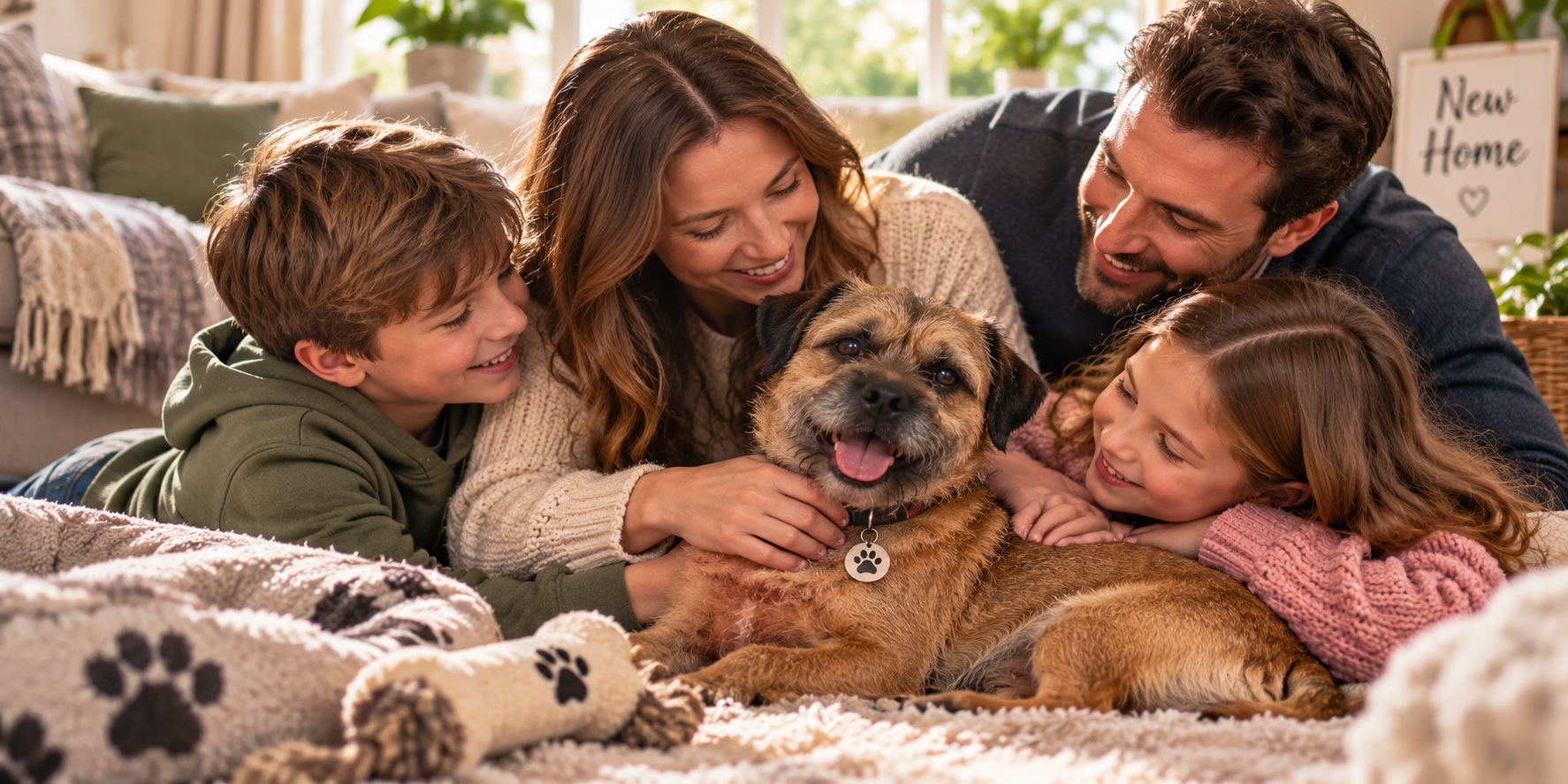
Rescue doesn’t mean “problem dog”
Dogs find themselves needing new homes for all sorts of reasons. Sometimes a person’s circumstances have changed. There may have been illness, bereavement, housing difficulties, financial problems or another change that means they can no longer care for their dog.
Some rescue dogs have experienced neglect or difficult circumstances and may need extra time, patience and reassurance. Others may have medical or behavioural needs that require additional support. But many rescue dogs settle happily into new homes without needing any specialist care.
Every dog has a different story. The important thing is to get to know the individual dog rather than make assumptions simply because they’re in rescue.
You might not know the whole story
Sometimes a rescue organisation has a detailed history for a dog. Sometimes there are gaps.
You may know how they lived previously, whether they have lived with children or other animals, what training they have had and how they cope with everyday life. With another dog, considerably less may be known.
That doesn’t make the dog unsuitable. But it does mean that adopting can sometimes involve being comfortable with a little uncertainty.
Settling in isn’t a race
Moving home is a big change for any dog.
Some dogs appear comfortable surprisingly quickly. Others need much more time before they begin to relax, explore and show their personality.
Your new dog might initially be quiet, unsettled, clingy, cautious or simply unsure what is expected of them.
Try not to measure progress against a timetable. Give them somewhere safe to rest, establish a predictable routine and allow the relationship to develop at their pace.
The dog you imagined might not be your best match
You may begin your search picturing a particular breed, age, size or appearance.
That’s perfectly understandable.
But one of the most useful things you can bring to rescue adoption is flexibility.
A responsible rescue is trying to match a dog’s needs with the home and lifestyle that can meet them.
If the rescue tells you that the dog you’ve fallen for isn’t right for your household, that doesn’t necessarily mean they think you shouldn’t have a dog.
It may simply mean that particular dog needs something different.
The dog you hadn’t originally considered could turn out to be exactly the one who fits.
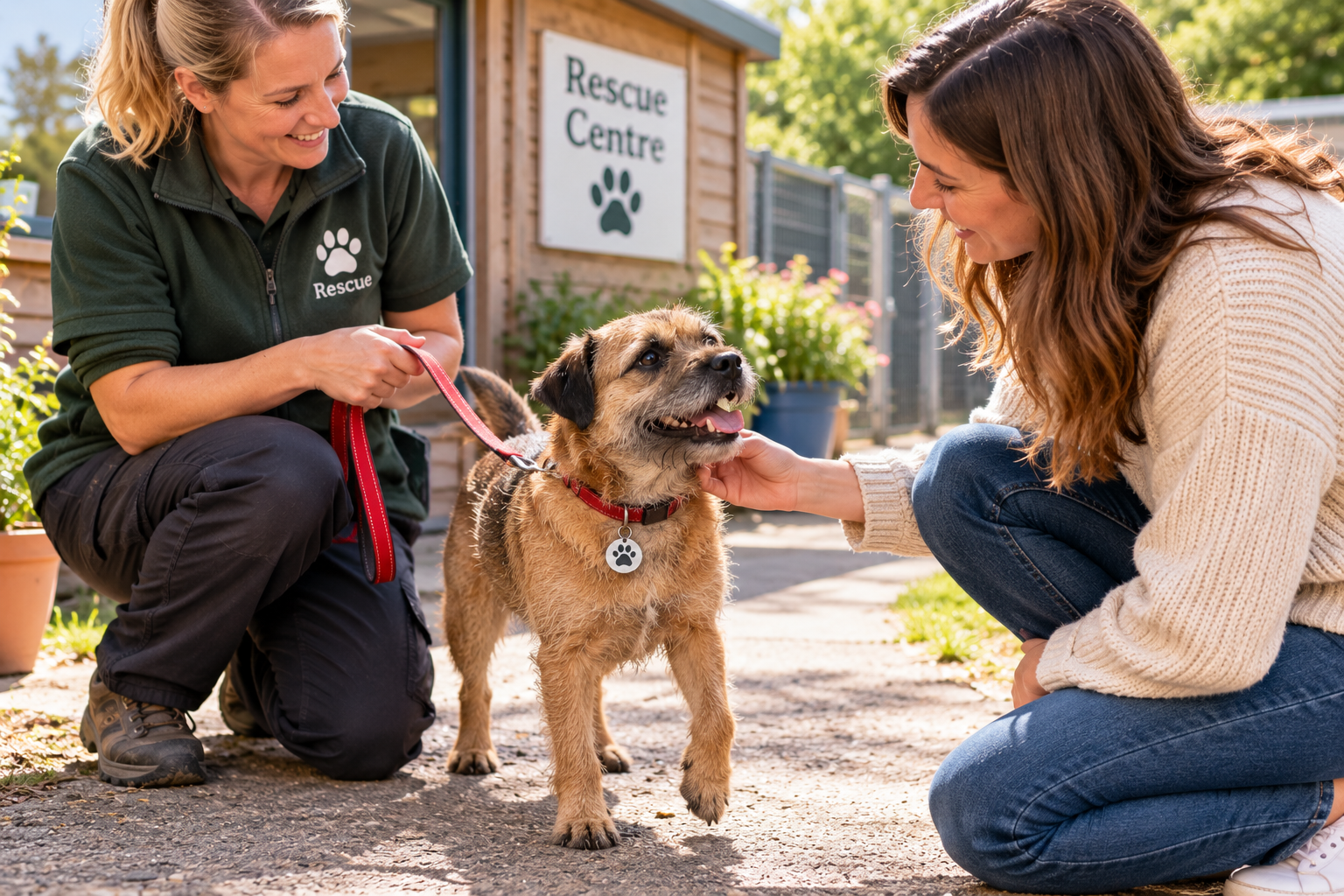
Restrictions are there for a reason
You may see profiles saying that a dog needs older children, cannot live with cats, needs to be the only dog, requires a secure garden or needs somebody around for more of the day.
Those aren’t hurdles to persuade the rescue to overlook.
They’re information about what the organisation currently believes that particular dog needs.
There may still be plenty to learn together
An adult rescue dog isn’t automatically the easy alternative to a puppy.
One dog may arrive housetrained, relaxed at home and familiar with everyday routines. Another may need help learning some of those things.
You could find yourselves working on being left alone, walking calmly on a lead, confidence around visitors, housetraining, handling or simply learning how life works in a completely new household.
What matters isn’t expecting perfection. It’s being prepared to teach, support and seek appropriate help when you need it.

Think about the whole household
If you have children, another dog, cats or other animals, tell the rescue honestly about them.
A rescue dog isn’t automatically unsuitable for a family or multi-pet household. Suitability depends on the individual dog.
Nobody benefits from trying to squeeze the wrong dog into the wrong home.
And yes, there’s still the money bit
Adoption doesn’t remove the ordinary costs of having a dog.
There will still be food, equipment, preventative healthcare, veterinary treatment, insurance if you choose it, grooming where appropriate, training and all the other expenses that can come with caring for a dog throughout their life.
An individual rescue dog may also have an existing medical condition or need additional behavioural support.
The rescue should tell you what it knows, but you still need to consider whether you could cope if your dog’s needs or costs changed later.
Perhaps the biggest requirement is flexibility
You don’t need to be an expert dog trainer.
You don’t need a perfect house.
And choosing rescue shouldn’t require you to accept a dog whose needs genuinely don’t fit your circumstances.
What helps is being realistic, patient and open to the individual dog.
Listen to the people who know the dog. Ask questions. Be honest about what you can and cannot offer. And be prepared to walk away from a match that isn’t right, however lovely the dog may be.
Finding the right home matters more than finding a home quickly.
Interactive Tool
Are you still considering getting a rescue dog?
There isn’t one particular type of person who makes a good rescue dog owner.
These ten questions aren’t here to pass or fail you. They’re designed to help you think about how comfortable you are with some of the realities that can come with adopting a rescue dog.
Please answer each question honestly, based on your own circumstances. Your reflection at the end will highlight the things that may be worth thinking about before you take the next step.

YOUR RESULTS