Training & Behaviour · Stage 03
Understanding Your Dog’s Behaviour
Understanding Why Your Dog Behaves in Certain Ways
Dogs don’t behave in certain ways simply to be naughty or difficult. Their behaviour can be influenced by how they’re feeling, what’s happening around them and what they’ve learned from previous experiences.
For example, a dog that barks when someone approaches the front door might be excited, worried or trying to alert you. Rather than immediately telling them off, think about what happened just before they started barking and how they reacted afterwards.
The same applies to other behaviours. If your dog suddenly refuses to follow an instruction, pulls away from something or becomes unsettled, consider whether they’re frightened, distracted, uncomfortable or unsure of what’s expected.
By looking at what might be causing the behaviour, you can respond more appropriately and help your dog feel more comfortable and confident.

Barking
Barking is communication.
Barking is one of the ways your dog communicates with you and the world around them. They can’t tell us in words what they’re feeling or what has caught their attention, so barking may be their way of expressing excitement, concern, frustration or a need for something. The important thing is to understand why your dog is barking rather than simply trying to stop the noise.
Dogs may bark because they are alerting, excited, frustrated, worried, seeking interaction or distressed.
The useful question isn’t simply “How do I stop the barking?”
First look for patterns.
When does it happen? Where? Who or what is nearby? What happens immediately afterwards?
Once you’ve noticed when and why your dog tends to bark, think about how you can help them in those situations. For example, if your dog barks when the doorbell rings, they may be alerting you that someone has arrived. You don’t necessarily need to stop that first bark, but you can gradually teach them to settle afterwards. Practise rewarding calm behaviour, perhaps by teaching your dog to go to a comfortable spot when someone comes to the door.
If your dog barks because they’re frightened, overwhelmed or uncomfortable, the approach may be different. Give them more distance from whatever is worrying them and avoid forcing them into situations they find distressing. If the barking is persistent or difficult to manage, a suitably qualified, reward-based trainer or behaviour professional can help you work out an appropriate approach.
Teaching Your Dog to Greet People Without Jumping Up
Dogs often jump up at people because they’re excited, want attention or have learned that jumping gets a reaction. Although it can seem harmless, particularly with a small puppy, it can become a problem as your dog grows, especially around children, older people or visitors.
Rather than repeatedly telling your dog to get down, teach them what you would like them to do instead. For example, reward your dog when they greet someone with all four paws on the floor. You could also teach them to sit when someone approaches, rewarding them for remaining calm.
Practise this regularly in quiet situations before introducing more excitement, such as visitors arriving at your home. Ask family members and visitors to follow the same approach so your dog receives consistent messages.
While your dog is learning, you can use a lead, a baby gate or a little extra distance to prevent them from rushing towards people. The aim is to help your dog understand that calm greetings are more rewarding than jumping up.
Understanding Why Dogs Chew and Dig
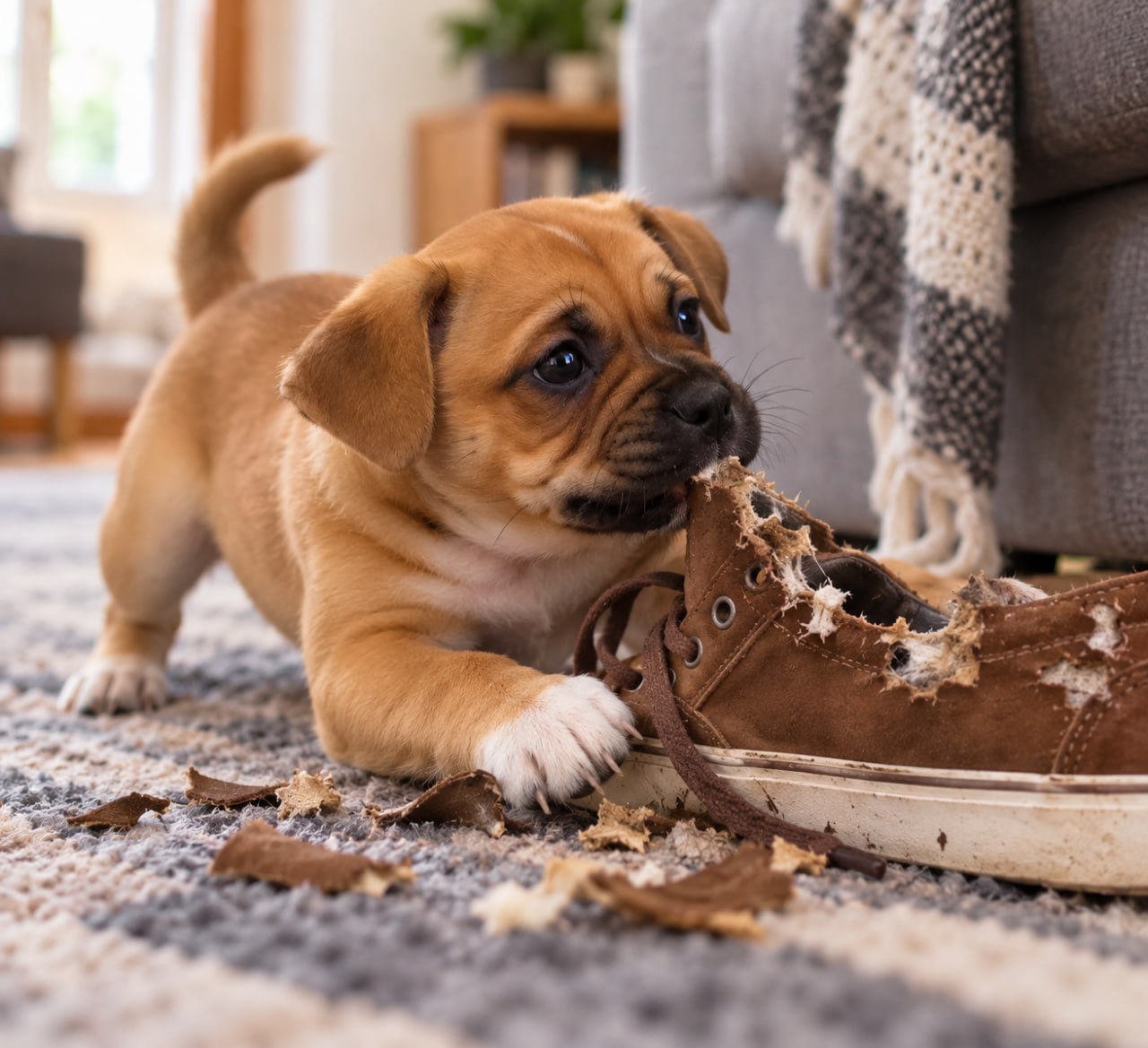
Chewing and digging are natural behaviours for dogs, although some dogs enjoy them much more than others. One dog might spend hours happily chewing their toys, while another may show very little interest. The same applies to digging.
Dogs chew for different reasons. Puppies often chew while they’re teething and exploring the world around them. Older dogs may chew because they enjoy it, find it relaxing or need something to occupy themselves. Sometimes, excessive or destructive chewing can be linked to boredom, frustration, stress or difficulty coping when left alone.
If your dog enjoys chewing, provide suitable toys and safe chews that match their size and chewing habits. Supervise them with toys that could break apart, particularly soft toys containing stuffing or squeakers, and remove damaged toys before pieces can be swallowed.
If your dog is chewing furniture, shoes or other household items, try to understand when and why it’s happening. Keep unsuitable items out of reach, offer appropriate alternatives and reward your dog for choosing those instead. Avoid punishing them, particularly if you discover the damage afterwards.
Digging is another normal behaviour. Some dogs dig to explore interesting smells, create a comfortable resting spot, bury objects or simply because they enjoy it. If your dog loves digging, you could provide a designated digging area in the garden or a suitable supervised activity where they can safely use that instinct.
The aim isn’t necessarily to stop every natural behaviour. It’s to understand what your dog enjoys, provide appropriate outlets and help them learn which things are safe and acceptable.
What to Do When Your Dog Takes Things They Shouldn’t
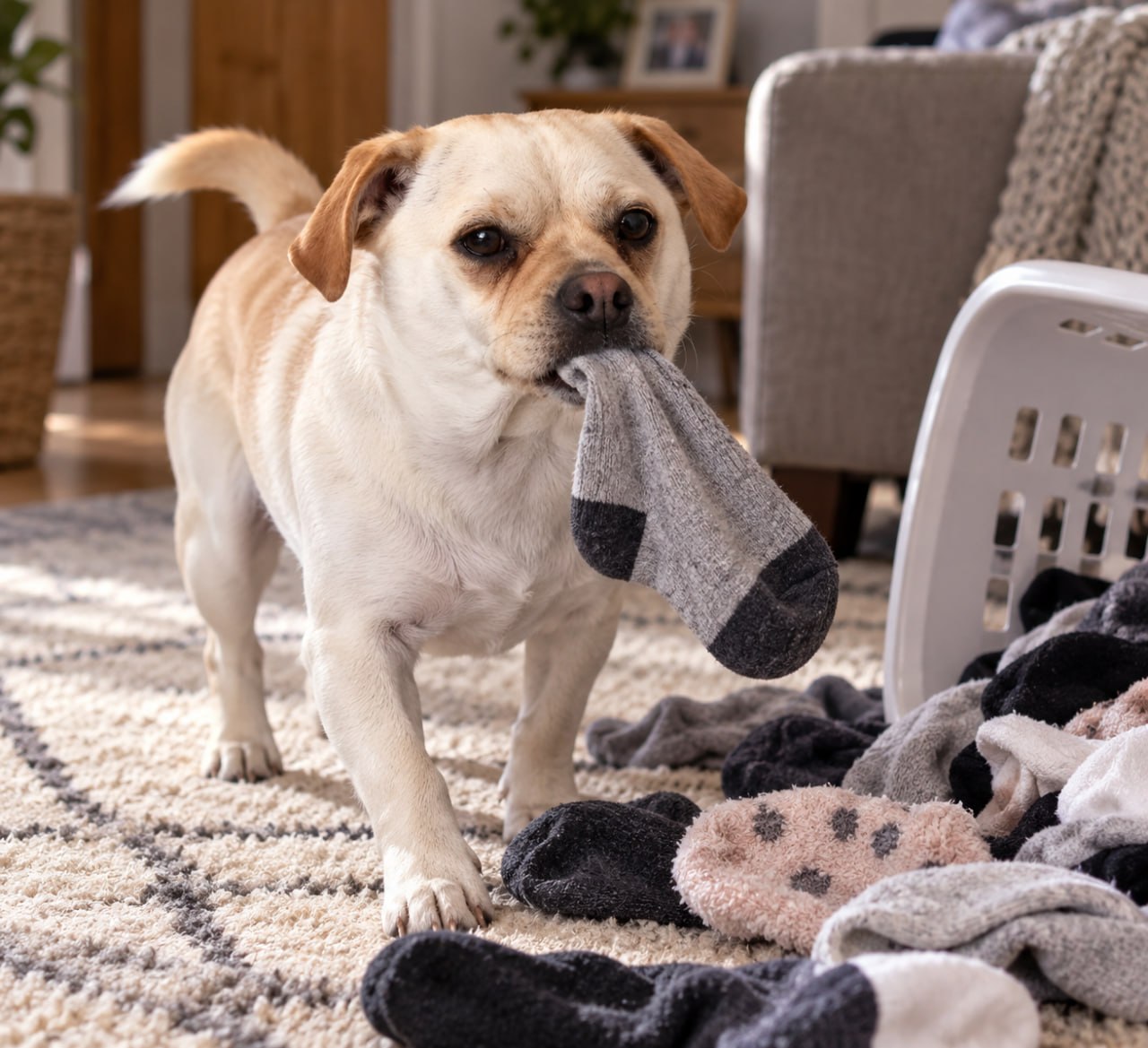
Have you ever caught your dog wandering around with a sock, slipper or something they’ve helped themselves to from the laundry basket? It’s a familiar situation for many dog owners.
Dogs may take household items because they’re curious, enjoy carrying things around, like the smell of something familiar or have discovered that taking an object gets everyone’s attention.
If your dog picks up something they shouldn’t, try to stay calm. Chasing them around the house can turn it into an exciting game, and they may start running off with things because they enjoy the attention.
Instead, encourage your dog to give up the item by offering a suitable toy or treat in exchange. Practising a simple ‘drop’ cue with their own toys can help them learn to release objects willingly.
Prevention helps too. Keep shoes, laundry and other tempting belongings somewhere your dog can’t easily reach, particularly while they’re young and still learning.
If your dog takes something dangerous, avoid grabbing at them if there’s a risk of being bitten. If they’ve swallowed something potentially harmful, contact your vet promptly.
With patience and consistency, many dogs can learn which things belong to them and which are best left alone.
Keeping tempting items out of reach while teaching your dog what they can safely play with can help prevent unwanted habits.