CARE & WELLBEING · STAGE 05
Exercise, Enrichment & Everyday Wellbeing
Exercise, mental stimulation and rest all contribute to your dog’s wellbeing.
Exercise matters, of course. Dogs need opportunities to move, explore and enjoy the world around them.
But wellbeing is about much more than how far they walk or how tired they are at the end of the day.
Sniffing, playing, learning, exploring, chewing, resting and simply spending time with you can all be important parts of a dog’s life too.
Some dogs seem ready for the next adventure before you’ve even taken your coat off. Others are happiest after a gentle wander, a good sniff and an afternoon asleep somewhere comfortable.
The right balance of exercise, mental stimulation and rest will depend on your dog’s age, health, personality and individual needs.
The aim isn’t to exhaust your dog. It’s to give them a life they enjoy.
Every dog has different exercise needs
It would be convenient if there were a simple formula telling us exactly how much exercise every dog needs.
There isn’t.
Breed or type, age and size can give you useful context, but they don’t tell you everything. Health, fitness, personality, confidence and previous experience matter too. So does the activity itself.
A brisk walk along a familiar pavement, an hour exploring woodland, a slow sniff around the neighbourhood and an energetic game in the garden all ask different things of a dog.
Two dogs of the same breed and age can have very different needs. One may thrive on longer adventures. Another may prefer several shorter outings. One may love busy places while another finds them tiring or overwhelming.
Rather than chasing a particular number of minutes or miles, get to know your own dog.
How do they cope during activity? How do they recover afterwards? Are they moving comfortably? Do they seem eager to go out? Can they settle when they come home?
Their needs can change too. Illness, injury, weight, fitness, age and changes in routine can all affect what is appropriate.
If you’re unsure, particularly while your dog is growing or if they have a health or mobility issue, your vet can help you decide what’s suitable for them.
Your dog’s needs matter more than somebody else’s exercise chart.
A walk doesn’t have to be a march
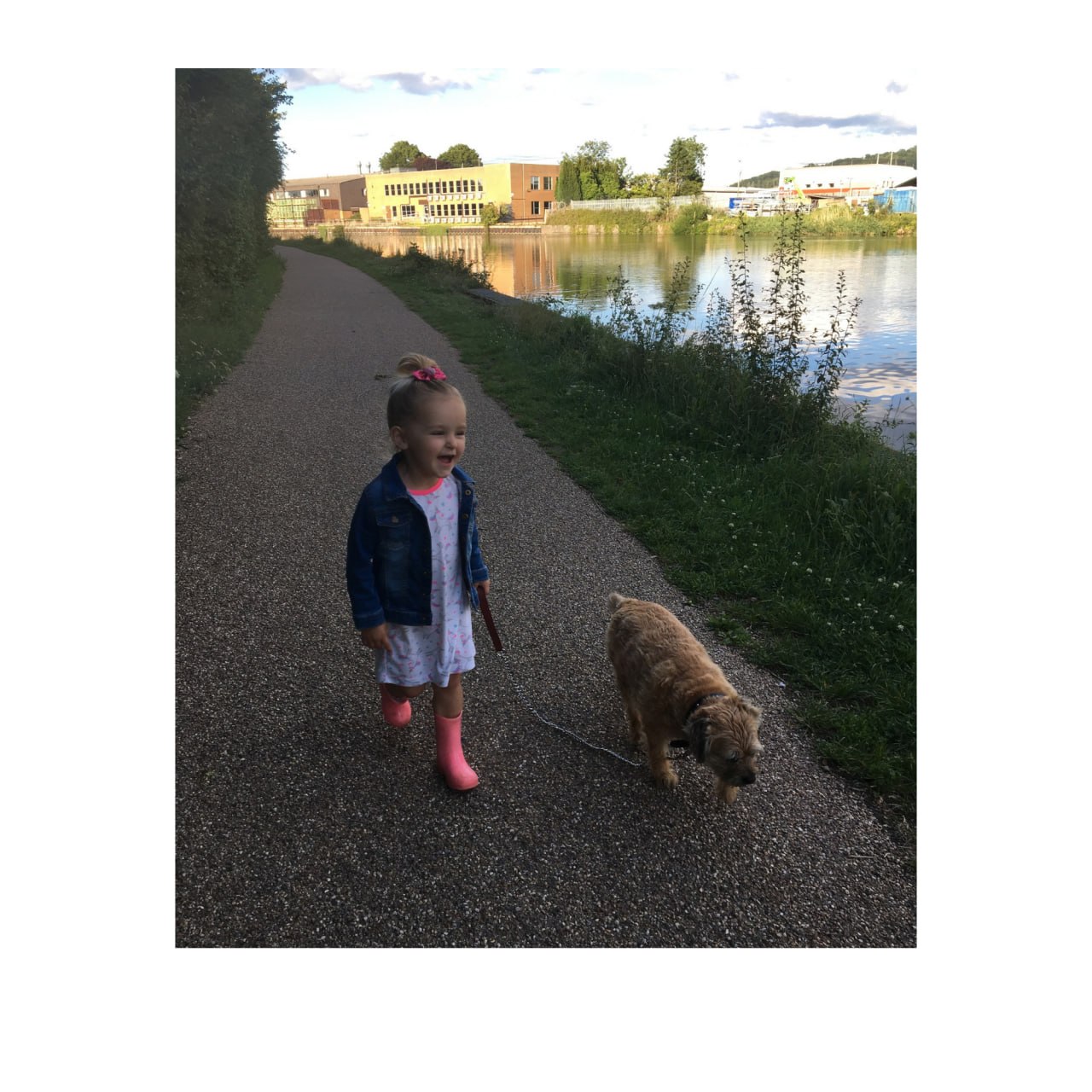
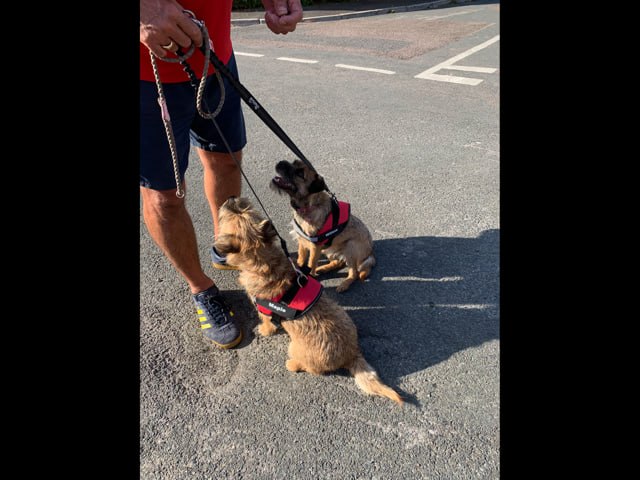
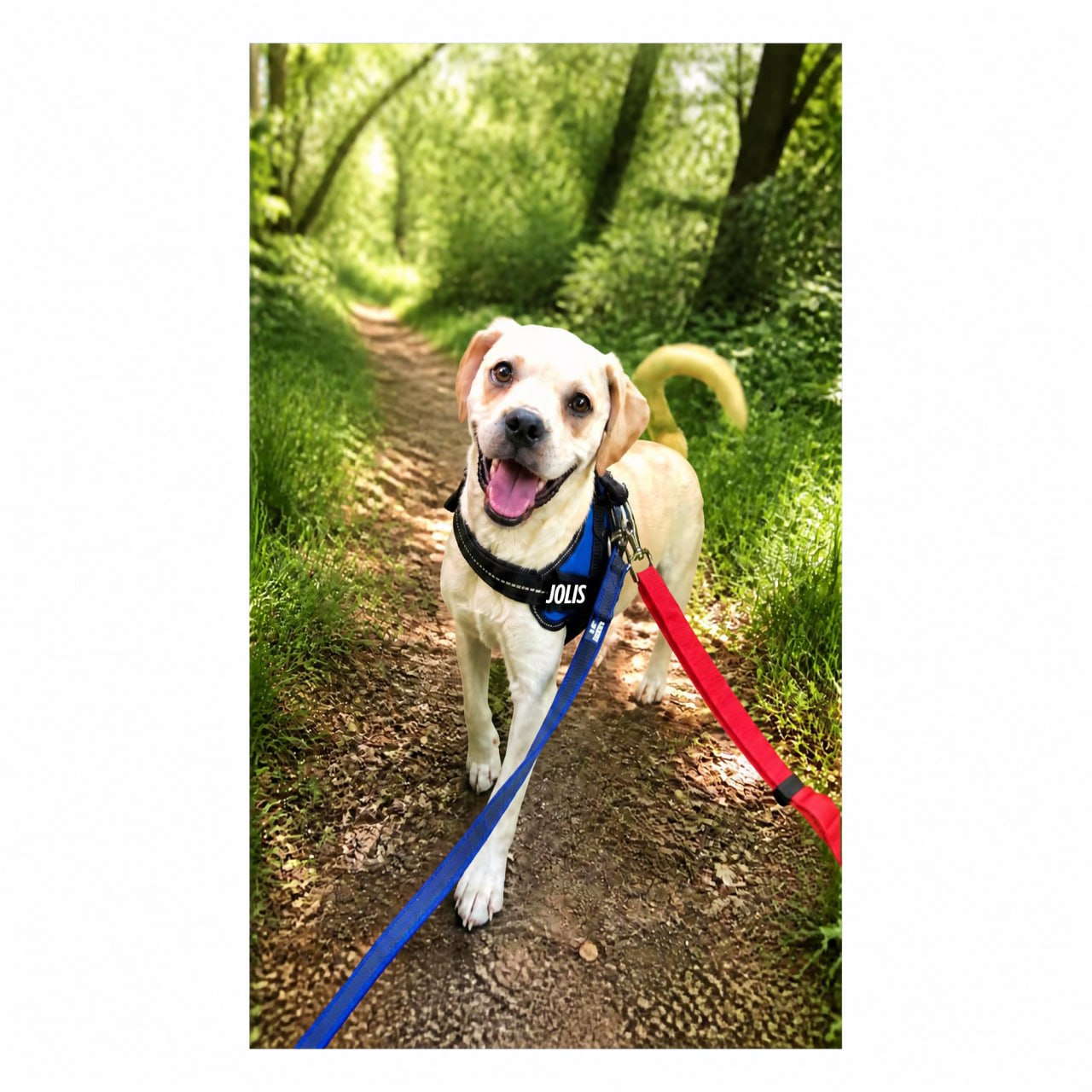
Walks are exercise, but they’re also an opportunity for your dog to experience the world.
For us, stopping every few metres can feel as though we’re getting nowhere.
For a dog, that may be the interesting bit.
The lamppost at the end of the road, the hedge another dog passed earlier and one apparently fascinating blade of grass can contain information we know nothing about.
Give your dog opportunities to sniff and investigate where it’s safe to do so.
Some walks can be purposeful and active. Others can be slower and sniffier. You might explore somewhere new, practise a little training, visit a familiar favourite or simply wander around together.
Even the same route can feel different to your dog from one day to another.
And where it’s safe and practical, giving them a little appropriate choice can make an outing more interesting. Perhaps they choose which path to investigate or are allowed an extra moment with a particularly good smell rather than being hurried along.
You still decide what is safe and appropriate. Your dog simply gets some say in how they experience it.
Not every good walk needs to leave your dog exhausted.

The Doggie Addition Recommends
Looking for Somewhere New to Walk?
Sometimes a change of scenery is just what you and your dog need. Whether you fancy a woodland wander, a coastal stroll or somewhere different for your usual walk, finding a suitable route can take a little planning.
Dog Walks Near Me is a UK website offering free walking guides to help you discover new places to explore with your dog. Depending on the walk, you can find information about parking, terrain, facilities and things to be aware of along the way.
We explored the free guides and found them a useful starting point for planning days out. Some guides are more detailed than others, so it’s always worth checking current access rules, dog restrictions and local conditions before setting off.
What about the paid version?
The optional Plus membership offers additional features, including advanced search filters, Ordnance Survey maps with GPS and printable route information. Annual Plus is currently advertised at £29.99, although we haven’t personally tested these paid features.
If you decide Plus is right for you, our referral link offers £7 off the annual subscription.
Ad – Affiliate link: If you purchase a qualifying subscription through our link, The Doggie Addition may earn a small commission. This doesn’t affect our recommendations.
Think about quality as well as quantity
Time alone doesn’t tell you what your dog has experienced.
Thirty minutes walking quickly along a pavement is different from thirty minutes exploring a quiet field. A run is different from a sniffing walk. Playing with you is different from navigating a busy environment full of dogs, people, traffic and unfamiliar sounds.
Terrain matters too. Hills, sand, uneven ground and long periods of repetitive activity can place different physical demands on a dog.
Environment can affect them mentally. Somewhere exciting, unfamiliar or very busy may be far more tiring than a familiar route, particularly for a young, sensitive or less confident dog.
This doesn’t mean one kind of outing is always better than another.
It simply means that the clock is only one part of the picture.
Watch how your dog responds and build their activity around what suits them rather than trying to make every outing meet the same target.
Let them use their nose
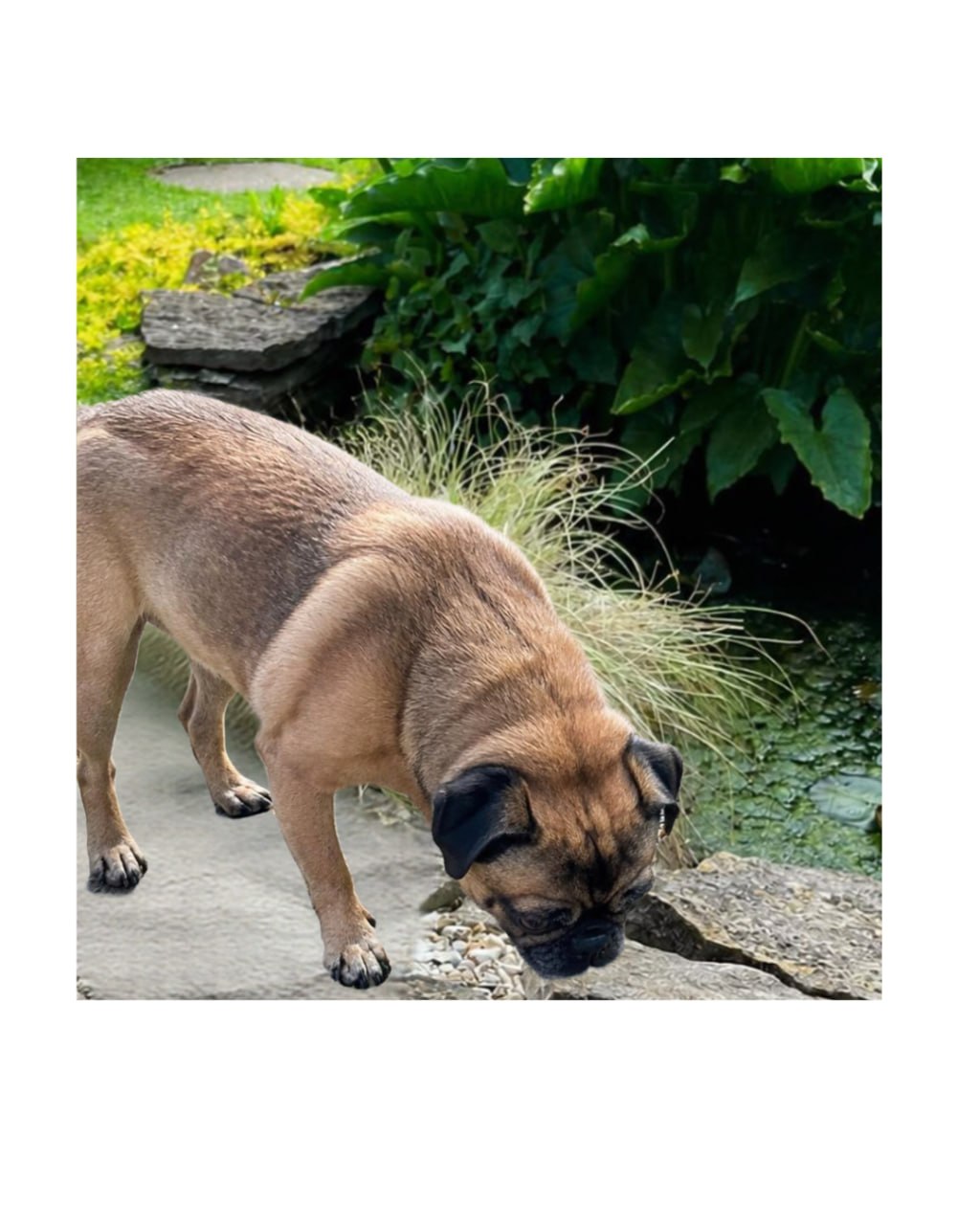
Sniffing is such a normal part of being a dog that it’s easy to underestimate how valuable it can be.
Dogs experience a huge amount of their world through scent.
Allowing time to investigate smells on walks can turn an ordinary outing into something much more interesting. You can bring sniffing into everyday life at home too.
You might hide a favourite toy for your dog to find, scatter some of their food where appropriate, create a simple search around a room or garden, or let them investigate a safe cardboard box containing something interesting.
You don’t need to turn it into a complicated scent-work session.
Start simply and let your dog succeed.
If they enjoy using their nose, there are plenty of ways to develop that interest later.
Sometimes, though, enrichment really can be as simple as slowing down and letting your dog sniff.
Enrichment is bigger than puzzle toys
The word enrichment can make it sound as though you need specialist equipment and a diary full of planned activities.
You don’t.
Enrichment is really about giving your dog suitable opportunities to do things that interest and engage them.
That can take lots of forms.
- sniffing and searching for food, toys or interesting scents
- chewing or licking something safe and appropriate for them
- problem-solving, using a suitable food toy or simple homemade activity
- learning, through short positive training sessions
- playing with you or with appropriate toys
- exploring, whether that’s a new walking route or simply taking time somewhere familiar
- using food differently, such as appropriate scatter feeding, slow feeding or food-based enrichment
- quiet activities that allow them to engage without becoming highly excited
Not every category will appeal to every dog.
And enrichment doesn’t have to be added on top of everything else. You can use part of your dog’s normal food allowance, incorporate it into a walk or spend five minutes doing something together.
Interesting doesn’t have to mean complicated.
Enrichment doesn’t need to be expensive
There are some brilliant enrichment products available, and the right one can be useful.
But your dog doesn’t need a cupboard full of equipment to have an interesting life.
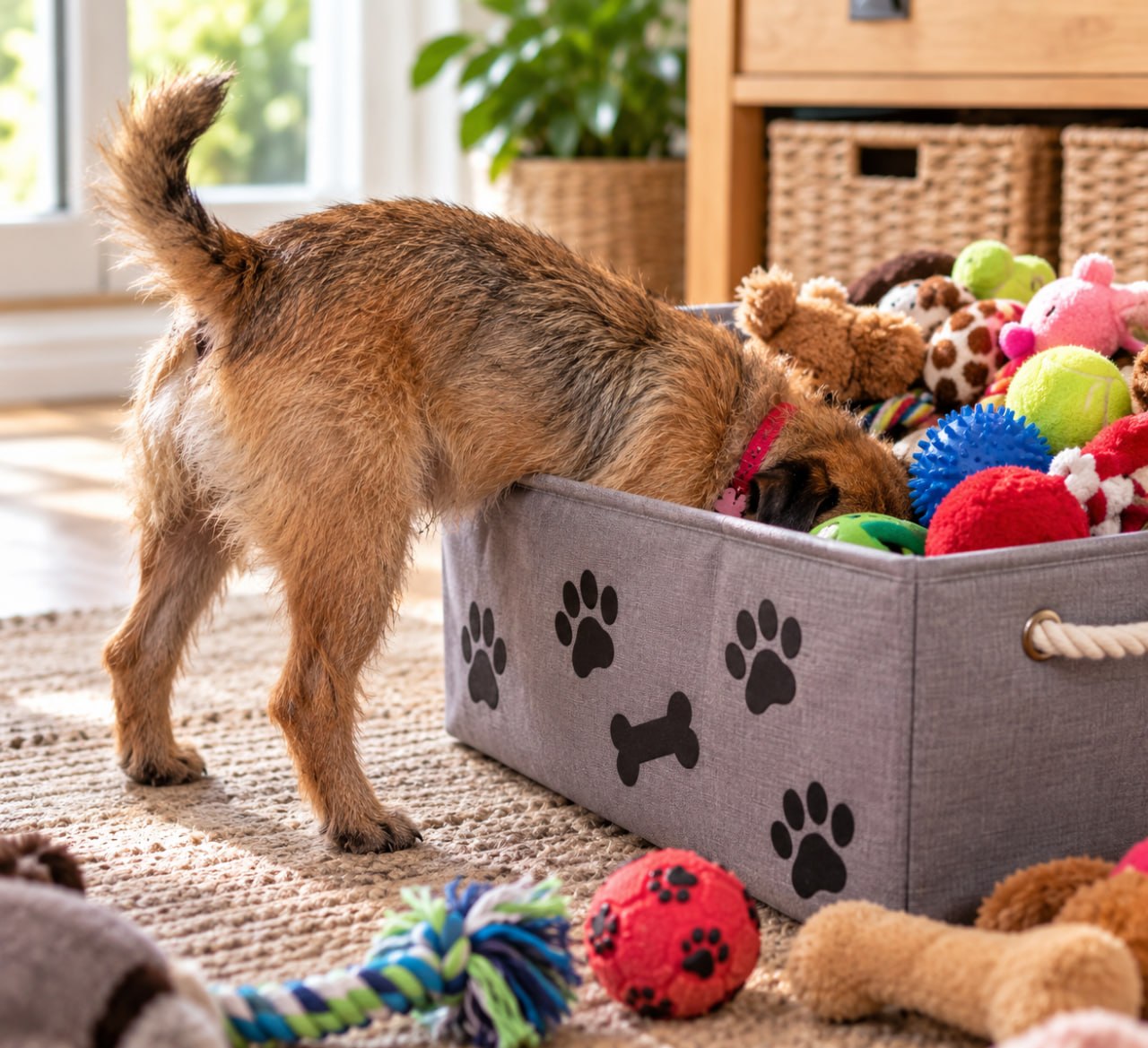
A cardboard box can become a supervised search game. Part of a meal can be used for a simple treasure hunt. A toy can be hidden around the house. A towel can sometimes become a basic food-search activity where it’s safe for the individual dog. You can practise a familiar skill in a different room or change a walking route.
You can also simply play together.
Use a little common sense with homemade activities. Supervise where necessary, avoid anything your dog may swallow or injure themselves on, and choose activities that suit the individual dog.
If your dog tends to destroy and eat cardboard, for example, a cardboard search probably isn’t the activity for them.
Products are options, not requirements.
The best enrichment isn’t necessarily the cleverest idea on the internet. It’s the thing your dog actually enjoys doing.
Watch the dog, not the activity
An enrichment idea is only useful if it works for the dog doing it.
Imagine giving two dogs the same puzzle.
One investigates, works something out and happily keeps going.
The other paws at it, becomes increasingly frantic, barks and eventually walks away.
They haven’t had the same experience simply because they were given the same activity.
Watch what your dog tells you.
If they don’t understand, make it easier.
If they’re getting frustrated, help them succeed or try something else.
If they walk away, let them.
If an activity makes them increasingly overexcited, something calmer may suit them better at that moment.
And if they solve your carefully prepared activity in twelve seconds and look at you as though they’d like another one, that doesn’t mean it failed either.
Quick enjoyment still counts.
Your dog’s preferences are useful information. Over time you may discover that they’re a dedicated sniffer, an enthusiastic chewer, a problem-solving genius or a dog who thinks most puzzles are ridiculous but would happily play with you instead.
That’s fine.
Play counts too
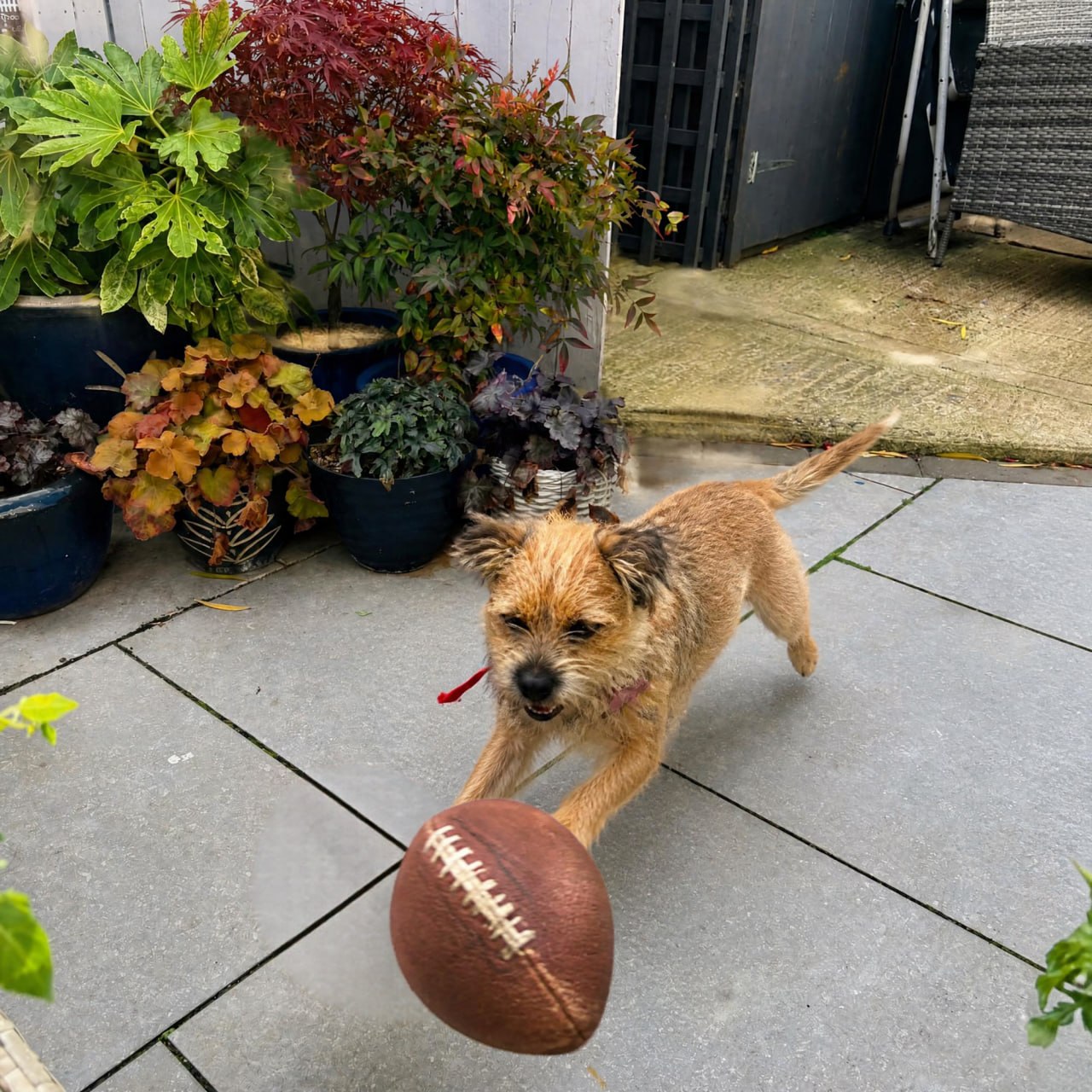
Play can provide movement, mental stimulation and a lovely opportunity to interact with your dog.
What that looks like will vary enormously.
It might be tug, retrieving, searching for a toy, chasing an appropriate toy, a gentle game in the garden or something your dog has apparently invented themselves.
Some dogs love vigorous games. Others prefer something gentler.
Keep an eye on how excited your dog is becoming. Allow pauses and breaks where needed, and choose games that are physically appropriate for them.
Play doesn’t have to continue until they’re completely worn out.
It should still feel like fun.
And if your dog doesn’t particularly enjoy a game that every other dog on social media seems to love, that’s okay.
Find the things that make your dog’s tail wag.
Training can be enrichment
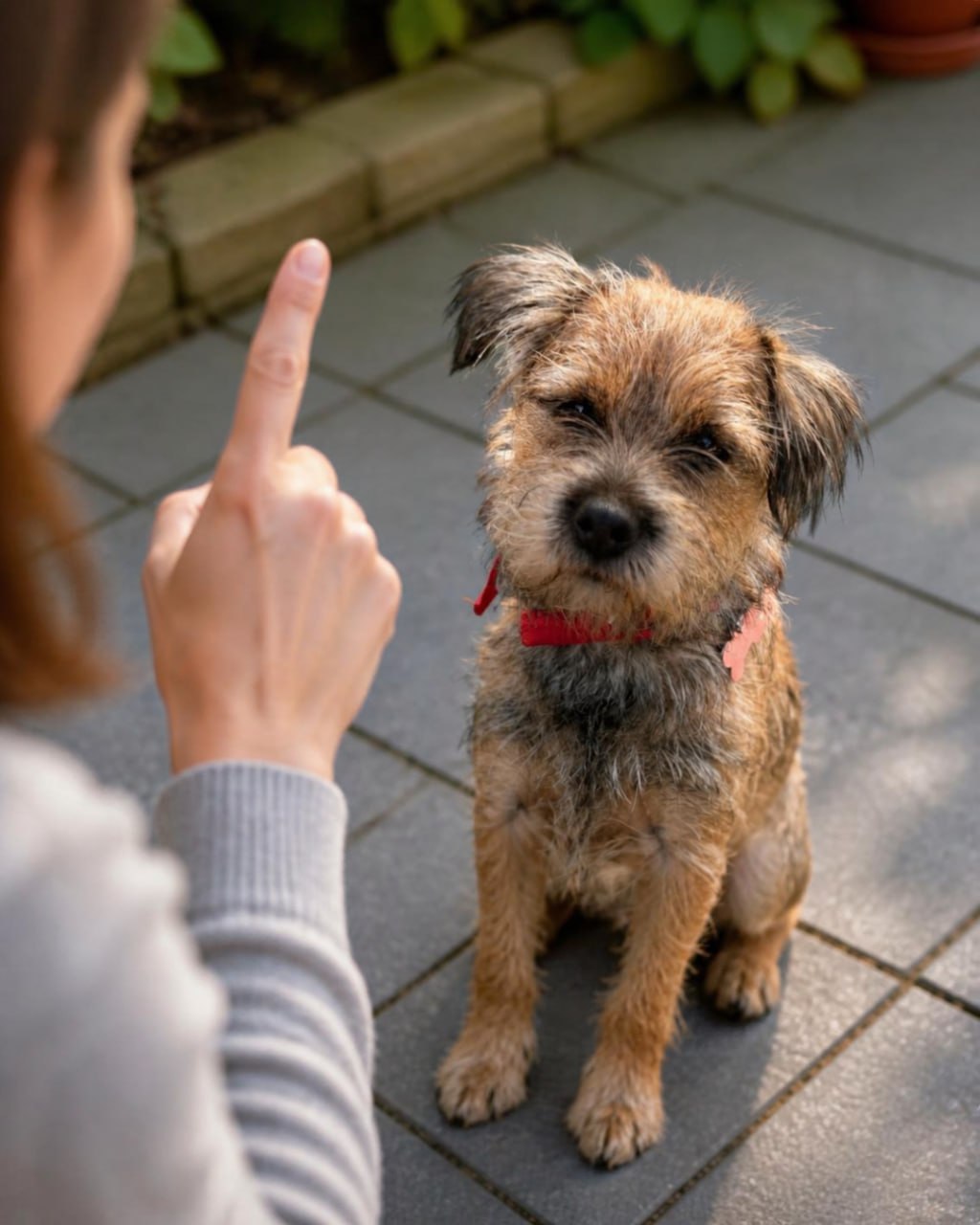
Training isn’t only about teaching manners or solving problems.
Short, enjoyable sessions can give your dog something to think about and provide another way for the two of you to spend time together.
You might practise a skill they already know, teach a simple trick, work on finding an object, introduce a hand target or turn part of their everyday training into a little game.
It doesn’t need to be a formal half-hour session.
A few minutes while the kettle boils can be enough.
Keep it achievable. If your dog is repeatedly getting something wrong, the answer usually isn’t to keep asking in exactly the same way.
Make it easier. Break the task down. Help them succeed.
And stop while you’re both still enjoying yourselves.
More isn’t always better
This is an easy trap to fall into.
Your dog seems restless, so you take them for another walk.
They come home still bouncing around, so you play another game.
They become increasingly wild, so you assume they must still have energy to burn.
Sometimes a dog genuinely does need more appropriate activity.
But sometimes what looks like endless energy can be overexcitement, tiredness or difficulty settling.
Constantly adding stimulation can make it harder for some dogs to switch off.
Think about the whole day.
Have they exercised? Have they had opportunities to sniff and think? Has anything unusually exciting happened? Have they actually had a chance to rest somewhere quiet?
A dog who has had a busy day may not need another activity.
They may need help winding down.
Physical exercise, mental activity and proper rest work together.
Puppies need a slightly different approach
Puppies need movement, play, exploration and opportunities to experience the world.
But they’re also still growing and learning how to cope with everything around them.
You may come across rules telling you that a puppy should exercise for a particular number of minutes for every month of their age. There isn’t good evidence for using a simple formula like that for every puppy.
The type of activity matters as well as the amount.
Allow appropriate opportunities for natural movement, play and exploration. Build activity gradually and be sensible about repetitive, strenuous or high-impact exercise while your puppy is developing.
Remember the mental side too.
A short outing involving new sights, sounds, smells and experiences may be a lot for a young puppy to process.
And puppies need plenty of opportunities to sleep and rest.
Trying to tire a puppy out every time they become lively can sometimes result in an overtired puppy who finds settling even harder.
If you’re unsure what’s appropriate for your individual puppy, particularly if you have concerns about their growth, joints or health, speak to your vet.
Your dog’s exercise needs can change over time
Once a dog reaches adulthood, it’s tempting to think you’ve discovered their exercise requirement and that’s that.
But dogs change.
Fitness can increase or decrease. Weight can change. Health can change. Confidence can change. A dog who once adored a particular activity may become less interested in it, while another may discover a new enthusiasm later in life.
Routine is useful, but it shouldn’t stop us noticing the dog in front of us.
Adjust things when you need to.
If you’ve had a quieter period, build strenuous activity back up sensibly rather than expecting your dog to leap straight into what they were doing months ago.
And don’t assume every change is simply preference. A noticeable change in willingness or ability to exercise can sometimes be a sign that something needs checking.
Keeping your older dog active and engaged
Getting older doesn’t mean life has to become boring.
An older dog may need changes to the length, pace or type of activity they do, but movement, sniffing, gentle play, exploration and mental activity can still be valuable parts of their day.
You might choose shorter outings, easier routes, gentler games or enrichment that doesn’t require as much physical effort.
Familiar activities may be adapted rather than abandoned.
Give them time too.
An older dog may walk more slowly, stop more often or need longer to recover. The aim isn’t to keep pace with the dog they were several years ago. It’s to help them enjoy life as the dog they are now.
And if your dog suddenly becomes reluctant to walk, play, climb stairs, jump into the car or do something they previously enjoyed, don’t automatically put it down to old age.
Changes in movement or activity can be worth discussing with your vet.
Why rest and relaxation are important for your dog
Rest can get forgotten when we talk about giving dogs fulfilling lives.
We’re understandably keen to make sure they aren’t bored, so we think about walks, training, toys, games, outings and activities.
But dogs also need opportunities to switch off.
Some will happily curl up wherever they happen to be. Others may find settling more difficult, particularly when the household is busy or exciting.
Give your dog somewhere comfortable where they can rest without constantly being disturbed.
In a family home, that may also mean teaching children and visitors that a sleeping dog should be left alone.
After physical exercise, an exciting outing or mentally demanding activity, downtime can be exactly what your dog needs.
You don’t have to entertain them every waking minute.
Sometimes the best activity is no activity at all.
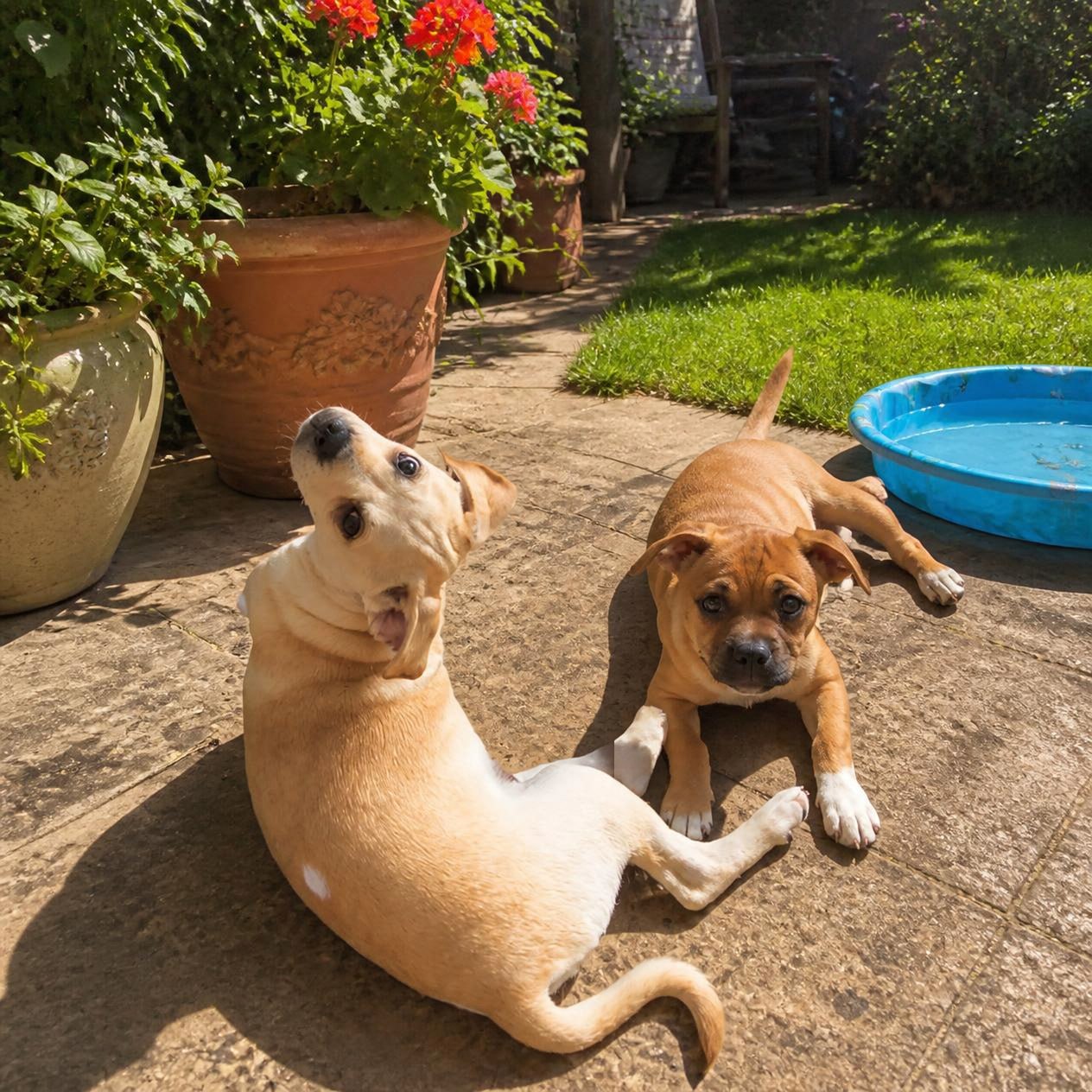
Keeping your dog safe and comfortable in hot weather
A normal exercise routine can become unsafe when the temperature rises.
Dogs can develop heat-related illness, and exercise increases the amount of heat their body produces.
On warmer days, think about whether the activity is necessary, whether it can be moved to a cooler part of the day and whether a shorter or gentler outing would be more appropriate.
Always provide access to fresh drinking water and somewhere cool to rest.
Be particularly cautious with dogs who may be more vulnerable to heat, including flat-faced dogs, dogs with thick coats, older dogs and dogs with certain health conditions.
And never leave a dog in a hot car.
If the weather means the normal walk isn’t sensible, that doesn’t mean you have to replace it with an exhausting indoor workout.
A little sniffing, gentle training, an appropriate enrichment activity and a quieter day may be perfectly reasonable.
Keeping your dog active when the weather is bad
British weather has a habit of ignoring our plans.
Some dogs couldn’t care less about rain. Others reach the back door, take one look outside and appear personally offended.
Cold conditions can also affect dogs differently depending on their age, health, coat, size and individual tolerance.
Use your judgement.
Sometimes you’ll change the route. Sometimes you’ll shorten an outing. Sometimes you’ll get wet anyway.
And sometimes an indoor activity, a little training or a search game can add interest to a quieter day.
One disrupted routine isn’t going to undo everything.
Recognising changes in your dog’s activity and behaviour
Because you see your dog every day, you’re in a good position to notice when their normal activity changes.
Perhaps they’re suddenly hanging back on walks.
Maybe they’re tiring much sooner, struggling to keep up, becoming reluctant to jump into the car or no longer interested in a game they usually love.
You might notice stiffness after rest, difficulty settling after exercise or an unexpected change in energy.
Changes can happen for lots of reasons, and noticing one doesn’t tell you what caused it.
You don’t need to diagnose it yourself.
But a sudden, significant or persistent change in movement, energy, behaviour or interest in normal activities is worth paying attention to.
If you’re concerned, speak to your vet.
Knowing what’s normal for your dog makes it easier to notice when something isn’t.
Adapting your dog’s routine to everyday life
Not every day has to contain the perfect walk, an enrichment activity, a training session and something impressive enough to photograph.
Real life happens.
You might have a busy day. The weather might be awful. Your dog might be tired. Yesterday may have been unusually active. You may simply have less time than usual.
Look at the bigger picture.
If your dog’s needs are generally being met, one quieter day doesn’t make you a bad owner.
And quieter doesn’t necessarily mean empty.
A sniff around the neighbourhood, a few minutes doing something together and a comfortable evening at home may be plenty for that particular day.
A good routine should support life with your dog, not make you feel guilty every time life doesn’t follow the plan.
I’M BORED!
Need something to do with your dog?
Tell us where you are, how much time you’ve got and what sort of activity suits your dog today. We’ll pick a Doggie Mission for you.
Wellbeing is the whole picture
Exercise matters.
So do opportunities to sniff, explore, play, learn and use their brain.
But everyday wellbeing also includes comfort, sleep, security, companionship and opportunities to make appropriate choices.
It includes having somewhere safe to rest.
It includes being allowed to move away when they need space.
It includes noticing what they enjoy rather than deciding what they should enjoy.
And it includes adapting as they change.
You don’t need to fill every minute of your dog’s day.
Give them opportunities. Spend time together. Notice what makes them happy. Let them rest. Change things when their needs change.
Some days will be adventurous.
Some will be ordinary.
Some will involve a very long nap on the sofa.
They all count.
A good life isn’t measured in miles walked. It’s found in all the little ways your dog gets to enjoy being your dog.