Training & Behaviour · Stage 04
Fear, Reactivity & When Your Dog Is Struggling
Recognising When Your Dog Is Frightened or Uncomfortable
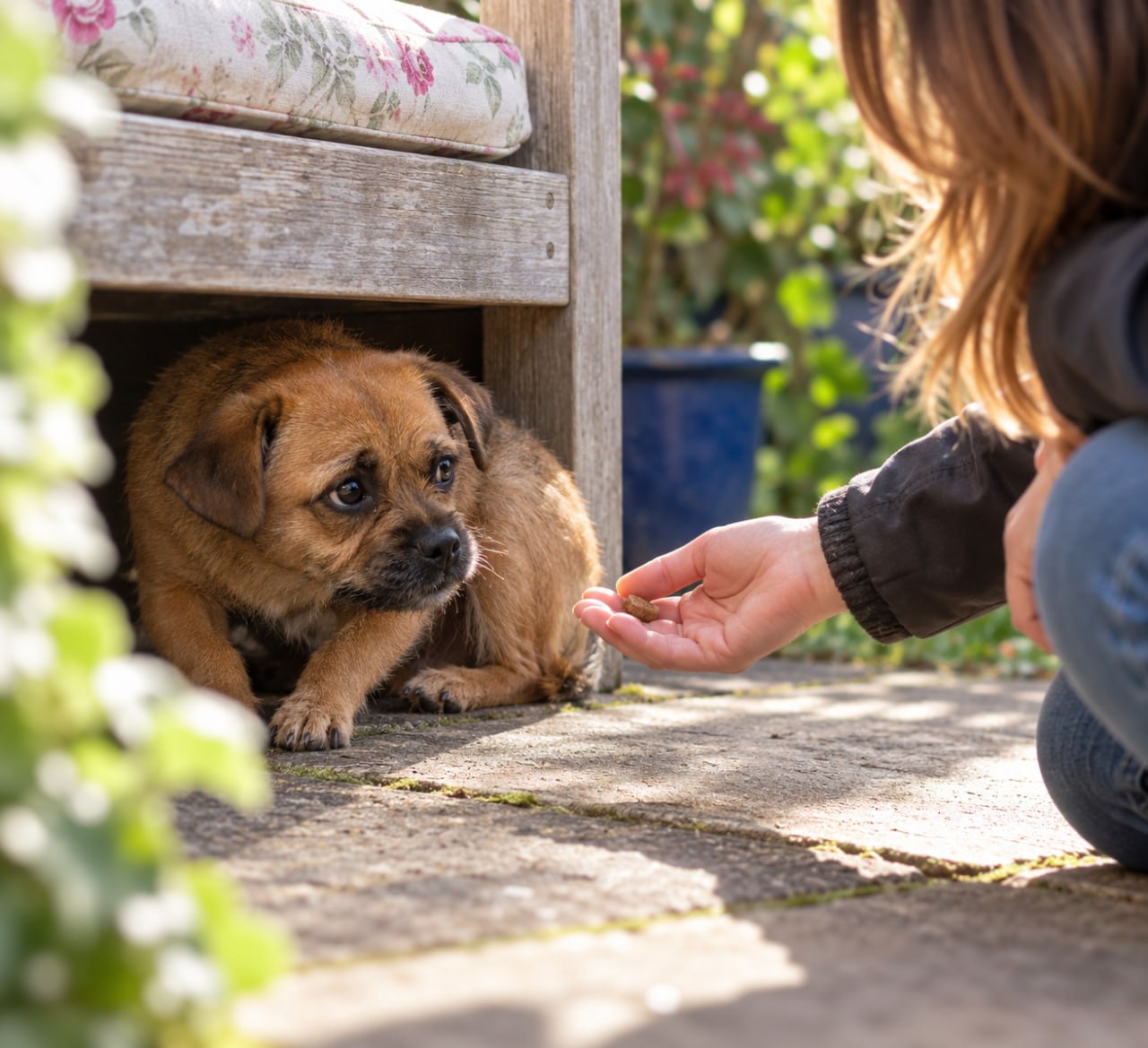
Growling, freezing, hiding, backing away, barking, lunging or trying to escape can all be signs that your dog is frightened or uncomfortable. These behaviours can be difficult to manage, but simply calling a dog difficult doesn’t help us understand what’s causing them. Instead, look at what’s happening around your dog and consider what might be making them feel uneasy.
Give Them Space to Tell You
Warnings are useful information.
Do not punish growling or other warning behaviour.
If a dog is communicating discomfort, create space and reduce pressure where it is safe to do so.
Persistent fear, escalating behaviour or situations where safety is a concern require appropriate professional support.
Understanding Reactivity
Some dogs react strongly to things around them, such as other dogs, unfamiliar people, traffic or sudden noises. They might bark, lunge, pull on the lead or become difficult to settle.
This is often described as reactive behaviour, but it doesn’t tell us why the dog is reacting. One dog might be frightened, while another might be frustrated or overwhelmed. Understanding what’s triggering the reaction and how your dog is feeling is an important first step towards helping them.
Resource Guarding
Resource guarding is when a dog tries to protect something they value because they’re worried it might be taken away. This could be food, a favorite toy, something they’ve picked up, their bed or even a particular person.
You might notice your dog becoming stiff or still when someone approaches, hovering over an object, moving away with it, growling or showing their teeth. These are warning signs that your dog is uncomfortable and wants more space.
Never punish a dog for guarding something, deliberately challenge them or repeatedly take things away to prove you’re in charge. This can make the situation worse and increase the risk of someone being bitten.
Give your dog space, avoid confrontations and keep children away from situations involving guarded items. If your dog is showing signs of resource guarding, seek guidance from a suitably qualified, reward-based behaviour professional, particularly if there’s growling, snapping or biting.
Sometimes training isn’t the next step.
When a dog is frightened, overwhelmed or guarding something they value, asking them to practise more commands isn’t necessarily going to solve the problem. They may need more space, changes to their environment or help with whatever is causing them distress. Pain or illness can also affect behaviour, so a veterinary check may be important. A suitably qualified behaviour professional can then help you understand what’s happening and work towards a safe, positive solution.